











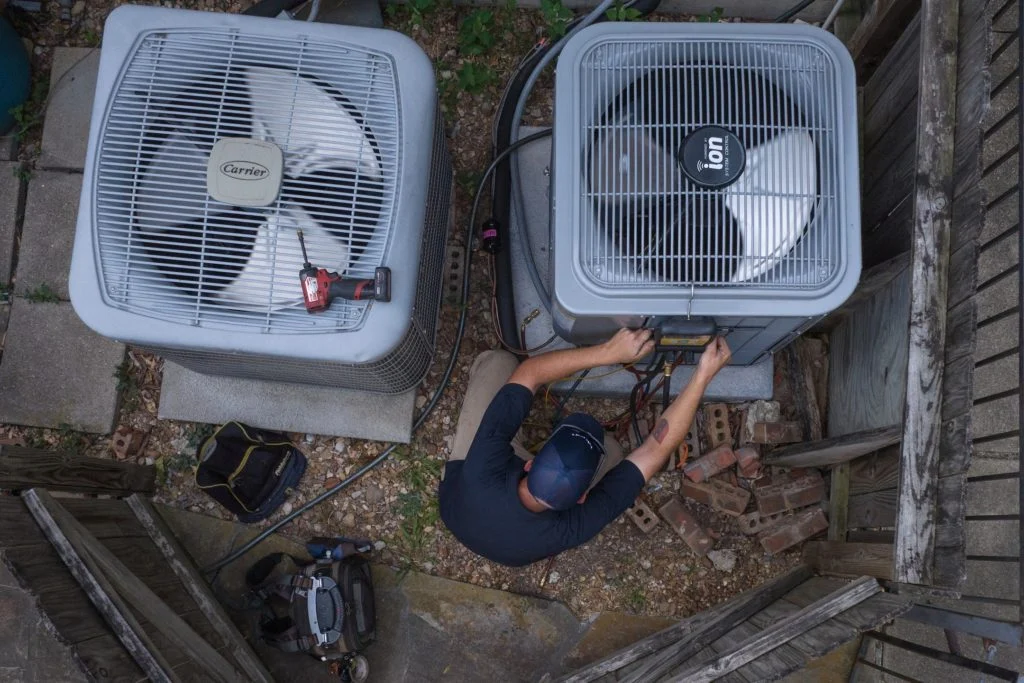
As autumn leaves begin to blanket the United States, the respite from the summer’s sweltering heat is a welcome relief. However, the season just passed was far more than a meteorological inconvenience—it was a definitive signal of a planet in flux. With 2026 recorded as the warmest summer in the history of the contiguous United States, the "new normal" is increasingly defined by life-threatening heat.
In response to this climate reality, a growing number of American cities are grappling with a profound policy question: Should air conditioning be considered a fundamental human right? From New York City to Houston, local governments are shifting from viewing cooling as a luxury to classifying it as a critical piece of public health infrastructure.
The Human Toll of Urban Heat
The urgency behind these legislative shifts is written in the stories of those most vulnerable to rising temperatures. In Brooklyn, twenty-two-year-old Brianna Styles experienced the 2026 heat wave not just as a discomfort, but as a crisis. Living in a subsidized apartment without a cooling unit, Styles watched as the extreme heat caused the paint on her walls to peel.
"It was humid, hot, moist. I felt like my apartment was melting," Styles recalled. For her toddler, the heat was even more dangerous. "My son had a really bad heat rash. And not only that, he was also getting eaten by mosquitoes. I’m waking up and I’m seeing my son with almost 100 bites every morning."
Styles’ experience is emblematic of the “cooling divide.” Nearly 10 percent of New Yorkers lack access to air conditioning in their homes, a figure that jumps to nearly 25 percent in some low-income neighborhoods. This disparity is lethal. According to New York City Council Member Lincoln Restler, approximately 580 people die every year in New York City due to extreme heat, with a lack of in-home cooling identified as the most common contributing factor.
Chronology of a Shifting Policy Landscape
The movement to mandate air conditioning is a recent, yet rapidly accelerating, trend. While cities like Phoenix, New Orleans, and Dallas have long held cooling requirements on the books due to their desert or subtropical climates, the shift is now hitting temperate zones that were previously unaccustomed to such sustained, extreme heat.
- Pre-2024: Cooling mandates were largely restricted to cities with historically extreme climates. Many northern municipalities focused exclusively on heating requirements, viewing cooling as a lifestyle choice rather than a necessity.
- Summer 2026: Record-breaking temperatures across the U.S. catalyze public outcry. In New York City, the heat wave serves as the tipping point for local legislative action.
- Late 2026: Spokane, Washington, and Houston, Texas, pass landmark measures establishing a "right to A.C." for renters.
- 2030 Forward: New York City’s new mandate will go into effect, requiring landlords to provide cooling systems capable of maintaining a temperature of 78 degrees in sleeping quarters during peak summer months.
This nationwide shift reflects a changing understanding of climate-driven health risks. Experts like Grace Wickerson of the Federation of American Scientists argue that the physiological toll of heat is cumulative. "Chronically high temperatures at night make it harder for you to sleep. They make your body work harder to circulate blood," Wickerson explains. "We’re starting to identify the many ways that heat leads to heart attacks, kidney failure, and other health impacts that might not be ‘heat-related’ at first glance."
Supporting Data and Future Projections
The urgency is backed by sobering projections. Research suggests that by the 2050s, New York City could experience eight times the number of days at or above 95 degrees compared to current averages. As the urban heat island effect intensifies, the structural integrity of existing housing stock—much of it built before the era of widespread climate-controlled living—is being pushed to its breaking point.
Furthermore, the economic burden of energy is becoming a primary driver of health inequality. According to research from Columbia University’s Professor Diana Hernandez, one in five New Yorkers struggled to pay their utility bills in 2024. Hernandez highlights a critical paradox: in states like Arizona, 75 percent of heat-related indoor deaths occur in homes that have air conditioning, simply because residents cannot afford the electricity to run them.
Official Responses and the Landlord-Tenant Conflict
The legislative push for mandated cooling has met with significant resistance from property owners, who argue that the financial burden of retrofitting aging buildings is unsustainable.
Kenny Burgos, CEO of the New York Apartment Association, argues that the government is offloading its responsibilities onto the private sector. "Putting the burden on property owners is not the right way the government should be approaching this," Burgos says. He notes that rent-stabilized building owners are already struggling with rising insurance premiums, property taxes, and maintenance costs for aging infrastructure.
There are also technical and environmental concerns. Older buildings often lack the electrical grid capacity to support widespread A.C. installation without massive, costly upgrades. Additionally, critics point out that more A.C. units could lead to higher carbon emissions, potentially conflicting with municipal climate goals.
However, advocates argue that the answer is not to abandon the mandate, but to pair it with aggressive energy efficiency initiatives. Caleb Smith of WE ACT for Environmental Justice suggests that "if there’s no baseline for what is acceptable in our housing for extreme heat, then it’s always considered a luxury. We already have requirements for heating because we know no one should be freezing. The same should apply when we are facing temperatures with a heat index of 105 degrees."
Implications: The Need for Holistic Solutions
The path forward is complex. While a mandate provides a legal "floor" for living conditions, it does not guarantee safety. Experts agree that a multi-pronged approach is required to address the crisis:
- Weatherization and Efficiency: Investing in retrofitting buildings—insulation, better windows, and energy-efficient heat pumps—is essential to lowering the long-term energy costs for tenants and reducing the carbon footprint of cooling.
- Financial Safety Nets: Providing hardware is only the first step. Without utility bill assistance, such as expanded funding for the Low Income Home Energy Assistance Program (LIHEAP), the most vulnerable will continue to face the choice between cooling their homes and paying for food or medicine.
- Grid Resilience: Cities must invest in updating local electrical grids to ensure they can handle the surge in demand during peak summer heat waves, preventing the very blackouts that make air conditioning useless.
For residents like Brianna Styles, the policy debates occurring in city halls feel distant, yet their outcomes will determine the health and safety of her family. When asked if she would sacrifice other needs to pay for the electricity to run an air conditioner, her answer was immediate: "A hundred percent. Nothing is worth my son going through any type of pain."
As the United States faces a warming future, the transition toward treating air conditioning as a public utility—or at the very least, a minimum housing requirement—appears inevitable. Whether this transition will be managed through equitable policy or fractured by economic inequality remains one of the defining challenges of the coming decade. The climate is changing, and as the summer of 2026 proved, the infrastructure of our homes must change with it.