











For decades, the medical community has focused on the "usual suspects" of cardiovascular health: cholesterol, blood pressure, and arterial plaque. However, a landmark study involving nearly half a million adults has cast a spotlight on a far more insidious culprit—chronic, low-grade inflammation. This silent biological process, often triggered by the pressures of modern life, is now being linked to structural changes in the heart that may significantly shorten lifespans and increase the risk of heart attacks and strokes, even in individuals who appear healthy.
The research, led by the MRC Laboratory of Medical Sciences (LMS) and Imperial College London, represents the largest investigation of its kind. By synthesizing blood markers, heart imaging, and genetic data from the UK Biobank, researchers have uncovered a compelling biological pathway that explains how the stresses of socioeconomic status, mental health, and lifestyle choices literally reshape the human heart.
The Biological Clock: How Inflammation Remodels the Heart
To understand the gravity of these findings, one must first understand what chronic inflammation is. In its acute form, inflammation is a miraculous survival mechanism—the body’s immediate, short-term response to injury or infection. It is the "firefighting" system that repairs tissue and eliminates pathogens.
However, chronic inflammation is a different beast. It occurs when the immune system fails to "switch off," remaining in a state of persistent, low-level activation. This state of biological "alert" creates a toxic environment for the cardiovascular system. According to the study, this constant immune activity leads to a process known as cardiac remodeling.
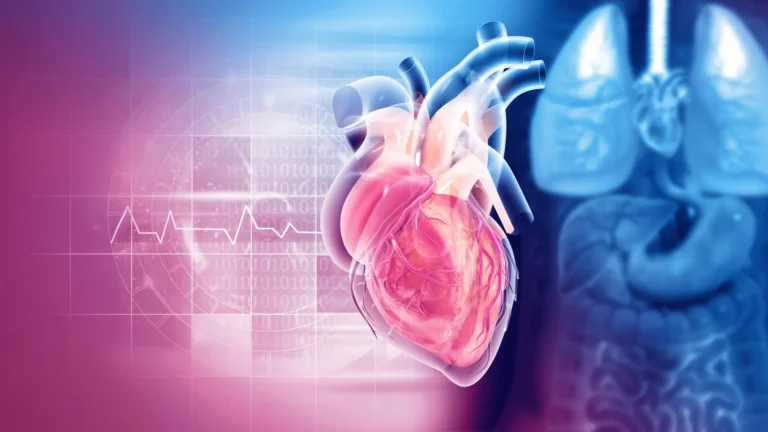
As the heart remains under the influence of inflammatory proteins, its architecture begins to shift. Researchers observed that individuals with high levels of inflammation displayed thicker heart walls, smaller cardiac chambers, and diminished filling capacity. These are not merely abstract measurements; they are the precursors to heart failure. Crucially, these changes often develop in silence, progressing for years without producing any discernible symptoms until a major cardiac event, such as a heart attack or stroke, occurs.
Chronology of a Discovery: From Data to Insight
The scale of this research allows for a robust understanding of the timeline of cardiac damage. The team utilized data from the UK Biobank, a vast repository of biological and health information from 480,000 UK residents.
Phase 1: Identifying the Marker
The researchers utilized a specific blood marker known as glycoprotein acetyls (GlycA). GlycA provides a snapshot of systemic inflammation, offering a more reliable long-term view than traditional inflammatory markers. By correlating GlycA levels with the participants’ comprehensive health profiles, the team established a baseline for how "inflamed" a population was.
Phase 2: Mapping the Structural Changes
By cross-referencing GlycA levels with high-resolution cardiac imaging, the team was able to observe the physical state of the heart. The correlation was immediate: high inflammation was statistically linked to the thickening of the heart muscle and the degradation of its efficiency.
Phase 3: The Risk Escalation
The final stage of the analysis involved tracking long-term health outcomes. The researchers found that those in the top 20% of inflammation levels faced a 43% higher risk of heart attack and stroke compared to those in the bottom 20%. This risk persisted even when accounting for traditional factors like age or existing health conditions, confirming that inflammation is an independent and dangerous predictor of cardiovascular failure.
The Convergence of Lifestyle and Biology
Perhaps the most striking takeaway from the study is the "convergence" of factors that fuel this inflammation. The researchers found that the biological damage is not merely a matter of bad luck or genetics, but is deeply intertwined with the social and psychological landscape of the individual.
Socioeconomic and Psychological Drivers
The study highlights that poverty, psychological distress, and chronic stress are not just abstract social issues; they are biological stressors. When an individual lives in a state of constant, low-grade stress—often necessitated by economic disadvantage or poor mental health—the body’s immune system is triggered, leading to that persistent state of inflammation.
The Lifestyle Component
While socioeconomic factors play a significant role, the research reinforces the impact of traditional lifestyle choices. Smoking and excess body fat are potent drivers of systemic inflammation. These behaviors act as a "force multiplier," accelerating the structural changes in the heart.
The Genetic Component
The study also identified a strong genetic component. Some individuals possess a natural resilience to the inflammatory damage caused by environmental pressures, while others are genetically susceptible. This explains why two people with similar lifestyles might experience vastly different cardiovascular outcomes. However, the researchers are quick to note that genetics is not destiny.
Official Perspectives: Translating Research into Action
The medical community has received these findings with a mix of urgency and optimism. Professor Declan O’Regan, Chair of Cardiovascular AI at Imperial College London and lead researcher, believes the findings have profound implications for preventative medicine.
"Our study suggests that millions of people could be living with hidden inflammation, which is slowly changing their heart and causing long-term damage," Professor O’Regan stated. "Chronic inflammation is complicated, but we know it’s tied to our health and driven by a range of lifestyle and economic factors."
He noted the importance of the study’s scope, adding: "The surprising thing was how much social factors and mental health are linked to inflammation and damage to the heart—as well as more well-known risk factors like smoking and inactivity."
Professor Bryan Williams, Chief Scientific and Medical Officer at the British Heart Foundation, emphasized the "darker side" of the body’s healing process. "This large-scale study found people with higher levels of inflammation experienced silent changes to the structure of their hearts," Williams remarked. "It also identifies several inflammatory proteins that appear to play a key role in the heart changes linked to chronic inflammation, and it is to be hoped that anti-inflammatory medicines could become an important tool in preventing cardiovascular disease."
Implications: A New Frontier in Cardiology
The identification of specific inflammatory proteins—namely those in the interleukin-1 and TNF families—opens a new door for therapeutic intervention. Because pharmaceutical companies are already testing drugs that target these specific proteins, the possibility of an "anti-inflammatory" approach to heart health is moving from theory to reality.
Early Detection and Intervention
The study advocates for a paradigm shift in how we assess cardiovascular risk. By integrating blood tests for inflammatory markers like GlycA with genetic risk scores, clinicians could identify "at-risk" patients years before they ever experience a symptom. This would allow for targeted, early intervention—ranging from lifestyle counseling to pharmacological support—long before the heart muscle begins to thicken or weaken.
Tackling Health Inequalities
The findings also serve as a clarion call for public health policy. If socioeconomic disadvantage is a primary driver of heart-damaging inflammation, then addressing poverty, housing, and mental health resources must be viewed as an essential component of cardiovascular care. The research proves that a patient’s heart health is intrinsically linked to the health of their community and their environment.
The Path Forward
While the study paints a sobering picture of the "silent" damage occurring in the population, it also offers a map for improvement. Inflammation is not an unchangeable state. By addressing smoking, obesity, and the systemic pressures that cause psychological distress, individuals and societies can reduce the inflammatory load on the body.
As we move toward an era of personalized medicine, these findings provide the evidence needed to treat the person, not just the symptom. The heart, it seems, is a far more sensitive instrument than we previously imagined, recording every hardship and every healthy choice in the very thickness of its walls. By listening to what this inflammation is telling us, we may finally be able to silence the architect of heart disease.