









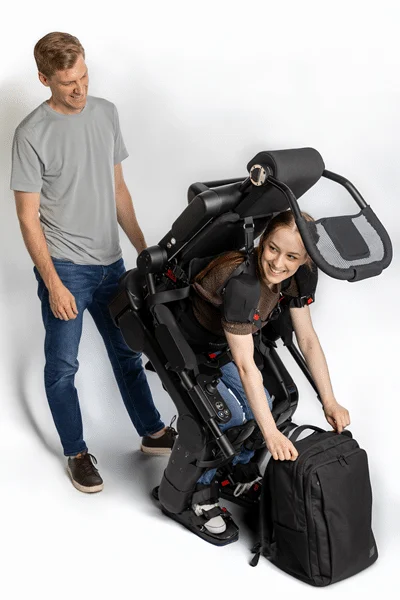
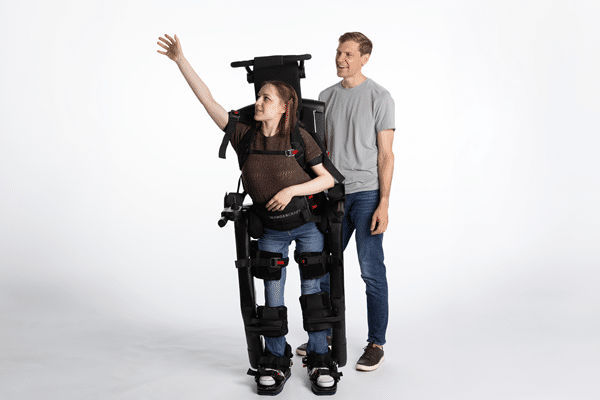
New York, NY – [Insert Date of Publication] – In a landmark development set to redefine personal mobility, Wandercraft, a leading innovator in walking robotics, has officially launched its groundbreaking Eve self-balancing personal exoskeleton for commercial availability across the United States. This marks a pivotal moment for eligible adults living with spinal cord injuries (SCI) at any neurological level, offering them the unprecedented opportunity to experience hands-free upright mobility. The Eve exoskeleton, reportedly the world’s first FDA-cleared device of its kind, leverages advanced physical AI to enable users to stand, walk, and engage in daily activities without the need for crutches or a walker, fundamentally enhancing independence and quality of life.
The announcement, celebrated at an event in New York City alongside the United Spinal Association’s 80th anniversary, signals the culmination of years of intensive research, development, and rigorous clinical testing. Wandercraft’s comprehensive approach includes a structured pathway for users, from initial clinical evaluation and trial to custom fitting, personalized training, and ongoing support. This launch not only brings a revolutionary piece of technology to market but also establishes a robust infrastructure designed to ensure widespread and equitable access for those who can benefit most.
Main Facts: A New Era of Mobility Unveiled
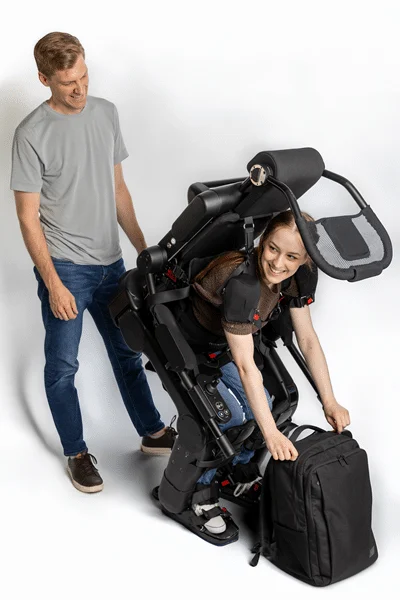
The commercial introduction of Wandercraft’s Eve exoskeleton represents a significant leap forward in assistive technology, offering a level of freedom and functionality previously unattainable for many individuals with spinal cord injuries. At its core, Eve is an intelligent, self-balancing robotic device designed to restore upright mobility and ambulation.
Unlike conventional exoskeletons that often necessitate the use of external aids such as crutches or walkers for stability, Eve integrates sophisticated physical AI to maintain balance autonomously. This crucial distinction frees the user’s hands, allowing them to perform a multitude of tasks that are integral to daily living—reaching for objects, carrying groceries, preparing meals, opening doors, and engaging in social interactions with greater ease and dignity. The ability to perform these actions unencumbered fosters a profound sense of independence and participation in the world.
A cornerstone of Eve’s revolutionary status is its FDA clearance, which uniquely extends eligibility to adults with spinal cord injuries at any neurological level. This broad criterion stands in stark contrast to previous exoskeleton technologies, which often imposed restrictions based on the severity or location of the injury. Wandercraft’s extensive safety data, robust clinical evidence, and comprehensive usability testing were instrumental in securing this expansive clearance, significantly enlarging the potential user population and democratizing access to advanced robotic assistance. The only primary requirements are the ability to safely operate the device’s controller and the absence of contraindications listed in the User Manual.
Wandercraft emphasizes that Eve is designed to complement, rather than replace, a wheelchair. It offers users a valuable additional mobility option, empowering them to choose when and how they wish to be upright. This philosophy underscores a holistic approach to mobility, recognizing that different situations call for different solutions, and providing users with greater autonomy over their movement choices. The availability of Eve promises to transform everyday moments, from the mundane to the momentous, into opportunities for renewed connection and joy, as eloquently articulated by test pilot Caroline Laubach.
The commercial rollout is supported by a multi-faceted access program, including a dedicated Wandercraft team to assist with benefits navigation, documentation, reimbursement, and coordination with clinicians and payers. Key partnerships with National Seating & Mobility (NSM), Good Shepherd Rehabilitation, and USVetServ are crucial to ensuring broad distribution, clinical expertise, and specialized support across various user demographics, including veterans.
Chronology: From Concept to Commercialization
The journey of Wandercraft’s Eve exoskeleton from an ambitious concept to a commercially available medical device in the U.S. has been a testament to relentless innovation and a deep commitment to improving human mobility.
Wandercraft, founded in France, has been at the forefront of bipedal robotics for over a decade. Their initial work focused on developing highly dynamic and stable walking robots, laying the foundational technological groundwork for devices like Eve. Prior to Eve, Wandercraft gained recognition for Atalante X, a self-balancing exoskeleton primarily used in rehabilitation centers for gait training. The experience and data gathered from Atalante X were instrumental in refining the self-balancing algorithms and user interface that would eventually define Eve.
The development of Eve specifically targeted personal, home-use applications, necessitating a focus on user-friendliness, safety, and adaptability to various daily environments. This involved years of intensive research and development, iterating on designs, refining the physical AI, and conducting extensive testing to ensure both efficacy and safety in real-world scenarios.
A critical milestone in Eve’s journey was securing FDA clearance. The process for obtaining clearance from the U.S. Food and Drug Administration is rigorous, requiring comprehensive data on safety, performance, and effectiveness. For Eve, this involved demonstrating the reliability of its self-balancing technology and the ability of users with diverse spinal cord injury levels to operate it safely and effectively. The FDA’s decision to clear Eve without neurological level restrictions was a significant validation of Wandercraft’s meticulous development and testing protocols, signaling the device’s readiness for a broader market.
Following FDA clearance, Wandercraft pivoted towards establishing the necessary commercial infrastructure for a U.S. launch. This included forging strategic partnerships for distribution, developing comprehensive user support programs, and defining the clinical and logistical pathways for individuals to access the device.
The commercial launch itself begins with an initial clinical evaluation, where eligible individuals undergo a thorough assessment to determine their suitability for Eve. This is followed by a trial period, allowing prospective users to experience the device firsthand under guided supervision. Upon successful completion of the trial and a physician’s order, an Eve unit is custom-fitted and manufactured to the individual’s specific physiological requirements. The final stage before delivery involves a personalized training program conducted by the Wandercraft team, ensuring users are proficient and comfortable with the device. Post-delivery, Wandercraft provides ongoing support, underscoring their commitment to long-term user success and satisfaction.
The celebratory launch event in New York City served not just as an announcement but as a powerful demonstration of Eve in action, bringing together key stakeholders from the SCI community, healthcare, and technology sectors to witness the dawn of a new era in personal mobility.
Supporting Data: The Science Behind Hands-Free Mobility
The innovation underpinning Wandercraft’s Eve exoskeleton is deeply rooted in advanced robotics and sophisticated control algorithms, specifically its "physical AI" self-balancing technology. This feature distinguishes Eve from earlier generations of exoskeletons, which often relied on the user’s upper body strength, crutches, or a walker to maintain stability. The physical AI system dynamically adjusts the exoskeleton’s posture and movements in real-time, mimicking human balance mechanisms to prevent falls and provide a stable platform for upright mobility. This frees the user’s hands, fundamentally changing the user experience and enabling a much broader range of functional activities.
The expanded eligibility criteria for Eve, encompassing adults with spinal cord injuries at any neurological level, is a direct result of the extensive safety data, clinical evidence, and usability testing conducted by Wandercraft. Previously, many exoskeletons were restricted to individuals with lower-level spinal cord injuries who retained significant trunk control or leg function. Eve’s design and control system, however, allow it to compensate for varying degrees of motor impairment, thereby opening access to individuals with tetraplegia (quadriplegia) and high paraplegia, who traditionally faced the most significant barriers to upright ambulation. This inclusivity represents a monumental shift in assistive technology, ensuring that more people can potentially benefit from exoskeleton use.
The commercial launch of Eve is further bolstered by recent peer-reviewed research, providing robust scientific validation for its personal use. Two key studies underscore its efficacy and safety:
-
Journal of Visualized Experiments (JoVE) Publication: This study investigated the feasibility of training individuals with tetraplegia and high paraplegia, along with their companions, to use a self-balancing exoskeleton for personal use. Conducted at Kessler Foundation and the James J. Peters VA Medical Center, the research focused on practical, real-world application. Among the initial 16 participants, all successfully achieved the study’s performance goals for standardized mobility assessments, including the Timed Up and Go (a measure of functional mobility) and the 6-Minute Walk Test (a measure of endurance). Significantly, 15 out of 16 participants achieved the donning goal (putting on the device) after just four training sessions, and all achieved the doffing goal (taking off the device). Crucially, the researchers reported no serious adverse events among the participants who completed the protocol, highlighting Eve’s safety profile during the training and use phases. This research is vital as it demonstrates that even individuals with high-level SCI can be effectively trained to use such a sophisticated device for personal, rather than just clinical, purposes.
-
Academy of Spinal Cord Injury Professionals (ASCIP) Annual Meeting Presentation: Findings presented at the ASCIP Annual Meeting further reinforced Eve’s capabilities. This research, derived from Wandercraft’s pivotal study at the James J. Peters VA Medical Center and Kessler Foundation, involved 16 participant pairs. The results conclusively showed that Eve safely supported hands-free assisted walking for people with spinal cord injury, maintaining a low adverse-event rate. Beyond basic ambulation, participants successfully performed key mobility tasks and activities of daily living. Importantly, the study also reported high perceived safety, strong user satisfaction, and ease of training among participants, indicating a positive user experience alongside clinical efficacy.
Dr. Gail Forrest, PhD, director of the Tim and Caroline Reynolds Center for Spinal Stimulation at Kessler Foundation, underscored the significance of this research: "What is important about this work is that we evaluated more than whether someone could stand or walk in an exoskeleton. We examined whether people with high-level spinal cord injuries and their companions could learn to use a self-balancing exoskeleton and perform functional tasks relevant to personal use. Commercial availability is an important next step toward translating that clinical work into carefully supported use in everyday life." Her statement highlights the paradigm shift from merely enabling movement to facilitating genuine functional independence and integration into daily life. These scientific validations are critical in establishing Eve’s credibility and reassuring both users and healthcare providers about its potential benefits and safety.
Official Responses: Vision, Accessibility, and Impact
The commercial launch of Wandercraft’s Eve exoskeleton has been met with enthusiastic responses from the company’s leadership, a pioneering user, and strategic partners, all emphasizing the device’s transformative potential and the comprehensive support system designed to ensure its accessibility.
Matthieu Masselin, co-founder and CEO of Wandercraft, articulated the company’s long-term vision and commitment to its users: “FDA clearance showed that Eve was ready to move forward. Today is about making it a reality for the people we built it for. We have spent years developing the robotics, but our breakthroughs only matter when we’re able to better connect people to the world around them. That’s why we built an infrastructure that supports people every step of the way, from evaluation and fitting to reimbursement, training, and ongoing service.” Masselin’s statement underscores Wandercraft’s holistic approach, recognizing that the technology itself is only one part of the solution; robust support, accessibility, and a seamless user journey are equally critical for real-world impact. His emphasis on "connecting people to the world around them" highlights the profound social and psychological benefits of renewed mobility.
The personal impact of Eve is powerfully conveyed by Caroline Laubach, a Wandercraft test pilot, whose testimonial resonates with the lived experience of individuals with spinal cord injuries: “With Eve, being upright isn’t just about standing. It’s about having the freedom to use my hands, move through my home, and connect with people in a new way. Those everyday moments bring me so much joy. What makes this milestone especially meaningful is knowing that more people will now have the chance to experience Eve for themselves and find that same joy in their own way.” Laubach’s words encapsulate the essence of Eve’s promise: not merely physical movement, but the restoration of autonomy, dignity, and the simple pleasures of daily life that many take for granted. Her experience as a test pilot lends authenticity and a human face to the technological breakthrough.
To ensure broad access, Wandercraft has established a dedicated access team tasked with navigating the often-complex landscape of benefits, documentation, reimbursement, and financing. This team coordinates closely with clinicians and payers, simplifying the process for prospective users. Crucially, for eligible individuals who meet medical necessity requirements, Medicare provides coverage for qualifying personal exoskeletons as custom-fitted orthoses under HCPCS billing code K1007. This established reimbursement pathway is vital for making such advanced technology financially viable for a wider population, subject to individual coverage requirements.
Strategic partnerships are central to Wandercraft’s distribution model. National Seating & Mobility (NSM), a leader in Complex Rehabilitation Technology (CRT), has been designated as Wandercraft’s exclusive CRT distribution partner for Eve. With a network of over 180 locations, NSM will play a critical role in facilitating evaluation, education, access, and delivery. CRT providers like NSM are instrumental in connecting users with clinicians, Assistive Technology Professionals, and other specialists, providing the individualized support necessary to transition a sophisticated mobility device from prescription to personal use.
Good Shepherd Rehabilitation, a recognized Wandercraft Center of Excellence, will further expand access in Pennsylvania’s Lehigh Valley. Having developed deep expertise with Wandercraft’s Atalante X, Good Shepherd will now serve as the exclusive Eve partner in the region, offering clinical support and allowing eligible users to experience the technology at their Hyland Center. This regional hub model is expected to be replicated with additional access locations in the future.
Furthermore, USVetServ, a Service-Disabled Veteran-Owned Small Business, has been appointed as an authorized independent distributor for both Eve and Atalante X for the U.S. Department of Veterans Affairs (VA), its medical centers, and other VA facilities nationwide. This partnership ensures that veterans, a demographic often disproportionately affected by spinal cord injuries, will have dedicated access to this life-changing technology. These collaborations underscore Wandercraft’s commitment to a multi-channel approach to ensure that Eve reaches all who can benefit, supported by expert clinical and logistical infrastructure.
Implications: Reshaping the Landscape of Assisted Mobility
The commercial launch of Wandercraft’s Eve exoskeleton carries profound implications that extend far beyond individual users, promising to reshape the landscape of assisted mobility, healthcare delivery, and societal perceptions of disability.
1. Enhanced Independence and Quality of Life: For individuals with spinal cord injuries, Eve represents a significant leap towards greater independence. The ability to stand and walk hands-free allows for more active participation in daily life, both within the home and in community settings. This includes mundane yet crucial tasks like cooking, cleaning, and reaching high shelves, as well as more enriching activities like engaging in eye-level conversations, participating in social events, and pursuing hobbies. The psychological benefits are immense, fostering improved self-esteem, reduced feelings of isolation, and a greater sense of autonomy. This shift from reliance on others to increased self-sufficiency can dramatically enhance overall quality of life.
2. Broader Accessibility and Inclusivity: The FDA clearance without restrictions based on the neurological level of spinal cord injury is perhaps one of Eve’s most revolutionary aspects. This dramatically expands the population eligible for exoskeleton use, including individuals with high-level tetraplegia who were previously excluded from such technologies due to limitations in trunk control or upper body strength required for crutch-assisted systems. This inclusivity challenges existing paradigms in assistive technology, advocating for solutions that cater to a wider spectrum of needs and complexities within the SCI community. It sets a new benchmark for future device development, emphasizing comprehensive accessibility.
3. Evolution of Rehabilitation and Personal Care: Eve’s design as a complementary device to wheelchairs signifies a more holistic and integrated approach to mobility care. It acknowledges that no single device can meet all needs, but rather a suite of options empowers users to choose the most appropriate tool for any given situation. This could lead to evolving rehabilitation protocols, incorporating personal exoskeleton training earlier or more extensively, and focusing on functional tasks relevant to home and community environments rather than just gait parameters. For personal care, the ability for users to perform more self-care tasks can reduce the burden on caregivers, fostering a more equitable and sustainable care model.
4. Economic and Societal Impact: While not explicitly detailed, increased independence for individuals with SCI can have significant economic benefits. Reduced reliance on extensive personal assistance, potentially fewer secondary health complications associated with prolonged sitting (e.g., pressure sores, cardiovascular issues), and greater participation in educational or vocational activities could lead to substantial healthcare cost savings and increased economic contributions. On a broader societal level, the visibility of individuals using advanced assistive technologies like Eve can help destigmatize disability, promote greater understanding, and encourage the design of more inclusive public spaces and services.
5. Advancements in Robotics and AI in Healthcare: Eve’s success with self-balancing physical AI pushes the boundaries of robotics in healthcare. It demonstrates the practical application of complex AI algorithms in dynamic, unpredictable human environments, paving the way for further innovations in prosthetics, orthotics, and other assistive devices. The data gathered from Eve users in real-world settings will undoubtedly feed back into research and development, accelerating the next generation of intelligent assistive technologies.
6. Importance of Support Infrastructure: Wandercraft’s emphasis on a robust support system—including access teams, reimbursement navigation, and partnerships with CRT providers and rehabilitation centers—highlights a critical lesson for the med-tech industry. Introducing groundbreaking technology requires an equally robust framework for adoption, training, and ongoing service. This model ensures that the promise of the technology translates into tangible, long-term benefits for users.
The celebratory launch event in New York City, co-hosted with the United Spinal Association, was not just a commercial announcement but a symbolic moment. It brought together diverse stakeholders – individuals living with SCI, clinicians, researchers, disability advocates, policymakers, and industry leaders – to witness and champion a future where advanced robotics empowers greater freedom and inclusion. Eve represents more than just a device; it embodies hope, progress, and a profound commitment to human potential.
To learn more about Eve or request an evaluation, interested individuals can visit Wandercraft’s dedicated online form at: https://www.wandercraft.eu/form. This accessibility point ensures that the journey towards hands-free upright mobility is clear and actionable for those ready to embrace this transformative technology.