





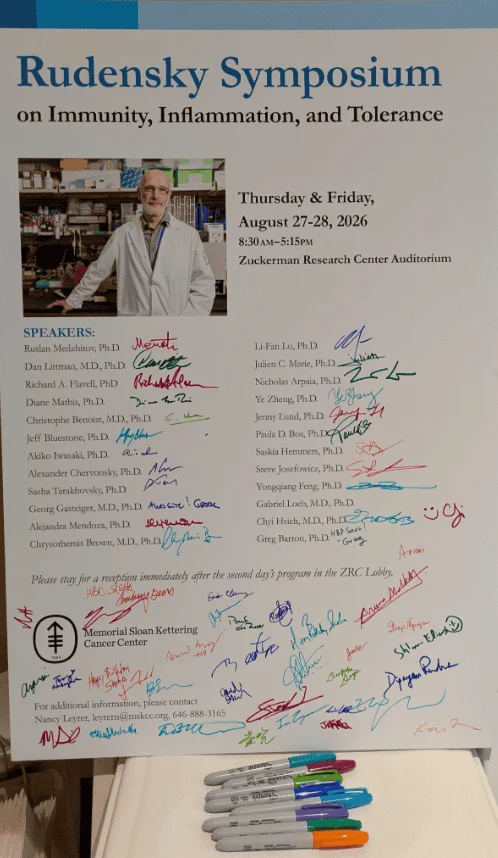
On August 27–28, 2026, the scientific community gathered not merely for a conference, but for a celebration of a career that has redefined our understanding of the immune system. The Rudensky Symposium on Immunity, Inflammation, and Tolerance, held in honor of the 70th birthday of Dr. Alexander “Sasha” Rudensky of the Memorial Sloan Kettering Cancer Center, served as a poignant reminder that the most profound breakthroughs in medicine are rarely solitary endeavors. They are the result of decades of mentorship, rigorous debate, and the persistent pursuit of fundamental biological questions.
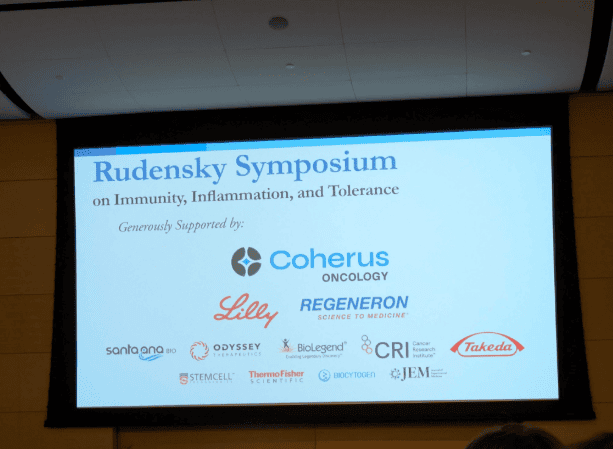
The Cancer Research Institute (CRI) was honored to support this milestone event. For over two decades, CRI has championed Dr. Rudensky’s pioneering work, a partnership that has seen more than a dozen CRI-funded fellows pass through his laboratory to become the next generation of scientific leaders.
The Foundation of a Scientific Legacy
Dr. Rudensky’s influence on immunology is foundational. In 2015, he was awarded the CRI William B. Coley Award for his groundbreaking identification and characterization of regulatory T cells (Tregs). These cells act as the "brakes" of the immune system, preventing the collateral damage of autoimmunity while maintaining the delicate balance required for healthy tissue function.
The symposium served as a convergence point for former trainees, collaborators, and colleagues whose professional relationships span decades. By weaving together technical presentations on tissue repair, the microbiome, and tumor microenvironments with personal anecdotes of mentorship, the event illustrated a vital truth: scientific progress is inseparable from the people who drive it. The atmosphere was one of intellectual rigor softened by genuine camaraderie, reflecting a career built on the belief that fostering talent is as important as conducting the research itself.
Chronology of a Two-Day Intellectual Exchange
Day One: The Mechanics of Balance
The first day of the symposium focused on the "basic science of balance." Speakers explored how immune cells function as the body’s internal maintenance crew, a concept that predates the development of cancer but is central to its eventual emergence.
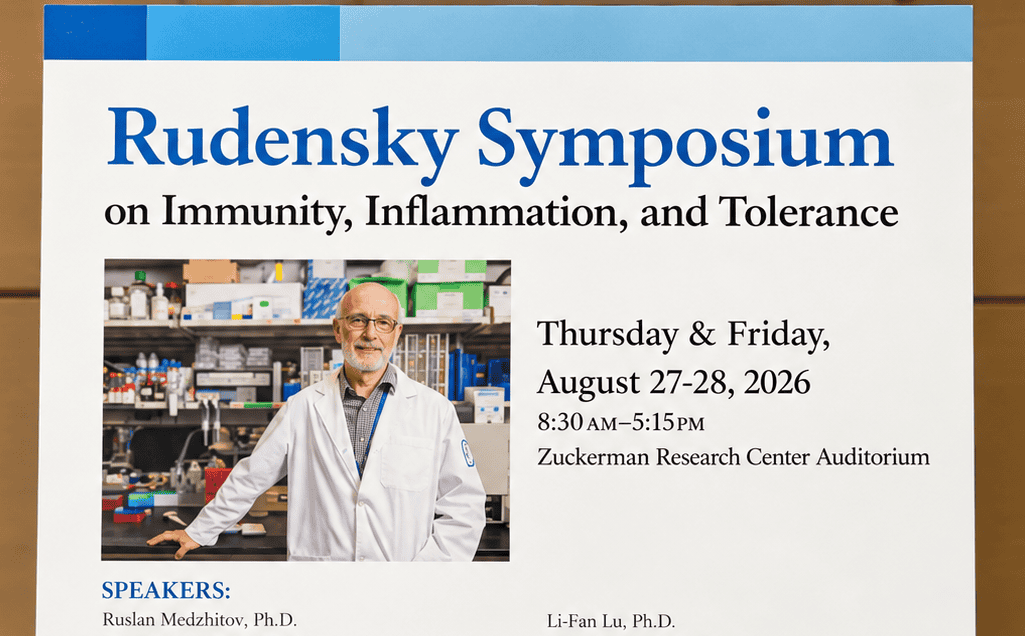
- Ruslan Medzhitov, PhD (2003 CRI Coley Awardee): Dr. Medzhitov shifted the perspective of the audience, describing stressed cells that recruit macrophages to clear damaged protein "garbage." This framing repositioned immune cells as essential stewards of tissue health, rather than just sentinels against external pathogens.
- The Regulatory T Cell Revolution: Diane Mathis, PhD, and Christophe Benoist, MD, PhD (both 2024 CRI Coley Awardees), presented compelling evidence that Tregs possess specialized functions beyond simple suppression. Dr. Mathis detailed how specific Treg populations facilitate muscle repair and scarring regulation, while Dr. Benoist highlighted how the molecular targets recognized by a Treg dictate its unique identity and therapeutic potential.
Day Two: From Prevention to Intervention
The second day transitioned toward the application of these fundamental insights to the complex landscape of oncology.
- Early Immunosurveillance: Richard A. Flavell, PhD (2012 CRI Coley Awardee), presented work on the earliest stages of cancer, specifically in the gut. By observing intestinal stem cells harboring BRAF mutations, his team demonstrated that the immune system acts as a filter, eliminating many mutant cells before they ever form a visible tumor.
- Inflammatory Plasticity: Julien C. Marie, PhD, explored the link between chronic inflammation and malignancy. His research showed that by manipulating the TGF-β signaling pathway, inflammatory cells like Th17 could be pushed toward—or pulled back from—a state of oncogenic potential, offering a glimmer of hope that even "bad" inflammation might be reversible.
Supporting Data: The Interconnected Ecosystem of Cancer
The symposium made it clear that cancer does not exist in a vacuum. It relies on a "wider ecosystem" of cells, tissues, and systemic signals.
The Microbiome and Systemic Immunity
Dan Littman, MD, PhD (2016 CRI Coley Awardee and CRI SAC member), bridged the gap between gastroenterology and oncology. His preclinical data illustrated how the gut microbiome influences the efficacy of checkpoint immunotherapy. The implications are profound: an immune response cultivated in the intestine can determine the outcome of a tumor response elsewhere in the body.
The Tumor Microenvironment
Paula D. Bos, PhD, provided a vivid illustration of how Tregs influence breast cancer metastasis. By temporarily depleting Tregs in mouse models, her team observed a shift in macrophages toward a tumor-fighting phenotype. Furthermore, this manipulation disrupted the collagen scaffolding that tumor cells use as a "highway" to migrate, leading to a significant reduction in metastatic disease.
Nicholas Arpaia, PhD, extended this narrative by identifying specific fibroblast populations that recruit Tregs to the site of lung tumors. His collaboration with CRI Lloyd J. Old STAR Tal Danino, PhD, using engineered bacteria to deliver localized therapy, represents the cutting edge of "precision immunotherapy"—concentrating the treatment exactly where the cancer hides.
Official Perspectives: The CRI Commitment
CRI’s participation in the symposium reflects a long-term strategic commitment to basic immunology. The institute has long operated under the premise that we cannot successfully "harness" the immune system against cancer until we fully understand its native mechanisms.
"The Rudensky Symposium was a microcosm of everything CRI stands for," said a representative from the Institute. "It is not just about the final drug or the clinical trial. It is about the fundamental questions—how cells talk to each other, how they maintain tissue homeostasis, and how they fail. By funding the science and the people, we are ensuring that the ripples of today’s basic research become tomorrow’s cures."
Implications: The Future of Precision Prevention
The synthesis of these talks suggests a fundamental shift in how we approach cancer therapy. For decades, the focus was on the "kill" phase: identifying a tumor and eradicating it. The new frontier, informed by the work presented by Dr. Rudensky and his colleagues, is the "maintenance" phase.
Key Takeaways for Future Research:
- Immune Restraint is a Double-Edged Sword: Precision is key. Too much restraint leads to tumor escape, while too little leads to autoimmune catastrophe. Future therapies must find the "Goldilocks zone."
- Early Intervention: If the immune system is already performing surveillance on mutant stem cells, can we boost that innate ability before a tumor ever forms? This could usher in a new era of cancer prevention.
- Holistic Treatment: We must stop treating tumors as isolated entities. By manipulating the "neighborhood"—the fibroblasts, the collagen, the microbiome, and the macrophages—we can make the environment hostile to cancer without needing to deploy systemic, toxic agents.
A Legacy Written in People
The symposium concluded with a moving display: a poster board signed by "Dr. Rudensky’s Research Family." It served as a visual representation of a career that has spanned generations. The trainees who once sat in his lab are now the principal investigators directing their own labs, teaching their own students, and pushing the boundaries of what is known about the immune system.
The "ripple effect" mentioned by attendees was palpable. Dr. Rudensky’s career serves as a testament to the fact that scientific brilliance is amplified by mentorship. In a field often driven by the pursuit of the next big breakthrough, the Rudensky Symposium reminded the scientific community that the most important element of any discovery is the human connection that allows it to flourish. As the conference closed, it was clear that while the celebration was for a 70th birthday, the work itself—the relentless pursuit of understanding how we stay healthy and how we succumb to disease—is only just reaching its most exciting phase.