BRUSSELS, 17 September 2026 – In a landmark decision that promises to reshape the landscape of chronic disease management across the continent, Members of the European Parliament (MEPs) have officially adopted the Public Health Committee’s comprehensive report on cardiovascular diseases (CVD). This legislative milestone signals a paradigm shift in European health policy, moving away from fragmented, siloed approaches toward a holistic, integrated strategy for tackling non-communicable diseases (NCDs).
The report, which acts as a robust response to the European Commission’s Safe Hearts Plan, underscores the necessity of prioritizing prevention, early detection, and interdisciplinary care pathways. For organizations like the European Respiratory Society (ERS), the vote represents a significant victory for the "co-morbidity" approach, acknowledging that the health of the heart and the lungs are inextricably linked.
1. Main Facts: The Core of the Legislative Shift
The adopted report serves as a policy blueprint designed to curb the prevalence of cardiovascular conditions, which remain the leading cause of mortality across the European Union. By recognizing that patients rarely present with single, isolated pathologies, the Parliament is mandating a shift toward "integrated care."
The key pillars of the report include:
- Preventative Prioritization: Moving upstream to address lifestyle factors and environmental determinants before chronic conditions manifest.
- Integrated Screening: A move toward "multi-morbidity" screening protocols where respiratory health is no longer treated as a separate domain but as an essential component of cardiovascular check-ups.
- Addressing Inequities: A targeted focus on the social and economic inequalities that dictate health outcomes across different EU Member States.
- The "Safe Hearts" Framework: Utilizing the European Commission’s Safe Hearts Plan to standardize diagnostic and treatment pathways from primary care through to rehabilitation.
2. Chronology: The Road to Adoption
The path to this week’s vote was paved by years of advocacy, clinical research, and shifting epidemiological data.
- Early 2025: The European Commission introduces the Safe Hearts Plan, a high-level strategic document aimed at reducing the burden of cardiovascular disease. While the plan was hailed for its ambition, medical societies, including the ERS, identified a critical gap: the lack of formal recognition for respiratory comorbidities.
- Mid-2025: The European Parliament’s Public Health Committee begins deliberations. Experts are invited to provide testimony on the biological links between heart and lung health, specifically the impact of COPD and sleep apnoea on cardiac performance.
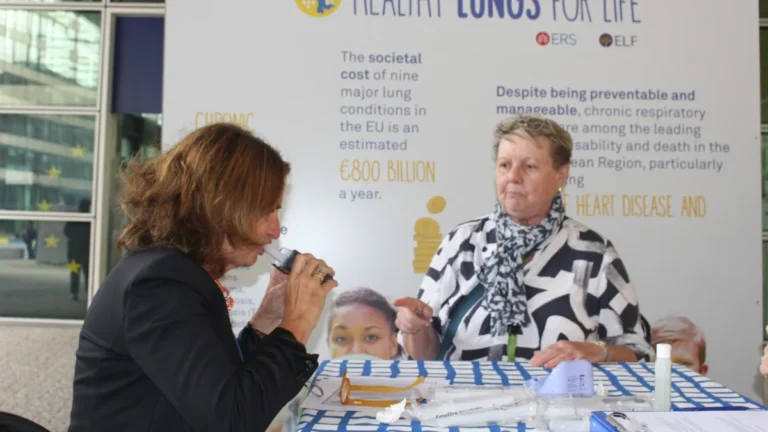
- Late 2025 – Early 2026: Throughout the EU Screening Week initiatives, medical professionals across the bloc conduct pilot testing events. These events provide the "real-world" data required to demonstrate that adding simple lung function tests to standard heart checks increases diagnostic efficacy.
- June 2026: The Committee finalizes the report, integrating recommendations from the ERS and other stakeholders to ensure that respiratory health is explicitly mentioned as a primary cardiovascular comorbidity.
- 17 September 2026: The full European Parliament votes to adopt the report, transforming it into a formal parliamentary stance that will guide upcoming Commission directives.
3. Supporting Data: The Biological and Clinical Necessity
The scientific rationale behind the Parliament’s decision is rooted in the high prevalence of co-occurring conditions. According to clinical data frequently cited by the ERS, a significant percentage of patients presenting with cardiovascular distress also suffer from undiagnosed or sub-optimally managed respiratory issues.
The Heart-Lung Axis
Cardiovascular and respiratory systems share a common physiological dependence. Chronic Obstructive Pulmonary Disease (COPD), for instance, increases systemic inflammation and oxidative stress, both of which are major drivers of atherosclerosis and heart failure. Similarly, obstructive sleep apnoea (OSA) creates intermittent hypoxia, which puts immense strain on the cardiovascular system, increasing the risk of arrhythmias and hypertension.
The Economic Burden
The economic argument for integration is equally compelling. NCDs account for approximately 80% of healthcare spending in Europe. By failing to detect respiratory issues early, the current system forces patients into emergency settings when conditions reach crisis levels. Integrated screening—specifically the inclusion of spirometry and sleep health assessments during heart-risk screenings—could potentially reduce hospital readmission rates by an estimated 15-20% over a five-year period, according to recent parliamentary projections.
4. Official Responses: A Unified Voice for Policy
The reception from the scientific community has been overwhelmingly positive. The adoption of the report is seen as a validation of the "One Health" approach to non-communicable disease.
Raquel Duarte, ERS Director of Scientific Affairs to the EU, issued a formal statement following the vote:
"This vote by the European Parliament marks an important step towards strengthening cardiovascular and respiratory health together. The Safe Hearts Plan provides a valuable framework for addressing cardiovascular disease, and importantly its comorbidities and precursors across the entire health pathway—from prevention and early detection to treatment and rehabilitation."
Duarte emphasized that the focus on COPD and the mitigation of risk factors is a vital inclusion. "We particularly welcome the strong focus on prevention, COPD and on addressing the risk factors and inequalities that continue to shape cardiovascular health outcomes across Europe," she noted.
However, the ERS remains pragmatic about the work ahead. Duarte added: "The next step now is to ensure that the Safe Hearts Plan translates into clear and effective measures across the EU with the cooperation between European institutions, Member States, the scientific community, healthcare professionals, patients and civil society."
5. Implications: What This Means for Europe
The adoption of this report is not merely a symbolic gesture; it creates a mandate for legislative and clinical change that will ripple through EU healthcare systems over the next decade.
Implications for Clinical Practice
Primary care physicians and cardiologists will likely see new guidelines emerging that require the integration of respiratory screenings. This will necessitate a move toward "One-Stop-Shop" health centers, where a patient visiting for a blood pressure check or cholesterol screening is also assessed for lung capacity and potential obstructive sleep issues.
Implications for EU Member States
Member States will be encouraged—and in some cases, incentivized through funding programs—to update their national health strategies to align with the Parliament’s report. This will involve:
- Workforce Training: Educating primary care staff on the cross-disease symptoms of heart-lung conditions.
- Digital Integration: Updating electronic health records to allow for better data sharing between cardiovascular and respiratory departments.
- Public Awareness: Launching pan-European campaigns to educate the public on the links between heart health, smoking, air quality, and respiratory function.
A Holistic Future
Perhaps the most significant implication is the cultural shift within European medicine. By moving away from the "organ-specific" approach, the EU is positioning itself as a global leader in the management of chronic disease. This holistic model acknowledges that the human body is a system of interconnected networks, not a collection of isolated parts.
As the implementation phase begins, the success of the Safe Hearts Plan will depend on the collaborative spirit highlighted by Dr. Duarte. The integration of respiratory function assessment into cardiovascular pathways is not just a scientific recommendation; it is an essential evolution of modern medicine.
For patients across Europe, this legislative shift offers the promise of a more proactive healthcare system—one that catches life-altering conditions before they become critical, and one that treats the whole patient rather than just the symptom.
Further Reading
For those interested in the technical specifics of the integration pathways, the ERS and European Lung Foundation advocacy archives provide extensive documentation on the clinical data supporting these policy changes. As the Commission begins the process of turning these parliamentary recommendations into actionable EU law, the eyes of the medical community remain firmly fixed on Brussels, anticipating a future where cardiovascular and respiratory health are managed as two sides of the same vital coin.