









For over two decades, the discourse surrounding human freedom has been dominated by debates over policy, taxation, and political representation. Yet, a more fundamental reality has been systematically overlooked: the degree of one’s liberty is directly proportional to the degree of one’s dependency. In an era of globalized, centralized supply chains, food sovereignty has transitioned from a lifestyle preference to a critical survival strategy. It is the assertion that the right to sustain oneself is not a privilege granted by a zoning commission, an HOA board, or a government agency, but a primary human mandate.
The Structural Pillars of Modern Dependency
The modern citizen exists within a web of "chokepoints"—centralized systems of food, currency, and information. These three pillars, when consolidated under the control of a handful of institutions, function as a mechanism of social control. When the flow of nutrition, the medium of exchange, and the access to knowledge are all gated by external entities, the individual is effectively stripped of the status of "citizen" and relegated to that of a "subject."
This system is inherently fragile. Modern supermarkets are not robust, localized hubs; they are merely the terminal ends of precarious global supply chains. These logistics rely on narrow straits, congested ports, and energy pipelines that can be disrupted by minor geopolitical tremors or artificial scarcity. The scarcity observed globally today is, in many cases, not a market failure but an engineered byproduct of elite-driven agendas that prioritize population management over individual flourishing.
Chronology of the Shift: From Consumer to Producer
The journey toward food sovereignty is marked by a specific psychological and logistical evolution:
- The Awakening: The individual recognizes that the grocery store is a vulnerable dependency rather than a permanent fixture. This phase often begins with disaster preparedness, such as securing water filtration and modest food reserves.
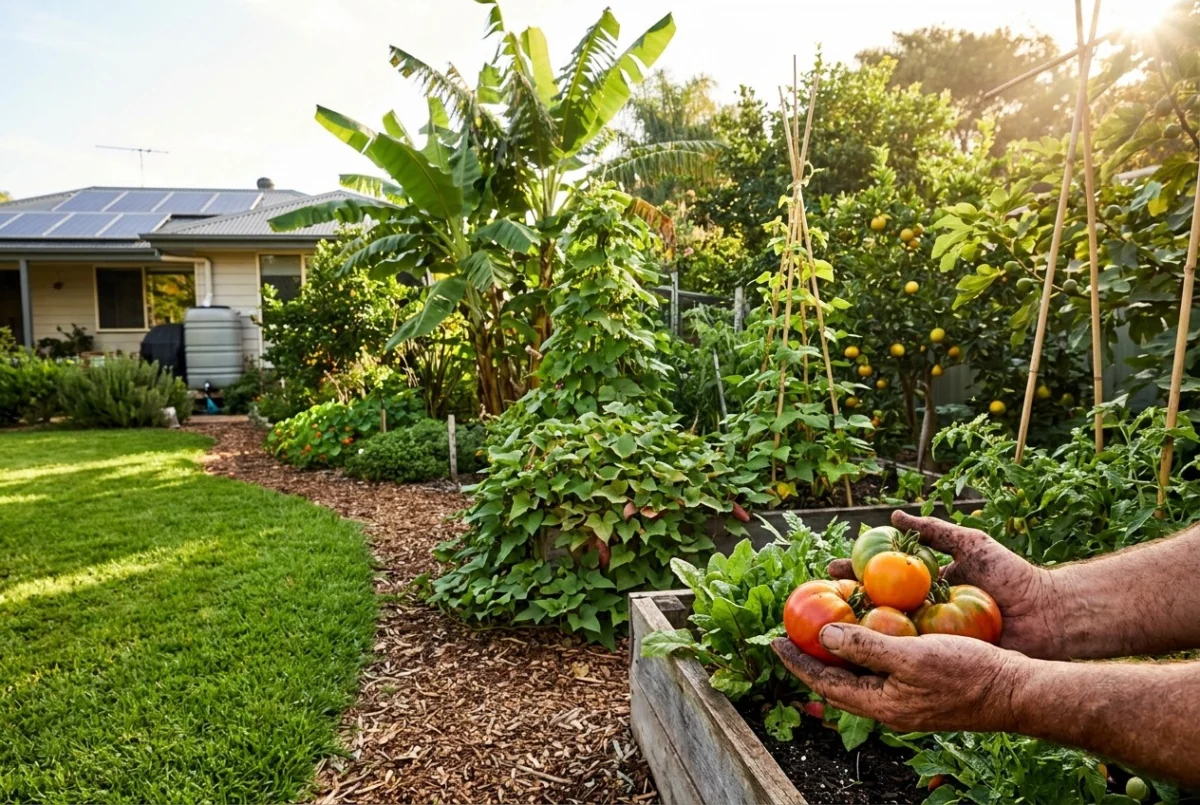
- The Pilot Phase: The transition from "consumer" to "producer" starts small—a balcony tomato plant, a windowsill herb garden, or a small composting bin. This is the moment the psychological bond with the industrial system begins to fracture.
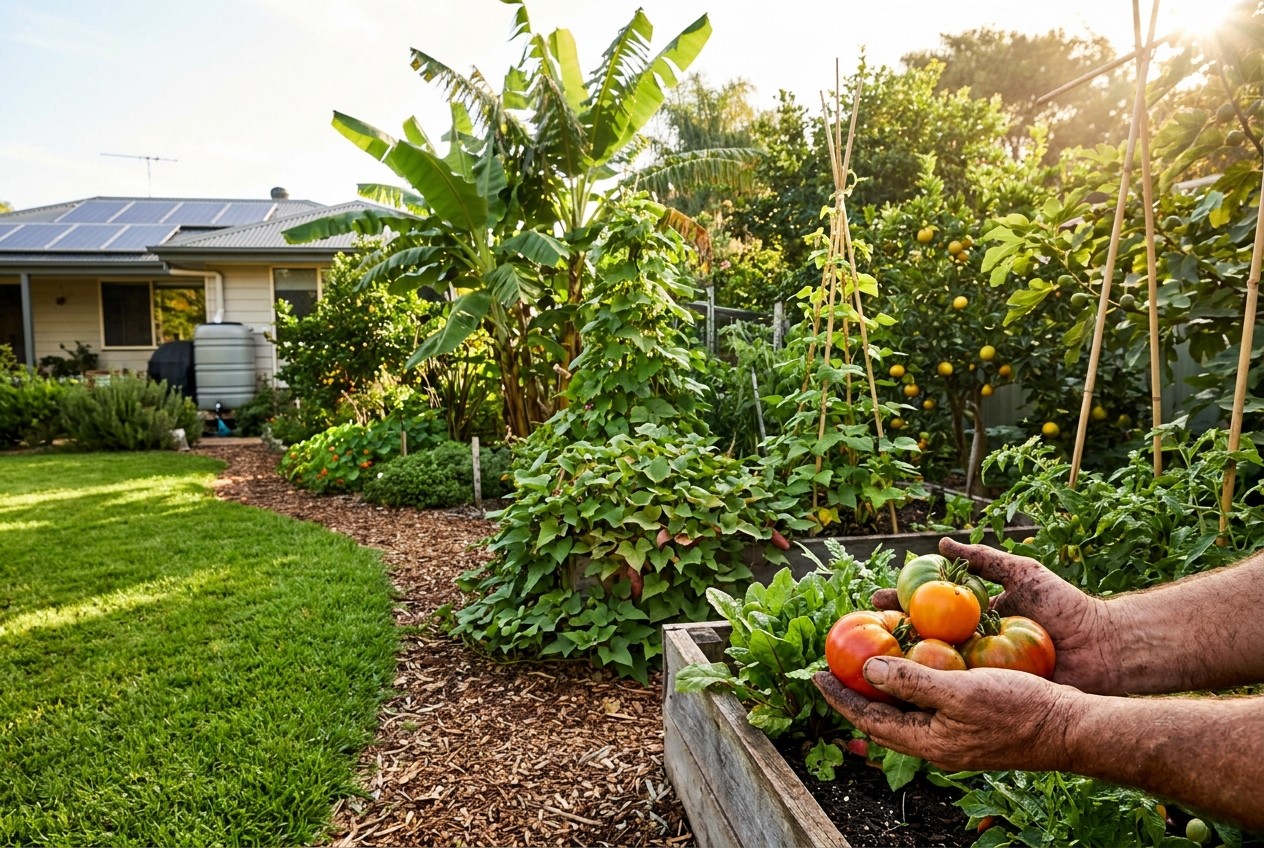
- The Permaculture Integration: Scaling up requires moving beyond traditional gardening into regenerative, closed-loop permaculture. This involves mimicking natural ecosystems to produce high-yield, nutrient-dense food with minimal chemical inputs.
- The Advocacy Stage: As seen in the work of practitioners like Todd Pitner, the final stage involves challenging institutional barriers, such as restrictive HOA guidelines, to formalize the right to cultivate land as a fundamental expression of property rights.
Supporting Data: Resilience Through Design
Evidence from high-yield, biointensive agricultural methods proves that abundance does not require vast acreage. The 19th-century Parisian market gardeners, for instance, fed a dense metropolis using double-dug raised beds and meticulous composting. This "biological infrastructure" is scalable.
Todd Pitner’s "Galt’s Landing"—a 42-acre food forest in Central Florida—serves as a primary case study. Despite navigating extreme weather events including hurricanes and freezes, the property remains a highly productive, self-sustaining ecosystem. The data is clear: resilience is found in the design of the system, not in the favor of the weather. By building "biological infrastructure," homesteaders turn marginal land into resilient assets.
Furthermore, the integration of decentralized information—such as open-source, offline-capable AI models and localized seed banks—ensures that the knowledge required to maintain these systems is not subject to digital censorship or grid failure. By decentralizing the "seed bank of the mind," individuals secure their ability to problem-solve, diagnose crop diseases, and build shelter without needing institutional validation.
Official Responses and Institutional Friction
The push for food sovereignty often encounters significant friction from Homeowners Associations (HOAs) and municipal zoning boards. These entities frequently invoke aesthetic or uniformity codes to prohibit food production. However, successful legal challenges demonstrate that when homeowners are armed with factual, scientific data regarding permaculture and property rights, the "aesthetic" argument often collapses.
Critics of self-reliance—often backed by processed-food lobbies—argue that industrial agriculture is the only way to feed the masses. Yet, this argument ignores the "hidden" costs of industrial products: the depletion of soil health, the reliance on chemical fertilizers, and the proliferation of chronic degenerative diseases. The industrial model prioritizes shelf life and corporate profit margins, whereas regenerative systems prioritize nutrient density and local health outcomes.
The Economic Necessity of Honest Money
Food sovereignty cannot exist in a vacuum; it must be supported by economic sovereignty. An individual may successfully cultivate a food forest, but they remain vulnerable if their financial life is tethered to a collapsing fiat system.
The strategy proposed by proponents of decentralized independence is a "many-legged stool." This includes:
- Hard Assets: Physical gold and silver as a hedge against inflation.
- Private Digital Assets: Bitcoin and other decentralized currencies as a tool for financial agency, separate from the Federal Reserve’s inflationary policies.
- Local Systems: Structuring one’s household economy to minimize debt and maximize investment into productive land.
The objective is to avoid the "extraction trap," where individuals surrender their surplus to systems designed to strip them of their wealth. By reclaiming financial control, the individual buys the time and space required to build true independence.
Implications: The Moral and Strategic Imperative
The implications of this movement are profound. Decentralization is not merely a hobby; it is a strategic response to a world that has proven it will use hunger as a weapon. When an individual achieves food sovereignty, they stop being a liability to their community and become an asset. They gain the capacity to assist neighbors during supply chain disruptions, thereby strengthening the local social fabric.
The "Independence Planter" philosophy is simple: start where you are, with what you have. Whether it is a single window box in an apartment or a large-scale permaculture project, the decision to produce is an act of defiance against a system that relies on your helplessness.
Key Takeaways for the Aspiring Independent:
- Knowledge is Decentralized: Utilize open-source tools and offline libraries to ensure access to critical survival skills remains unencumbered by corporate gatekeepers.
- Start Small, Scale Smart: Focus on high-return activities like sprouting, composting, and seed saving.
- Defend Your Rights: Treat property restrictions not as insurmountable obstacles, but as legal hurdles that can be cleared with research, conviction, and proper documentation.
- Build the Stool: Balance your efforts between food production, financial security, and the acquisition of practical, hands-on skills.
As global systems continue to show signs of volatility, the shift toward self-reliance is not just a trend—it is a necessary evolution for those who value personal liberty. The centralized systems that govern modern life are inherently fragile. By reclaiming the means of production—starting with the very food on our plates—individuals are building the only foundation of security that cannot be shuttered by a bureaucrat or compromised by a failing grid. The decision to begin is the only barrier that remains.