








In a bold move that signals a significant shift in how the biopharmaceutical industry approaches chronic inflammation, a new biotechnology powerhouse has entered the fray. ai3Bio, a startup born from the strategic merger of two innovative firms, announced on Tuesday that it has successfully closed a $48 million Series A venture capital round. With dual headquarters in the burgeoning biotech hubs of Pittsburgh, Pennsylvania, and Watertown, Massachusetts, the company aims to move beyond the current "sledgehammer" approach to autoimmunity, seeking instead to deploy high-precision molecular tools to reset the immune system.
The company is led by a veteran team, including scientific founder Jonathan Kagan—a prominent pediatrics professor at Harvard Medical School and an expert in gastroenterology research at Boston Children’s Hospital—and CEO Steven Altschuler, the former chief executive of the Children’s Hospital of Philadelphia. Together, they are positioning ai3Bio to challenge the current hegemony of B-cell depletion therapies by focusing on a different, more elusive culprit: the Th17 cell.
The Genesis: A Strategic Consolidation
The formation of ai3Bio is a textbook example of "biotech remixing." By combining the intellectual property and research pipelines of two distinct entities, the company has bypassed the typical gestation period of a startup.
The first pillar of the organization is Corner Therapeutics, a firm previously steered by Kagan that focused on cutting-edge immunological pathways. The second is Novasenta, an oncology-immunology startup birthed from the University of Pittsburgh Medical Center (UPMC). By integrating the molecular insights of Corner with the discovery engines of Novasenta, ai3Bio has created a platform that leverages "advanced immunology, autoimmunity, and artificial intelligence"—the three "AIs" from which the company derives its name.
The financial backing for this endeavor is equally robust. The Series A round was co-led by UPMC Enterprises and Ziff Capital Partners, with significant participation from Cockrell Partners and Tanis Ventures. Furthermore, the company has secured the counsel of John Maraganore, the legendary former CEO of Alnylam Pharmaceuticals, whose expertise in RNA interference and drug development provides a significant strategic tailwind.
Chronology: From Concept to Clinical Readiness
The path to ai3Bio began years ago in the research labs of Harvard and the University of Pittsburgh, where the scientific founders were questioning the status quo of immune modulation.
- 2021–2023 (Incubation): Novasenta and Corner Therapeutics operate as independent entities, each uncovering unique vulnerabilities in the human immune response. During this period, Kagan and his colleagues deepened their understanding of Th17 cell pathways, identifying them as potential targets for selective depletion.
- Late 2023 (Strategic Merger): Recognizing the potential for synergy, leadership begins the process of merging the two companies. The goal is to move beyond the limitations of standalone startups by building a platform capable of both discovering targets via AI and executing drug delivery with precision.
- Tuesday Announcement: ai3Bio officially breaks cover, announcing the $48 million infusion and a clear, albeit guarded, roadmap for therapeutic development.
- Current Status: The company is currently engaged in advanced preclinical testing, focusing on safety and efficacy markers required for eventual Investigational New Drug (IND) applications with the FDA.
The Scientific Pivot: Why Th17?
To understand the mission of ai3Bio, one must first understand the "problem" with modern autoimmune medicine. Over the past decade, the industry has become obsessed with cell therapies—specifically CAR-T—to treat severe autoimmune diseases like lupus. While these therapies have shown remarkable success in "resetting" the immune system, they carry significant risks.
"You’re eliminating these cells by cracking them open and inducing inflammation in the face of an inflammatory environment," Kagan explained. "It’s like pouring gasoline onto the fire."
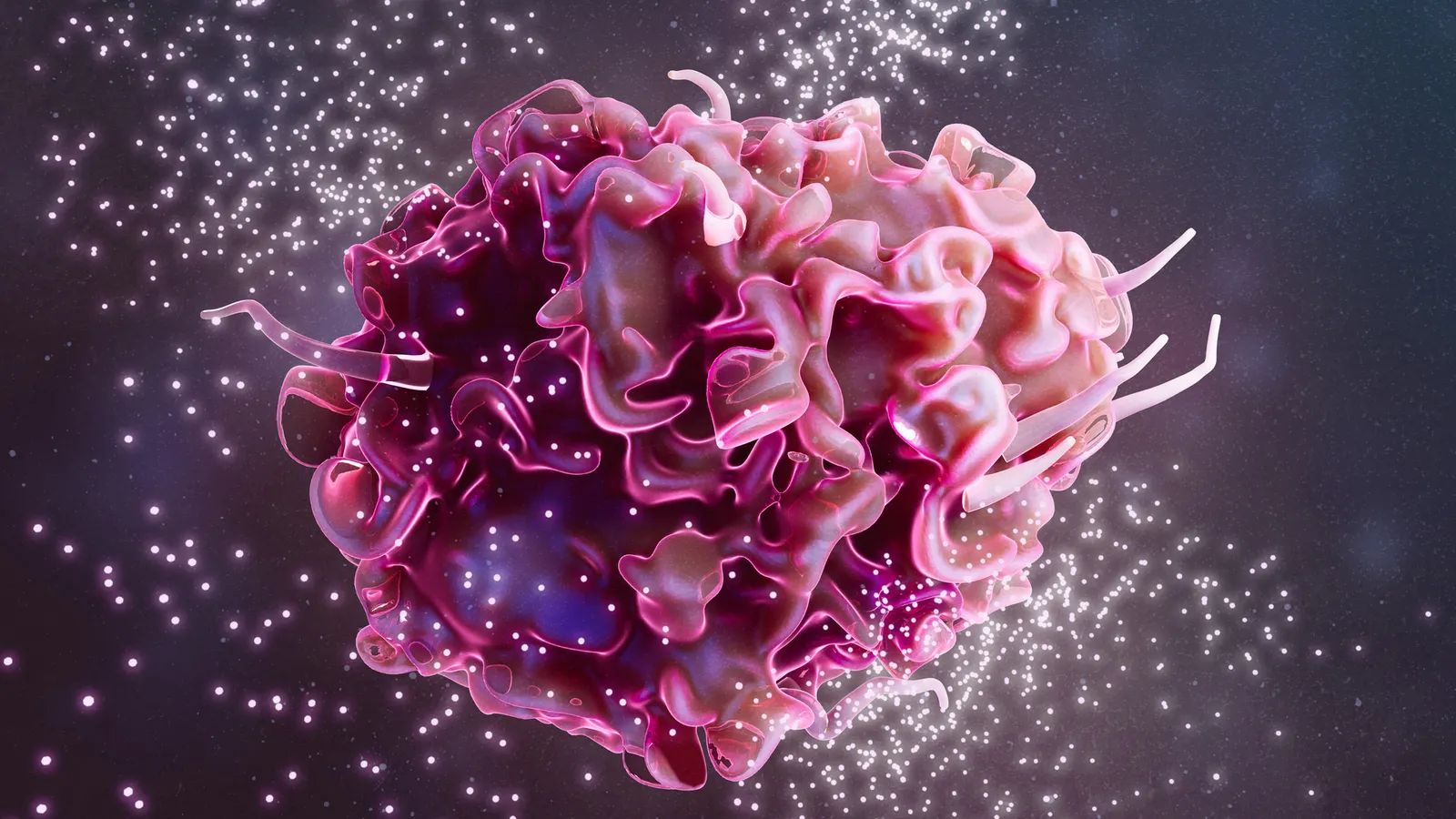
Current cell therapies often require complex, costly manufacturing processes and can lead to dangerous side effects, such as cytokine release syndrome. ai3Bio posits that there is a more elegant way. By focusing on Th17 cells—a subset of T-helper cells that are central to inflammatory responses in the skin and gut—the company hopes to achieve the same "reset" without the chaotic, broad-spectrum destruction of the entire B-cell lineage.
The Dual-Approach Pipeline
Ai3Bio is advancing two primary therapeutic modalities designed to eliminate pathogenic Th17 cells while leaving the broader immune architecture intact:
- Fatty-Shell Delivery: Using microscopic, lipid-based nanoparticles, the company delivers genetic or molecular instructions directly into Th17 cells, forcing them to undergo programmed self-destruction.
- Targeted Antibodies: A more traditional but highly refined approach, this involves an antibody-drug conjugate designed to tag Th17 cells for removal by the body’s own natural surveillance systems.
Both approaches are designed to be "surgical" in nature, avoiding the systemic suppression that leaves patients vulnerable to secondary infections.
Supporting Data and The "Golden Age" of Inflammation
The optimism surrounding ai3Bio is not merely theoretical; it is built on a decade of advancements in molecular biology. "Today we are living in what I would consider to be the golden age of molecular understanding of inflammation," Kagan noted in the official company release. "We know more about what pathways do than we ever did before, and because of that, new opportunities arise."
Preclinical data released by the company indicates that their nanoparticle-based approach has "effectively removed disease-causing Th17 cells" in laboratory models, while the antibody-based strategy has "demonstrated potent efficacy." While the company has kept the specific disease targets under wraps, the industry consensus is that Th17-focused therapies could revolutionize the treatment of psoriasis, inflammatory bowel disease (IBD), and certain types of arthritis.
Implications for the Future of Medicine
The emergence of ai3Bio suggests a broader trend in the biotech sector: the shift from "broad-spectrum" to "narrow-cast" medicine. If the company succeeds, it could set a new benchmark for how inflammatory conditions are treated.
Implications for Patients
Patients currently relying on immunosuppressants, which suppress the entire immune system and leave them prone to opportunistic infections, would be the primary beneficiaries. A targeted therapy that only removes the cells causing the specific autoimmune flare would allow for a much higher quality of life and a significantly improved safety profile.
Implications for the Industry
If ai3Bio’s platform proves viable, it will likely trigger a surge of interest in T-cell-directed autoimmune therapies. The current "cell therapy gold rush" is heavily focused on B-cell depletion; ai3Bio is effectively creating a new lane. Furthermore, the use of AI to integrate vast datasets from UPMC and Harvard labs demonstrates the increasing necessity of computational biology in drug discovery.
Strategic Challenges Ahead
Despite the optimism, the road ahead is fraught with complexity. The company must demonstrate that its therapies can survive the rigors of the human gut and bloodstream without being degraded, and that they can truly differentiate between "good" Th17 cells (which fight infection) and "bad" Th17 cells (which drive autoimmunity).
Furthermore, the competitive landscape is intense. Giants like Novartis, Bristol Myers Squibb, and emerging unicorns like Cabaletta Bio are all racing to find the "holy grail" of autoimmune resets. Ai3Bio’s $48 million is a strong start, but in the world of clinical trials—where a single phase-two failure can burn through hundreds of millions—the company will eventually need to prove that its "remixed" approach has the durability to reach the market.
Conclusion: A New Chapter in Autoimmunity
As ai3Bio transitions from its early-stage research roots into a formal drug development entity, the eyes of the venture capital and medical communities will be fixed on its preclinical progress. By betting on the intelligence of the immune system rather than the raw force of cellular depletion, Kagan, Altschuler, and their team are attempting to write a new chapter in medicine.
Whether or not they succeed in curing specific autoimmune diseases, the very existence of ai3Bio is a testament to the fact that we have entered a new era of immunology—an era defined not by what we can destroy, but by what we can precisely re-engineer. With a robust war chest and a scientific pedigree that spans the country’s most prestigious institutions, ai3Bio is well-positioned to be a significant player in the years to come.