











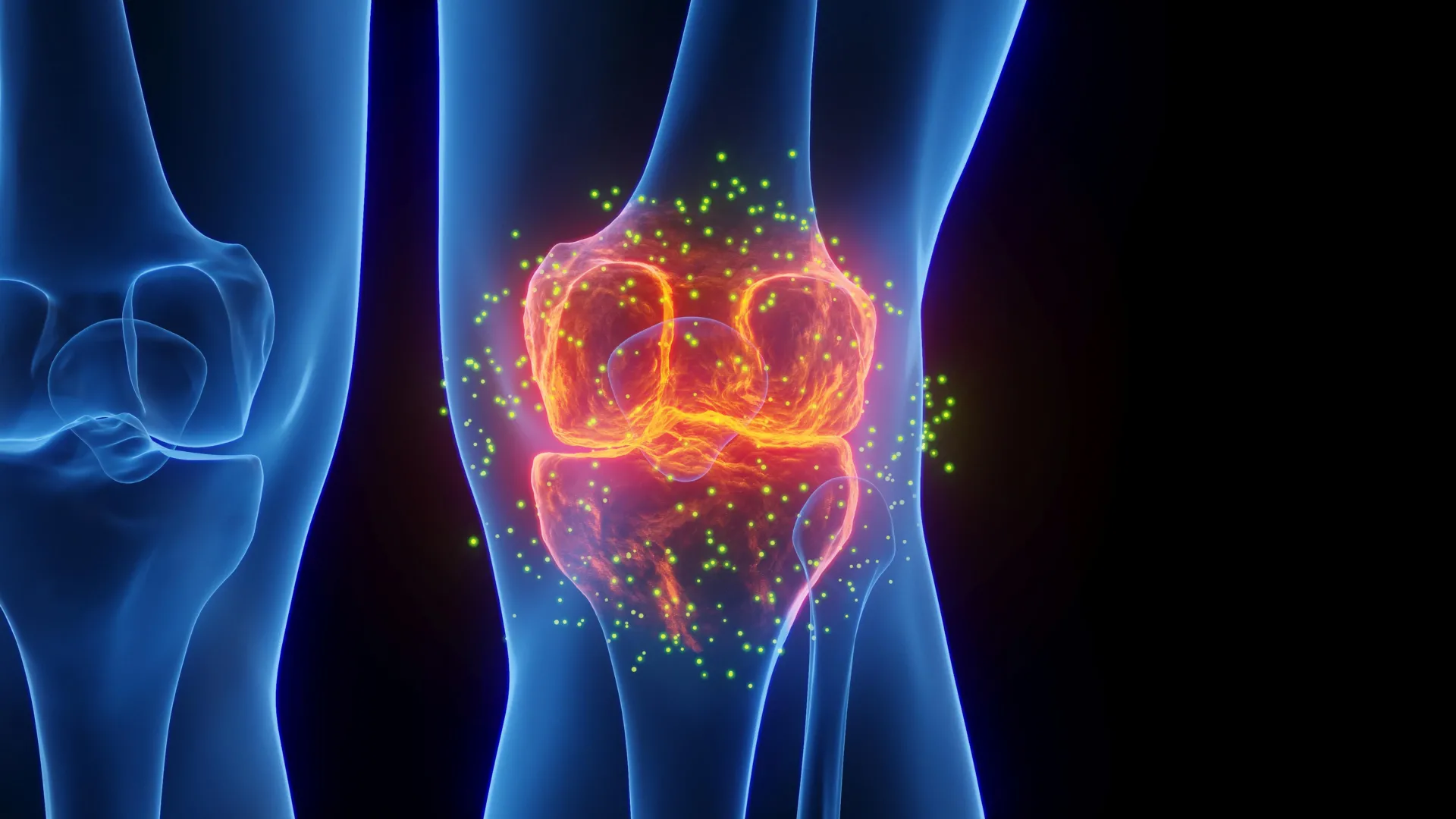
In the modern nutritional landscape, the mantra of "calories in, calories out" has long dominated the discourse surrounding metabolic health. However, a groundbreaking study published in the journal Radiology suggests that the quality of our food may be just as critical—if not more so—than the quantity. New research indicates that diets high in ultra-processed foods (UPFs) are linked to the accumulation of fat within thigh muscles, a condition that may significantly increase the risk of developing knee osteoarthritis.
This study, conducted by researchers at the University of California, San Francisco (UCSF), challenges traditional weight-loss paradigms by suggesting that what we eat alters our body composition at a microscopic level, even when total caloric intake remains constant.
The Anatomy of the Study: Unmasking the "Hidden" Fat
The research, which utilized data from 615 participants in the long-running Osteoarthritis Initiative, sought to investigate the relationship between dietary habits and intramuscular fat. The participants, who were initially free of knee osteoarthritis symptoms, were evaluated using non-enhanced MRI scans—a diagnostic tool that is widely available and cost-effective.
The findings were striking: regardless of a participant’s physical activity levels, total fat intake, or overall body mass index (BMI), those who consumed higher quantities of ultra-processed foods exhibited significantly higher levels of fat infiltration within their thigh muscles. On an MRI, this manifests as "fatty degeneration," where the uniform, healthy appearance of muscle fibers is interrupted by streaks of fat.
Defining Ultra-Processed Foods
To understand the gravity of these findings, one must define the culprits. Ultra-processed foods are defined by more than just their convenience; they are industrial formulations. They are typically crafted from substances derived from foods (oils, fats, sugars, starch, and protein isolates) and contain little to no whole-food ingredients.
Common examples include:
- Convenience Staples: Frozen pizzas, instant noodles, and ready-to-eat meals.
- Processed Proteins: Hot dogs, sausages, and deli meats.
- Snack Foods: Mass-produced packaged breads, buns, and sugary breakfast cereals.
- Beverages: Carbonated soft drinks, sweetened juices, and "energy" drinks.
- Confectionery: Candies, industrial pastries, and mass-market desserts.
These foods are engineered to be hyper-palatable, stimulating the brain’s reward centers in a manner that creates a cycle of dependency, making them notoriously difficult to moderate.
Chronology of a Public Health Crisis
The rise of knee osteoarthritis (OA) in the United States and globally has tracked in grim parallel with the rise of the ultra-processed food industry.
- Mid-20th Century: The industrialization of the food supply began, with a rapid transition away from whole-food preparation toward shelf-stable, chemically altered, and artificially flavored products.
- Late 20th Century: Obesity rates began an upward trajectory, and with them, the incidence of degenerative joint diseases like knee OA.
- Recent Years: The scientific community has increasingly turned its focus toward the "hidden" metabolic impacts of UPFs. While previous studies have linked these foods to cardiovascular disease and diabetes, this UCSF study is the first to directly correlate their consumption with the degradation of muscle tissue as it pertains to joint health.
Supporting Data: Why Muscle Quality Matters
The study cohort consisted of 275 men and 340 women with an average age of 60 and an average BMI of 27, placing the group in the "overweight" category. Approximately 41% of the average participant’s caloric intake was derived from ultra-processed sources.
The significance of the findings lies in the mechanism of knee osteoarthritis. The knee is a weight-bearing joint, and the muscles surrounding it—particularly the quadriceps—act as shock absorbers. When those muscles become infiltrated with fat, their function is compromised. They become less efficient at stabilizing the joint, which increases the stress on the cartilage and bone.
"In recent years, several researchers have shown detrimental impacts of ultra-processed food on various health outcomes," notes Dr. Zehra Akkaya, lead author of the study and a consultant at the UCSF Department of Radiology and Biomedical Imaging. "However, data on the relationship between ultra-processed food and body composition in the context of knee osteoarthritis is limited. This is the first study assessing the impact on thigh muscle composition using MRI."
Official Perspectives: Shifting the Paradigm
The implications of these findings are substantial for both clinical practitioners and public health policy. Dr. Akkaya emphasizes that the research should fundamentally alter how we approach the treatment of knee osteoarthritis.
"Addressing obesity is a primary objective and frontline treatment for knee osteoarthritis," Dr. Akkaya stated. "Yet, the findings from this research emphasize that dietary quality warrants greater attention. Weight loss regimens should take into account diet quality beyond simple caloric restriction and exercise."
A Practical Diagnostic Approach
One of the most promising aspects of this research is its accessibility. By demonstrating that non-enhanced MRI scans can effectively track fatty degeneration in muscle tissue, the researchers have provided a diagnostic pathway that does not require expensive or experimental technology. This means that physicians could, in theory, incorporate muscle quality assessments into standard screenings for patients at risk for OA, potentially catching the degradation before it manifests as chronic pain or mobility loss.
The Broader Implications: Nutrition as a Foundation for Mobility
The takeaway from this study is not merely that "junk food is bad," but that the chemical composition of our diet has a direct, visible impact on our physical structure.
Beyond the Calorie Count
For decades, health professionals have focused on the energy balance equation: if you eat fewer calories than you burn, you will be healthy. This study suggests that the equation is flawed if it ignores the source of those calories. Even if an individual maintains a stable body weight, the ingestion of ultra-processed, chemically altered ingredients may be silently undermining the integrity of their musculoskeletal system.
Reclaiming the Diet
For the average consumer, these findings offer a roadmap for prevention. Cutting back on ultra-processed foods is not just about avoiding weight gain; it is about preserving the "shock absorbers" of the body. Reducing dependence on packaged, shelf-stable, and chemically complex foods in favor of whole, natural ingredients may be a critical, under-utilized strategy in the fight against the global osteoarthritis epidemic.
Conclusion: A Call to Action for Healthier Aging
As the global population ages, the burden of knee osteoarthritis is expected to skyrocket, placing massive pressure on healthcare systems. This UCSF research provides a necessary wake-up call. It shifts the narrative from "weight management" to "muscle quality management."
By acknowledging that the industrialization of our food supply has direct, physical consequences on our muscles, we can begin to prioritize nutritional quality as a key component of orthopedic health. The path forward involves not just exercise, but a conscious movement away from the laboratory-engineered foods that have come to dominate the modern pantry.
For those at risk for knee osteoarthritis, the message is clear: protecting your joints may start in the kitchen. By choosing whole foods over ultra-processed alternatives, you aren’t just counting calories; you are investing in the long-term structural integrity of your body, one meal at a time. The study serves as a critical reminder that while we cannot stop the clock on aging, we may have more control over the quality of our musculoskeletal health than we previously imagined.