










By Global Affairs Correspondent
Seven months into "Operation Epic Fury," the ongoing military engagement between the United States and Iran has reached a precarious inflection point. As the global economy continues to buckle under the weight of surging oil prices and fractured supply chains, both Washington and Tehran are engaging in a tense, indirect diplomatic dance. While Iranian officials signal a tentative readiness to negotiate a de-escalation, President Donald Trump remains steadfast in his refusal to offer concessions, framing the current standoff as a decisive moment for his "maximum pressure" strategy.
The Stalemate: War, Oil, and Geopolitical Brinkmanship
The conflict, which ignited in February, has transformed the Middle East into a volatile theater of unconventional warfare. At the heart of the current diplomatic impasse is the Strait of Hormuz—the world’s most critical maritime chokepoint. Through this narrow passage flows approximately 20% of the world’s total oil consumption. Since the onset of hostilities, Iran has maintained a complete closure of the Strait, a move that has sent shockwaves through global energy markets and turned the waterway into the primary bargaining chip in a war of attrition.
The current diplomatic friction centers on a revised seven-day ceasefire proposal relayed by Tehran via Qatari mediators in New York. The proposal outlines a phased reopening of the Strait in exchange for a suite of American concessions: the lifting of the naval blockade on Iranian ports, an immediate cessation of hostilities in Iran and Lebanon, the suspension of oil-related sanctions, and the release of billions of dollars in frozen Iranian assets.
Chronology of a Crisis: From February to the Present
To understand the current deadlock, one must view the timeline of "Operation Epic Fury," which has fundamentally reshaped regional security:
- February: The U.S. and Israel launch "Operation Epic Fury," targeting Iranian military infrastructure and domestic naval capabilities.
- March-April: Iran responds by closing the Strait of Hormuz, triggering an immediate spike in global crude prices. Regional conflict begins to expand as Houthi proxies in Yemen escalate strikes on Saudi-backed forces and Red Sea shipping lanes.
- May-June: The conflict settles into a grueling stalemate. Drone and missile strikes become a near-daily occurrence, with Iranian allies targeting U.S. interests across the Gulf.
- July: Reports emerge from outlets like Axios and CNN suggesting a potential U.S. shift toward easing sanctions in exchange for nuclear oversight. President Trump vehemently denies these reports.
- August: Iran puts forward a formal, albeit confidential, ceasefire proposal via Qatari intermediaries.
- Present: President Trump publicly rejects the proposal, characterizing it as a sign of Iranian "desperation," while Tehran maintains it is still awaiting a formal, written response from Washington.
Supporting Data: The Economic Toll of Prolonged Conflict
The human and economic cost of the conflict is staggering. The instability has dismantled global supply chains and forced a re-evaluation of energy security in both the Global North and South.
The Energy Market Crisis
As of Tuesday, Brent crude futures were trading at $106.77 per barrel, while West Texas Intermediate (WTI) hovered at $93.94. These figures represent a sustained increase from pre-war baselines, directly contributing to record-high inflation in multiple G20 nations. Analysts at major financial institutions warn that should the Strait of Hormuz remain closed for another quarter, the global economy could face a recessionary shock of historic proportions.
Intelligence Assessments vs. Public Rhetoric
While the political discourse often focuses on the specter of a nuclear-armed Iran, the intelligence community offers a more nuanced view. Since 2007, the U.S. intelligence apparatus has maintained that Iran halted its active nuclear weapons development program in 2003. Despite this, the Trump administration has framed the conflict as a preventative measure to ensure Tehran never crosses the nuclear threshold. This divergence between intelligence-based risk assessment and the administration’s stated war goals remains a point of contention for international observers.
Official Responses and the Battle of Narratives
The divergence in rhetoric between the White House and the Presidential Palace in Tehran underscores the lack of direct communication channels.
The Washington Perspective
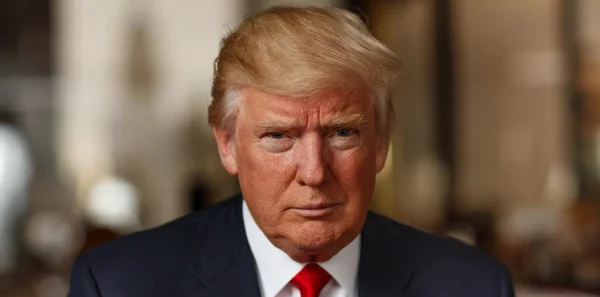
President Trump’s stance has been characterized by consistent rejection of diplomatic overtures. Over the weekend, he told reporters at the White House, "They want to make a deal to open the Hormuz Strait immediately because they’re losing so badly." This narrative of "winning" is central to his domestic political messaging. On Monday, he took to his Truth Social platform to clarify his position, writing, "This is untrue. I offered them NOTHING," in response to media speculation about potential sanctions relief. The administration continues to define its objectives as three-fold: preventing a nuclear breakout, neutralizing Iranian regional influence, and facilitating conditions that could lead to a change in the Iranian regime.
The Tehran Perspective
Iranian Foreign Minister Abbas Araghchi has attempted to maintain a diplomatic posture, suggesting that the "rejection" reported by the media may not be the definitive word from the White House. "We are waiting for the mediators to convey the definitive views to us," Araghchi stated, indicating that Tehran considers the Qatari channel the only legitimate conduit for negotiations.
President Masoud Pezeshkian, in an interview with CBS’s Face the Nation, attempted to strike a balance between defiance and pragmatism. While stating that Iran will not bow to "bullying or coercion," he clarified that his nation is not seeking a broader war. He reaffirmed that Iran’s nuclear program remains, in his view, strictly for peaceful energy purposes, noting that Iran has no desire to acquire nuclear weapons.
Implications: The Path Toward Escalation or Resolution
As the conflict enters its eighth month, the international community faces a narrow window for diplomacy. The risks of escalation are high; a single miscalculation in the Gulf could lead to a direct, full-scale confrontation that would render the current "war of attrition" a secondary concern.
The Risks of Continued Stagnation
Should the current impasse persist, the primary implication is a further erosion of the global rules-based order. The continued blockage of the Strait of Hormuz challenges the principle of freedom of navigation, forcing the U.S. to commit more naval assets to the region. Simultaneously, the involvement of regional proxies—such as the Houthis in Yemen—suggests that the war has already mutated into a broader regional struggle that neither Washington nor Tehran may be able to fully control.
The Diplomatic Pivot
For a resolution to occur, both sides must find a mechanism to "save face." For the U.S., this would require decoupling the nuclear issue from the immediate necessity of reopening the Strait. For Iran, it requires a tangible economic relief package that can be sold to its domestic hardliners as a victory. Currently, however, both sides are trapped by their own public rhetoric. President Trump’s focus on "total victory" and the Iranian leadership’s focus on "sovereignty and dignity" create a zero-sum environment where compromise is framed as weakness.
A World in Waiting
As U.S. and Iranian officials continue to communicate through intermediaries, the world remains in a state of suspended animation. The conflict has moved beyond a simple disagreement over regional policy; it has become a defining test of 21st-century diplomacy. Whether the next chapter is written through the lens of a negotiated ceasefire or a further escalation of military force will depend on whether either side is willing to blink first.
For now, the ships remain anchored, the oil stays in the ground, and the diplomatic mediators in Doha and New York work in the shadows, attempting to bridge a divide that seems to grow wider with every passing day. The coming weeks will likely determine whether the world is headed toward a cooling of tensions or a new, more dangerous phase of the conflict that has already claimed thousands of lives and upended the global economic order.