











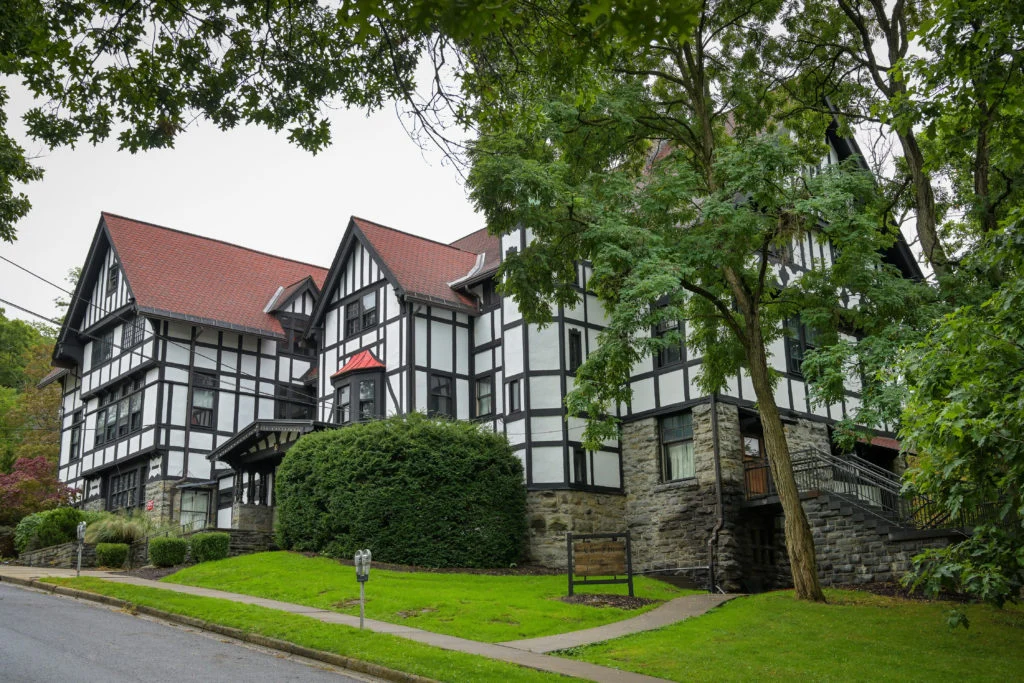
The Ivy League campus of Cornell University in Ithaca, New York, is currently embroiled in a profound institutional crisis. A high-profile, brutal sexual assault case that many assumed had been relegated to the annals of campus disciplinary history has violently resurfaced, triggering a wave of legal action, political scrutiny, and a fierce national debate regarding the adequacy of university-led investigations into sexual violence.
The case, centered on a 2024 alleged gang rape at the Chi Phi fraternity house, has been reopened following a sweeping civil lawsuit filed by the survivor, identified in court documents as “Jane Doe.” Her legal action has exposed deep fractures in how elite institutions manage allegations of criminal conduct, revealing a system that many critics argue prioritizes the preservation of the university’s reputation over the pursuit of justice for victims.
Chronology of an Alleged Betrayal
The timeline of this incident reveals a troubling disconnect between the gravity of the allegations and the institutional response. In October 2024, according to the lawsuit, a female student was invited to a party at the Chi Phi fraternity house. The complaint alleges that the evening devolved into a harrowing ordeal during which the woman was provided with alcohol and pressured to ingest ketamine.
The lawsuit details a multi-hour assault involving seven male students. According to the plaintiff, these men not only participated in the sexual violence but actively invited others to join in, creating a scene of systematic abuse. Following the incident, the woman reported the events to the Cornell University Police Department (CUPD).
For nearly two years, the case existed in a legal limbo. While Cornell officials maintain they conducted an internal investigation, no criminal charges were brought by local law enforcement at the time. The Chi Phi fraternity was shuttered and banned from campus in the aftermath, and the university reported taking disciplinary actions—ranging from suspensions to expulsions—against the individuals involved. However, the exact nature and consistency of those punishments have remained shrouded in institutional secrecy, fueling suspicion that the university’s “disciplinary” measures were insufficient compared to the alleged crimes.
The Legal and Political Uproar
The catalyst for the current reopening of the investigation was the filing of a civil lawsuit earlier this month. The suit alleges that Cornell University failed to protect the student, mishandled the investigation, and allowed some of the accused individuals to continue their academic careers on campus while the survivor felt compelled to leave the university entirely.
The District Attorney’s Stance
Tompkins County District Attorney Matthew Van Houten has faced significant backlash for his office’s initial decision not to pursue criminal charges. In recent public statements, Van Houten characterized the conduct of the young men as “morally wrong” and “disgusting,” yet argued that such labels do not automatically equate to a violation of the penal law. This distinction between moral culpability and criminal liability has become a central point of contention, with critics arguing that the threshold for prosecution in sexual assault cases remains prohibitively high.
A Call for Independent Review
The fallout has transcended the campus borders. New York Governor Kathy Hochul has publicly expressed "deep concerns" regarding the handling of the case. Her office has called for an independent probe, signaling that the state government no longer trusts the university to police itself. Similarly, the Mayor of Ithaca has condemned the university’s reliance on its own campus police force to investigate a case of this magnitude, labeling the initial handling of the matter an "irresponsible" miscarriage of justice.
Institutional Failure and the "Closed Door" Policy
A significant portion of the outrage stems from the university’s lack of transparency. Cornell leadership has largely declined to comment on the record regarding the specific actions taken against the seven defendants, citing student privacy laws (FERPA). This defensive posture has created a vacuum of information that has been filled by intense public scrutiny.
Journalistic investigations have suggested that, despite the university’s claims of “significant disciplinary action,” at least some of the seven men were permitted to remain enrolled at Cornell following the 2024 incident. This revelation has caused immense pain for the survivor and galvanized the student body. For many, the disparity—where the victim leaves the campus to find safety while the perpetrators remain to pursue degrees—is the definitive evidence of a broken system.
The case has also highlighted the inherent conflict of interest in allowing campus police departments to serve as the primary investigators for serious violent crimes. Critics argue that university police, whose primary mission is to protect the institution’s interests, are ill-equipped and perhaps institutionally disincentivized to conduct the rigorous, objective investigations required in sexual assault cases.
Implications for Campus Safety and Accountability
The reopening of the case by prosecutors, who now intend to present evidence to a grand jury, marks a pivotal shift. Whether this will lead to criminal indictments remains uncertain. Defense attorneys for the accused have already signaled that they expect no criminal charges to follow, asserting that the evidence remains insufficient.
The Impact on the Student Body
On campus, the atmosphere is one of profound disillusionment. The Cornell Daily Sun, the student newspaper, took the bold step of naming the seven men identified in the civil lawsuit. The subsequent social consequences—including several of the men reportedly losing their jobs—demonstrate the shift in power dynamics where public accountability is now being enforced by the court of public opinion, if not the courts of law.
Students, particularly women, have expressed a mixture of anger and deep sorrow. The case has become a rallying point for broader discussions about the prevalence of sexual violence in Greek life and the tendency of universities to settle allegations through quiet, internal disciplinary channels rather than transparent, public justice.
The Broader Legal Landscape
This case is poised to become a landmark example in the debate over Title IX and institutional accountability. If the university is found liable in civil court, it could set a massive precedent for how colleges and universities must handle reports of sexual assault. It challenges the "internal settlement" culture that has defined campus disciplinary policy for decades, suggesting that the era of shielding students from criminal repercussions via institutional protection is rapidly coming to an end.
Conclusion: A System on Trial
As the grand jury process begins, Cornell University finds itself under siege. The institution is no longer merely fighting a civil lawsuit; it is fighting for its reputation and its moral authority. The story of “Jane Doe” has transformed from a private trauma into a public mandate for change.
The tragedy of this case lies not only in the violence allegedly committed in a fraternity house but in the systemic failure to provide the survivor with a clear, transparent path to justice. By treating a potential felony as a matter of internal discipline, the university inadvertently signaled that the safety of its students was secondary to the shielding of its students. As the state, the legal system, and the public converge on Ithaca, the outcome of this case will likely redefine the responsibilities of elite universities to the individuals they are sworn to educate and protect.
The question remaining is whether the legal system will finally bridge the gap between “disgusting conduct” and the rigorous demands of the law, or whether the survivor will be forced to continue her fight in a landscape that has historically proven resistant to meaningful change.