










Contributing Author: Blood Cancer United
As the landscape of oncology shifts from mere survival to long-term quality of life, the medical community is increasingly focused on the intersection of advanced immunotherapy and reproductive health. During September’s Blood Cancer Awareness Month, researchers are spotlighting a critical, yet historically under-studied, question: Does CAR T-cell therapy affect a patient’s ability to conceive and carry a child to term?
For younger adults facing a blood cancer diagnosis, the immediate priority is life-saving treatment. However, as CAR T-cell therapy transitions from a "last-resort" option to a more common therapeutic strategy, survivors are looking toward the future. A collaborative research initiative led by Blood Cancer United, Moffitt Cancer Center, and University of Florida Health is now working to bridge this knowledge gap by analyzing data directly from patients who have undergone these life-saving procedures.
The Evolution of CAR T-Cell Therapy
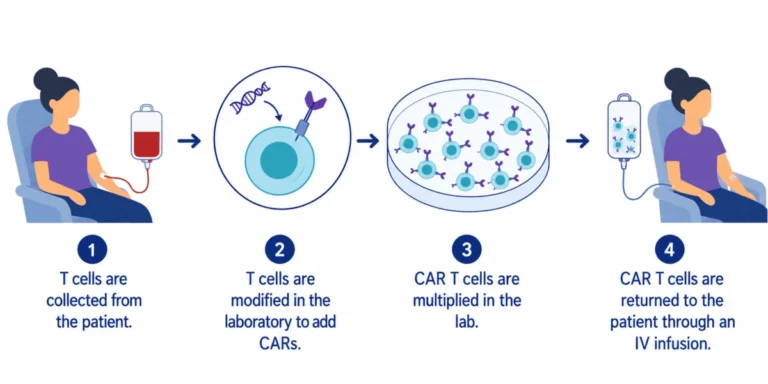
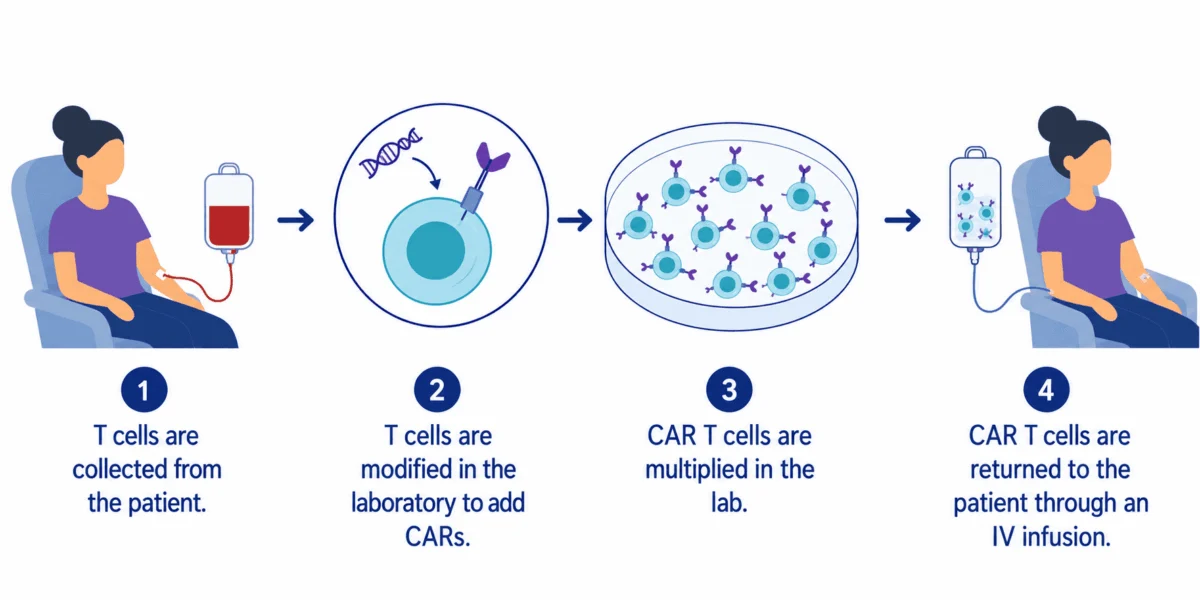
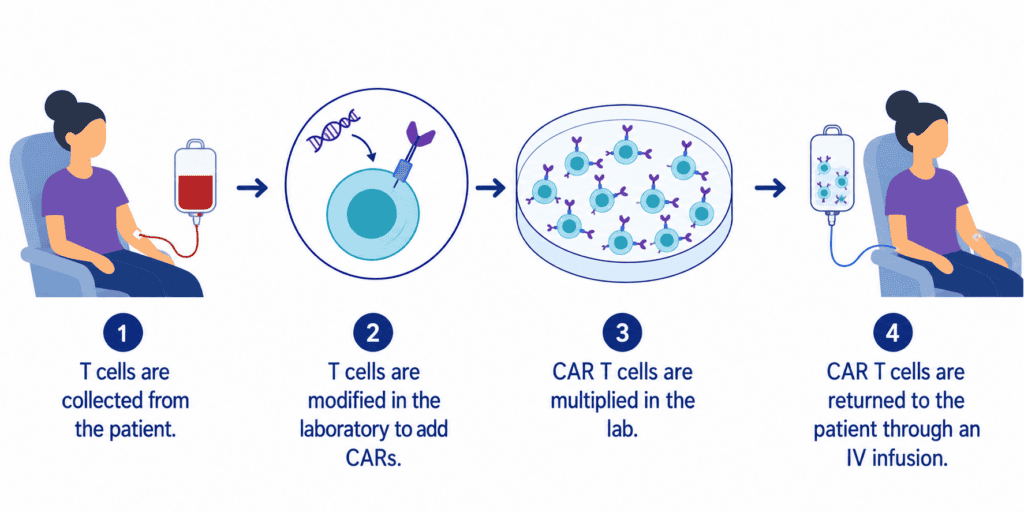
Chimeric antigen receptor (CAR) T-cell therapy represents a pinnacle of modern immunotherapy. The process is a sophisticated feat of bioengineering: clinicians extract a patient’s T cells—the "soldiers" of the immune system—and transport them to a laboratory. There, the cells are genetically modified to express a specific chimeric antigen receptor that allows them to "see" and destroy cancer cells that they would otherwise overlook.
Once these engineered cells are multiplied in the lab, they are infused back into the patient, creating a "living drug" capable of patrolling the body and eliminating malignancy.
The clinical journey of CAR T-cell therapy began in earnest in 2010, when pioneering research led by Dr. Carl June—a Scientific Advisory Member at the Cancer Research Institute (CRI)—demonstrated that these cells could induce remission in patients with refractory leukemia. This breakthrough catalyzed the FDA’s first CAR T-cell approval in 2017. Today, this modality is a standard-of-care option for various leukemias, lymphomas, and multiple myeloma, offering hope where traditional chemotherapy and radiation have failed.
The "Data Gap": Why We Haven’t Had Answers
Historically, the inability to isolate the effects of CAR T-cell therapy on fertility has been a function of patient complexity. Most early recipients of this therapy had exhausted all other lines of defense. They arrived at the CAR T stage after years of aggressive interventions, including intensive chemotherapy, total-body irradiation, and stem cell transplantation—all of which are known to carry significant risks of infertility.
Furthermore, the standard "lymphodepletion" process—a short, intense course of chemotherapy administered just before the CAR T-cell infusion to prepare the immune system—adds another layer of physiological stress. Distinguishing whether reproductive challenges stem from the patient’s underlying disease, their cumulative history of harsh chemical treatments, or the CAR T-cell infusion itself has proven statistically difficult for researchers.
Chronology: From Experimental Lab to Clinical Reality
To understand the current research, one must look at the timeline of the therapy’s expansion:
- 2010: The landmark clinical trial led by Dr. Carl June proves the efficacy of CAR T-cells in treating refractory leukemia.
- 2017: The FDA grants its first approval for a CAR T-cell product, marking a turning point in oncology.
- 2020–2024: As the number of survivors grows, the "survivorship" conversation gains momentum. Professional organizations begin calling for evidence-based guidance regarding the reproductive risks of immunotherapy.
- 2026: Researchers present preliminary findings from a patient-facing survey at the Tandem Meetings (Transplantation & Cellular Therapy Meetings), marking one of the first concerted efforts to quantify fertility outcomes in this population.
Supporting Data: Preliminary Insights
The study, currently being conducted by Blood Cancer United and its partners, is providing the first real-world evidence of post-treatment reproductive health. In an initial analysis of 106 survey respondents, the data revealed a nuanced picture:
- Intent to Conceive: 32 respondents explicitly expressed a desire to have children after completing their CAR T-cell therapy.
- Active Attempts: Of those, 12 individuals had actively attempted to conceive.
- Pregnancy Outcomes: Among the group, there were six reported pregnancies—four involving female respondents and two involving the partners of male respondents.
- Methodology: Notably, none of the six pregnancies required the use of assisted reproductive technologies (ART), such as IVF.
While these numbers are small, they are statistically and emotionally significant. They confirm that pregnancy is not only possible but occurring naturally after CAR T-cell intervention. However, researchers caution that these findings are preliminary. They do not yet clarify the baseline risk, the frequency of fertility impairment, or which specific patient profiles are most susceptible to reproductive side effects.
Official Perspectives: A Call for Informed Survivorship
Dr. Nina Logan, Senior Director of Research & Clinical Programs at Blood Cancer United, emphasizes that these findings are only the beginning of a long-term data collection effort.
"These early findings are encouraging, but they also highlight how much we still need to learn," Dr. Logan stated. "Our goal is to give patients and their care teams better information about fertility after CAR T-cell therapy so they can have informed conversations about treatment, survivorship, and their plans for the future."
The urgency of this research is shared by the broader scientific community. A 2024 study published in Transplant Cell Therapy echoed the need for evidence-based guidance, particularly for pediatric populations, who face an entire lifetime of reproductive decisions after surviving blood cancer.
The Role of Autoimmune Research
Interestingly, the study of fertility in CAR T-cell therapy is being bolstered by a surprising source: the treatment of autoimmune diseases. CAR T-cell therapy is currently being investigated for conditions like lupus, where the disease pathology and treatment histories differ significantly from cancer.
A 2026 report in the New England Journal of Medicine documented 14 pregnancies among 13 patients who received CAR T-cell therapy for autoimmune disease, resulting in eight healthy births. While autoimmune patients are not identical to cancer patients, these data points are invaluable. They offer a "control" of sorts, providing insights into the physiological impact of CAR T-cells on the reproductive system in patients who may not have undergone decades of heavy chemotherapy.
Implications for Patients and Clinicians
The implications of this research are profound. If clinicians can determine with certainty whether CAR T-cell therapy impacts fertility, they can shift their approach to patient care in three critical ways:
- Proactive Counseling: Physicians will be better equipped to provide accurate risk assessments before treatment begins, allowing patients to make informed decisions about whether to pursue fertility preservation, such as egg or sperm freezing.
- Standardized Surveillance: By understanding the risk, the medical community can develop screening protocols to monitor reproductive health during the follow-up period.
- Empowerment: For many cancer survivors, the uncertainty regarding their ability to start a family is a source of profound psychological distress. Having clear, data-driven answers can significantly improve the mental health and quality of life of survivors.
How to Participate
The ongoing "CAR T-Cell Therapy and Fertility Survey" is currently accepting participants. Adults aged 18 and older who have received CAR T-cell therapy for blood cancer are invited to contribute their stories to the growing body of evidence. By sharing their experiences, participants are not just contributing to a dataset—they are paving the way for future generations of patients to have a clearer understanding of their life after cancer.
Interested individuals can find more information or participate in the survey through the official portal provided by the research team.
Sources
- Pediatric cancer immunotherapy and potential for impact on fertility: A need for evidence-based guidance, Transplant Cell Ther, 2024.
- Fertility outcomes following CAR T-cell therapy: Results from a patient-facing survey, Tandem Meetings | Transplantation & Cellular Therapy Meetings of ASTCT and CIBMTR, 2026.
- Pregnancies in patients with autoimmune disease receiving CAR T-cell therapy, N Engl J Med, 2026.
- Approved Cellular and Gene Therapy Products, U.S. Food and Drug Administration, 2026.
Disclaimer: This article is for informational purposes only. The Cancer Research Institute (CRI) does not endorse or recommend the study, participation in the study, or the study sponsor. CRI is not involved in conducting the study or determining eligibility. Please contact the study team directly for all inquiries.