











By Nicole Lou, Senior Staff Writer, MedPage Today
October 1, 2026
In a landmark development for pediatric cardiology, the U.S. Food and Drug Administration (FDA) has officially granted approval for the Autus Size-Adjustable Valve, the first prosthetic heart valve specifically engineered to grow alongside a pediatric patient. This innovation, designed for surgical pulmonary valve replacement in children with congenital heart disease (CHD), promises to fundamentally alter the clinical management of a condition that has historically necessitated a grueling cycle of repeated open-heart surgeries.
The Clinical Challenge: The Burden of Growth
For decades, pediatric cardiologists and surgeons have faced a “Catch-22” when treating children with congenital heart defects requiring valve replacement. The fundamental issue is physiological: a child’s anatomy is constantly changing, while traditional prosthetic valves are static, fixed-size devices.
When a child receives a standard valve, that device will eventually become too small as the child grows. This leads to stenosis (narrowing) or regurgitation (leaking), necessitating a subsequent operation to replace the outgrown valve. For parents and patients, this cycle creates a trajectory of repeated, high-risk interventions. Surgeons have often been forced to delay surgery to allow for as much natural growth as possible, yet waiting too long risks irreversible damage to the right ventricle, which must work harder to pump blood through a dysfunctional valve.
The Autus valve, manufactured by Edwards Lifesciences, directly addresses this dilemma by offering a mechanical solution to a biological problem.
Anatomy of an Innovation: How the Autus Valve Works
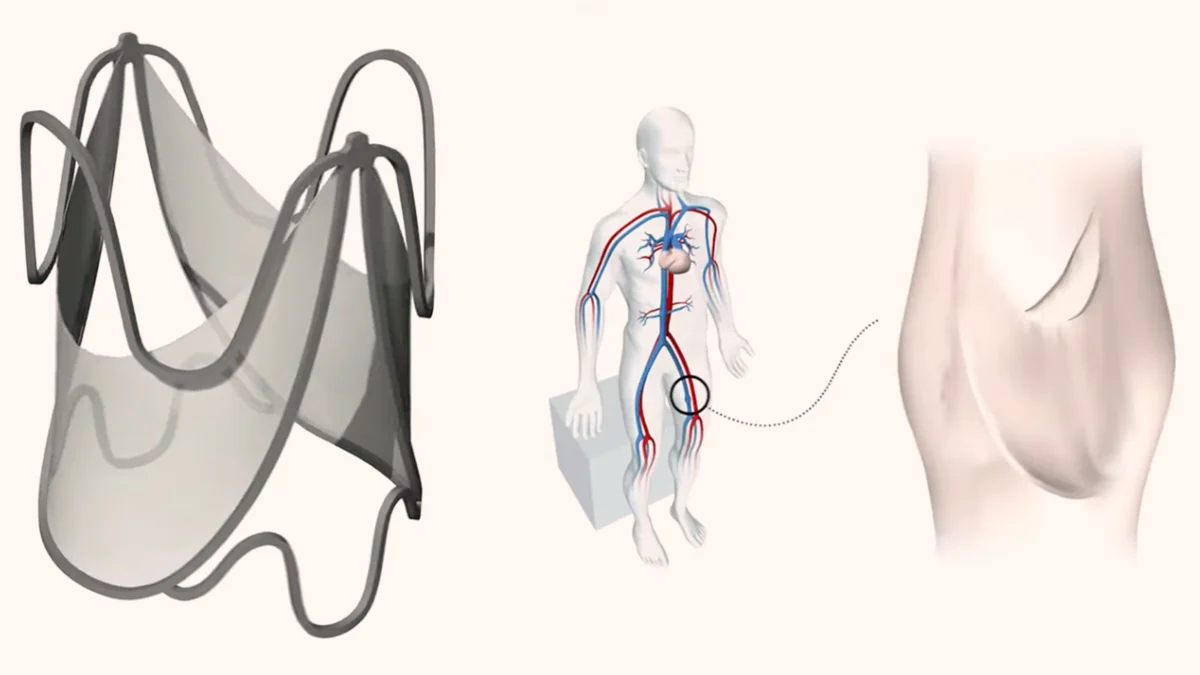
The Autus Size-Adjustable Valve is a marvel of bioengineering, designed with the specific constraints of the pediatric pulmonary artery in mind. Unlike standard valves that are constructed from bovine or porcine tissue, the Autus valve utilizes a proprietary polymeric material for its leaflets.
This transition to synthetic material is significant. Polymeric leaflets are designed for enhanced durability and performance, potentially outlasting traditional biological tissues that may degrade or calcify over time.
The most transformative feature, however, is the device’s adjustability. The valve can be implanted at a diameter as small as 13 mm—suitable for a young toddler—and can be expanded incrementally to a maximum of 22 mm. This expansion is performed via balloon catheterization, a minimally invasive procedure that avoids the trauma and recovery time associated with open-heart surgery. By “tuning” the valve size to match the child’s physiological development, clinicians can significantly extend the lifespan of the initial implant.
The Chronology of Approval: A Rigorous Path
The journey to the FDA’s approval of the Autus valve was defined by stringent clinical scrutiny. The premarket approval process relied heavily on a pivotal study involving 62 pediatric patients.
- Initial Clinical Testing: The study focused on the hemodynamic performance of the valve, ensuring that it could effectively manage blood flow while maintaining structural integrity.
- The 30-Day Benchmark: All 62 study participants remained free from device-related complications through the first 30 days post-implantation, providing an essential safety baseline.
- The 6-Month Milestone: At the six-month mark, none of the patients required valve reinterventions, demonstrating early success in the device’s stability.
- The 1-Year Follow-up: Among the cohort that completed the one-year follow-up, the results were highly encouraging. Right ventricular outflow tract (RVOT) mean gradients remained at 40 mm Hg or less—a critical metric for ensuring that the heart is not being overworked—and, notably, zero valve reinterventions were required.
These data points provided the FDA with the confidence needed to clear the device for commercial use, marking a shift in how pediatric heart centers will approach long-term care planning.
Expert Perspectives: A Paradigm Shift
Dr. Michelle Tarver, director of the FDA’s Center for Devices and Radiological Health, highlighted the human impact of this approval in the agency’s official statement. “For children born with congenital heart disease, valve replacement timing has always been a difficult decision—wait too long and you risk harm to the child, but intervene too early and they may need multiple open-heart surgeries as they grow,” Tarver noted.
She emphasized that the Autus valve is not merely a technical advancement but a quality-of-life improvement. By reducing the number of trips to the operating room, the device allows children to experience fewer hospitalizations and shorter recovery periods, effectively allowing them to spend more time in school and with their families rather than in a clinical setting.
Dr. Emile Bacha of NewYork-Presbyterian/Columbia University Irving Medical Center, an author of the pivotal study, echoed these sentiments. “Children with congenital pulmonary valve disease have long needed prosthetic valves that can account for growth over time,” Bacha said. “The Autus valve gives congenital heart teams a new way to think about long-term care planning for pediatric patients who may otherwise face multiple surgeries.”
Implications for Future Care and Longitudinal Research
The approval of the Autus valve is not the end of the research process, but rather the beginning of a long-term observational era. While the initial results are promising, the medical community remains focused on the long-term durability of the polymeric leaflets and the sustained effectiveness of the expansion mechanism.
To monitor these factors, a continued access study is currently underway. The FDA and the manufacturer have established a comprehensive follow-up plan that will track patients for up to 10 years. This longitudinal data will be crucial for understanding how the device performs throughout the critical growth spurts of adolescence and into young adulthood.
Impact on Hospital Systems
For pediatric heart centers, the introduction of the Autus valve requires a shift in how they structure care. Cardiologists and surgeons will now need to collaborate more closely with interventional teams to coordinate the timing of the balloon expansion procedures. This represents a more proactive, iterative model of care rather than the reactive, surgery-heavy model of the past.
Broader Industry Trends
The Autus valve also signals a potential shift in the materials science of cardiac implants. If the polymeric leaflets prove superior to animal-derived tissue in the long term, it could catalyze a broader transition away from biological valves in other areas of cardiology. The industry is closely watching these results, as successful outcomes could open the door for similar size-adjustable technologies in other congenital defects.
Conclusion: A Brighter Future
The approval of the Autus Size-Adjustable Valve represents a victory for innovation-driven medicine. By aligning the mechanics of a heart valve with the biological reality of human growth, the medical community has taken a significant step toward alleviating the physical and emotional toll of congenital heart disease.
While the clinical team continues to monitor the 10-year data, the immediate takeaway is clear: the paradigm for pediatric valve replacement has shifted. For the thousands of children living with pulmonary valve disease, the future is now defined by less surgery, better hemodynamic outcomes, and a significantly improved quality of life. As this technology enters the clinical mainstream, it stands as a testament to the power of precision engineering to address the most complex and delicate challenges in pediatric healthcare.