









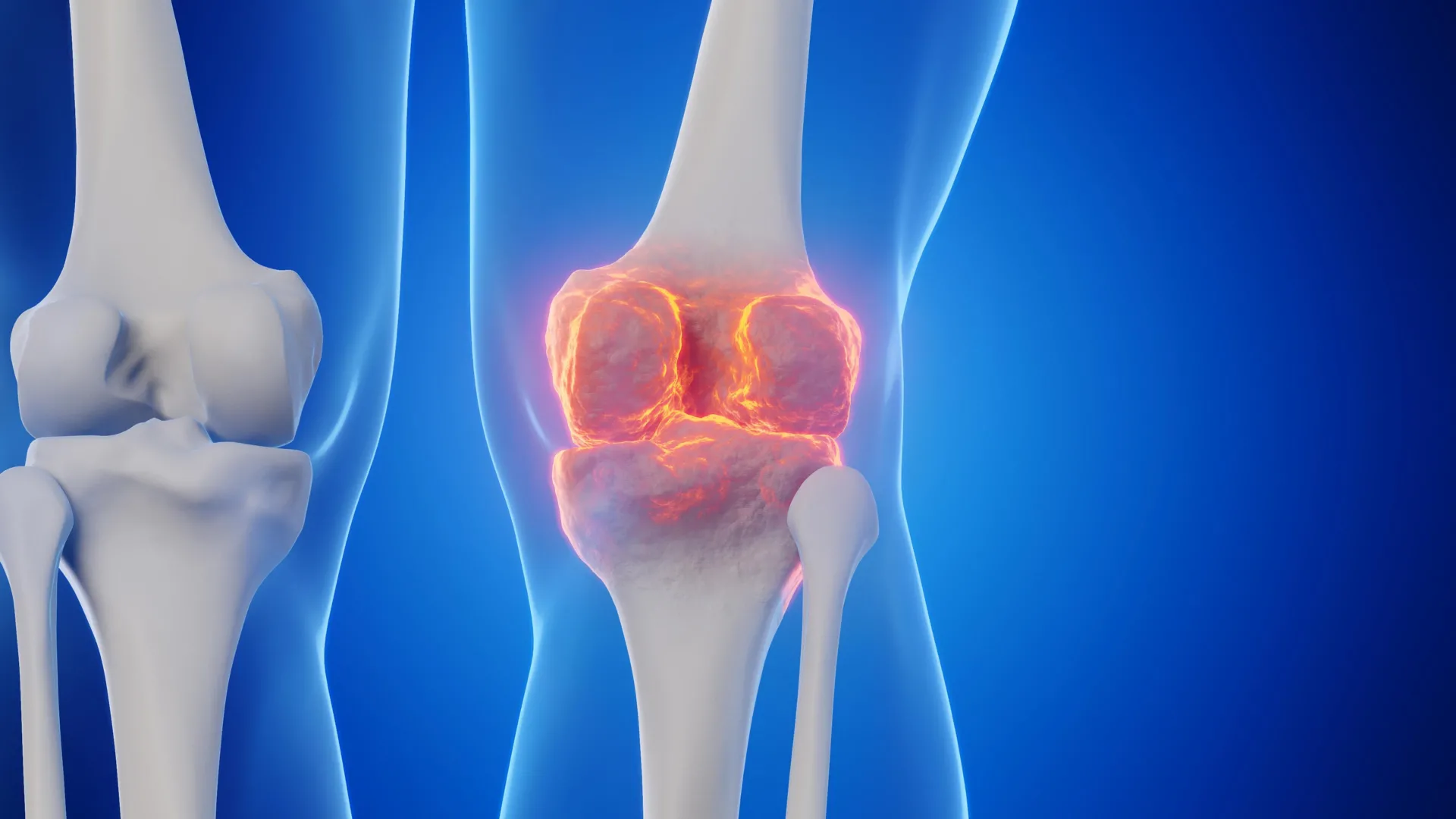
For millions of individuals worldwide, the steady, painful degradation of knee joints is an inevitable companion to aging or the long-term consequence of a sports injury. Osteoarthritis, a degenerative condition characterized by the erosion of articular cartilage, affects roughly one in five adults in the United States alone. Currently, the medical landscape for these patients is grim: treatments are largely palliative, focusing on symptom management, inflammation reduction, and pain control. When the cartilage—the essential, smooth tissue that allows joints to glide—is worn away, the final, invasive solution is often a total joint replacement.
However, a groundbreaking study led by researchers at Stanford Medicine may signal a paradigm shift in how we treat joint disease. By targeting a specific protein that accumulates with age, scientists have successfully triggered the regeneration of healthy cartilage in laboratory mice and demonstrated promising effects in human tissue. This discovery offers a glimmer of hope that the future of orthopedics may lie not in mechanical replacement, but in biological restoration.
The Discovery: Targeting the "Gerozyme" 15-PGDH
At the heart of this research is a protein known as 15-PGDH. The Stanford team, led by Dr. Helen Blau and Dr. Nidhi Bhutani, has categorized this protein as a "gerozyme"—a term they coined to describe enzymes that increase in abundance with age and actively contribute to the decline of tissue function.
In previous studies, the team identified that 15-PGDH plays a critical role in regulating aging across various tissues. By blocking this protein with a small-molecule inhibitor, the researchers observed significant improvements in muscle mass and endurance in older mice. Conversely, when they artificially increased levels of 15-PGDH in younger animals, they saw their muscles weaken and shrink. This pattern of biological interference suggested that 15-PGDH acts as a "brakes" system for regeneration, and removing that inhibition could potentially unlock the body’s innate ability to repair itself.
Chronology: From Muscle Regeneration to Cartilage Repair
The journey toward this discovery began with the lab’s interest in prostaglandin E2, a molecule known to be vital for the function of muscle stem cells. Because 15-PGDH is the protein responsible for breaking down prostaglandin E2, the researchers hypothesized that it might serve as a universal regulator of aging across different body tissues.
- The Hypothesis: The team questioned whether the same biological pathway involved in muscle and nerve regeneration might also govern the deterioration of cartilage.
- Comparative Analysis: By comparing knee cartilage samples from young and old mice, the team discovered that 15-PGDH levels roughly doubled in the older subjects.
- Initial Inhibition: The team administered a small-molecule inhibitor of 15-PGDH to older mice. The results were immediate and striking. The drug, delivered either systemically (via abdominal injection) or locally (directly into the knee joint), resulted in a noticeable thickening of cartilage across the joint surface.
- Trauma Testing: To see if the treatment could prevent post-traumatic osteoarthritis, the team simulated ACL tears—a common precursor to joint disease in humans. Mice treated with the inhibitor for four weeks post-injury showed significantly less cartilage degradation and moved with greater mobility than their untreated counterparts.
- Human Validation: The final phase of the initial research involved testing the inhibitor on cartilage samples harvested from human patients undergoing total knee replacement surgery. Within one week of exposure to the inhibitor, the human tissue showed a decrease in markers of degradation and an encouraging uptick in the production of functional articular cartilage.
Supporting Data: Changing the Genetic Blueprint
One of the most fascinating aspects of the study is the mechanism by which the cartilage regenerates. Traditionally, researchers have looked for stem cells within cartilage to serve as the "seeds" for new tissue. However, this study found no evidence that stem cells were responsible for the observed regrowth.
Instead, the existing cartilage cells, known as chondrocytes, underwent a profound transformation. By blocking 15-PGDH, the researchers were able to "reprogram" these mature cells to act in a more youthful state.
Data from the study showed that:
- Inflammatory Reduction: The population of old chondrocytes expressing genes associated with inflammation and degradation dropped from 8% to 3%.
- Hyaline Restoration: The population of cells responsible for forming hyaline cartilage—the smooth, slippery tissue necessary for frictionless joint movement—more than doubled, increasing from 22% to 42%.
- Fibrocartilage Suppression: Cells associated with the formation of fibrocartilage (the tougher, less ideal tissue that the body often creates as a "patch" during injury) decreased from 16% to 8%.
Essentially, the treatment forced the joint environment to favor the growth of high-quality, articular cartilage while silencing the genes that lead to inflammation and structural breakdown.
Official Responses and Scientific Perspective
The implications of these findings have been met with significant excitement within the medical community. Dr. Helen Blau, professor of microbiology and immunology and director of the Baxter Laboratory for Stem Cell Biology, emphasized the novelty of the approach. "This is a new way of regenerating adult tissue, and it has significant clinical promise for treating arthritis due to aging or injury," she noted. "We were looking for stem cells, but they are clearly not involved. It’s very exciting."
Dr. Nidhi Bhutani, associate professor of orthopaedic surgery and senior co-author of the study, highlighted the magnitude of the need. "Millions of people suffer from joint pain and swelling as they age," Bhutani said. "It is a huge unmet medical need. Until now, there has been no drug that directly treats the cause of cartilage loss. But this gerozyme inhibitor causes a dramatic regeneration of cartilage beyond that reported in response to any other drug or intervention."
The study, published in the journal Science, also involved contributions from the Sanford Burnham Prebys Medical Discovery Institute and received funding from a wide array of prestigious institutions, including the National Institutes of Health and the Li Ka Shing Foundation.
Clinical Implications: The Path Toward an Oral Medicine
While the results in mice and human tissue are highly encouraging, researchers are cautious to note that this does not yet confirm the treatment will effectively regrow cartilage or prevent osteoarthritis in living human patients. Clinical trials are the necessary next step to establish safety and efficacy.
However, there is reason for optimism. Because an oral 15-PGDH inhibitor is already undergoing clinical testing for the treatment of age-related muscle weakness, researchers already have a head start on safety data. Phase 1 trials have already demonstrated that the drug is well-tolerated in healthy human volunteers.
The potential for this therapy is vast. If successful in clinical trials, this treatment could manifest as an oral pill or a direct injection, offering a non-surgical alternative for those currently facing the prospect of knee or hip replacement. By addressing the biological roots of aging within the joint—rather than simply masking the pain—medicine may finally be moving toward a future where "wear and tear" is no longer a permanent sentence.
As Dr. Blau noted, the goal is clear: "Imagine regrowing existing cartilage and avoiding joint replacement." While the road to FDA approval and widespread clinical use remains long, the ability to reset the cellular clock of our joints represents a monumental leap forward in regenerative medicine. The transition from managing the decline of the human body to actively reversing its aging processes is no longer a matter of science fiction, but a tangible, documented possibility.