








The landscape of pediatric oncology has undergone a seismic shift over the last forty years. Once a near-certain death sentence, many childhood cancers are now considered curable, with survival rates for common conditions like acute lymphoblastic leukemia (ALL) climbing above 90%. Yet, for the pediatric oncology community, these statistics represent a bittersweet victory. While survival has increased, the "price" of that survival—intensive chemotherapy and radiation—often leaves young patients with lifelong health complications. Furthermore, for children facing rare or aggressive solid tumors, the progress has been stagnant.
To move beyond the limitations of traditional oncology, researchers are turning toward the next frontier: immunotherapy. Leading this charge is Dr. Robbie Majzner, a pediatric oncologist and recipient of the Cancer Research Institute’s (CRI) Lloyd J. Old STAR grant. Dr. Majzner argues that the future of treating childhood cancer does not lie in "trickle-down" medicine—where adult therapies are repurposed for children—but in a fundamental, biology-first approach that respects the unique genetic landscape of developing cells.
The Biological Distinction: Why Childhood Cancer is Unique
A common misconception in the public sphere is that childhood cancer is simply a "miniature" version of adult cancer. From a biological perspective, this could not be further from the truth.
The Developmental Mismatch
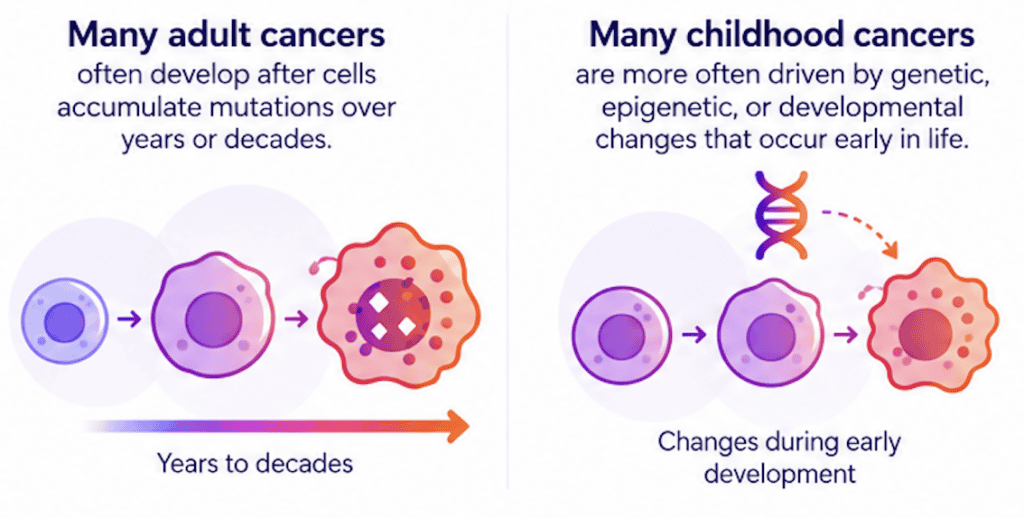
Adult cancers are typically the result of decades of cumulative DNA damage, environmental exposures, and the gradual breakdown of cellular repair mechanisms. In contrast, childhood cancers are often characterized as "diseases of development." These tumors arise when the normal developmental pathways of a growing child go awry. Because children are in a constant state of rapid biological growth and cellular differentiation, a single genetic or epigenetic error during this process can trigger malignant transformation.
The Genetic Landscape
Because childhood cancers do not have the decades of "wear and tear" that characterize adult malignancies, they often harbor fewer somatic mutations. This is a critical factor for immunotherapy. Standard "checkpoint inhibitors"—the blockbuster drugs that have revolutionized adult cancer care—work by removing the "brakes" from the immune system. They rely on the presence of "neoantigens," or abnormal proteins caused by heavy mutation, to signal the immune system to attack. Since many pediatric tumors have low mutation burdens, the immune system simply does not "see" the tumor. To the body’s T cells, the cancer appears to be "self" rather than "invader."
Chronology: The Evolution of Pediatric Immunotherapy
The journey toward modern immunotherapies has been a multi-decade progression, moving from non-specific immune stimulation to highly targeted, engineered solutions.
- The Early Era (1980s–1990s): Initial attempts at immunotherapy in children focused on cytokines and monoclonal antibodies designed to flag cancer cells for the immune system. While groundbreaking, these treatments often faced limitations in efficacy and significant toxicity.
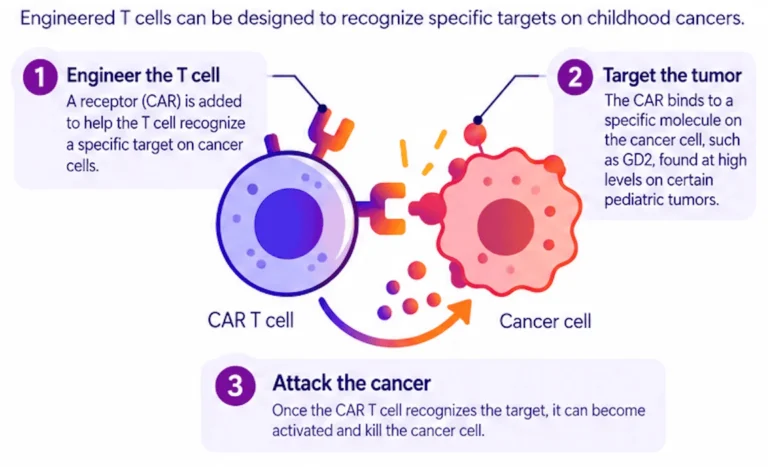
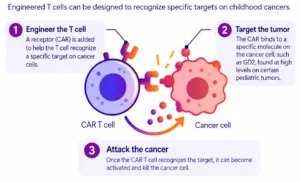
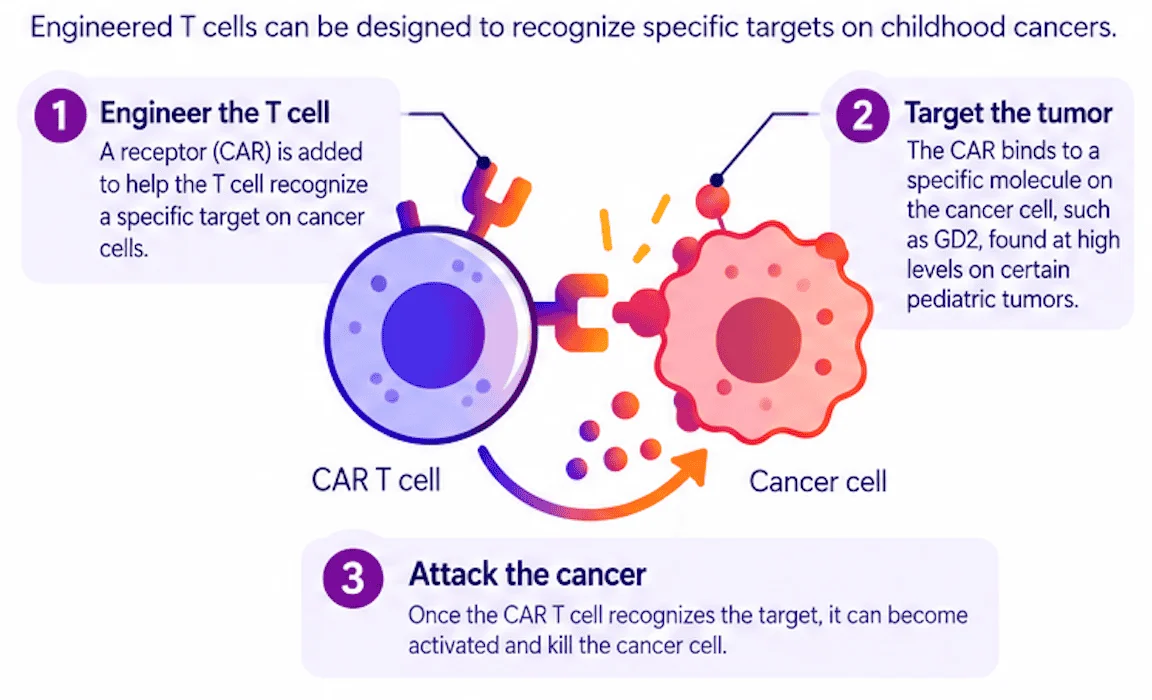
- The Rise of CAR T-Cell Therapy (2010s): The emergence of Chimeric Antigen Receptor (CAR) T-cell therapy marked a turning point. By engineering a patient’s own T cells to recognize a specific surface protein, researchers effectively created a "synthetic immune response." This proved highly successful for certain types of leukemia.
- The Solid Tumor Challenge (2015–Present): With hematologic cancers showing promise, the focus shifted to the more daunting landscape of solid tumors, such as brain tumors, neuroblastoma, and sarcomas.
- The Current Frontier (2025–Beyond): Researchers like Dr. Majzner are now moving into "next-generation" engineering, focusing on how T cells signal internally and how to optimize them to survive the hostile microenvironment of a solid tumor.
Supporting Data: The Case for Targeted Engineering
The efficacy of immunotherapy in pediatric cases is currently measured by the ability to bypass the tumor’s defensive mechanisms. Data from recent clinical trials highlights the potency of targeted approaches.
The GD2 Success Story
Dr. Majzner’s work at Stanford University provided a crucial proof-of-concept. His team identified that diffuse midline glioma (DMG)—an aggressive, historically incurable pediatric brain tumor—expresses a molecule called GD2. By engineering T cells specifically to hunt for the GD2 antigen, they observed meaningful biological activity in early trials. Some patients experienced significant reductions in neurological symptoms, and in a subset of cases, long-term responses were achieved.
Comparison of Treatment Modalities
| Feature | Traditional Chemotherapy | CAR T-Cell Therapy |
|---|---|---|
| Mechanism | Systemic cytotoxicity | Targeted molecular recognition |
| Specificity | Low (affects healthy cells) | High (targets specific antigens) |
| Long-term Impact | High risk of secondary health issues | Potential for long-term immune memory |
| Current Focus | Standard of care | Clinical trials/Advanced research |
Official Perspectives: Dr. Robbie Majzner on "High-Risk" Innovation
During a recent interview with the Cancer Research Institute, Dr. Majzner addressed the cultural and financial hurdles of pediatric research. In a system often driven by immediate, incremental results, "high-risk" research—the kind that asks fundamental questions about T-cell signaling—is frequently starved of funding.
"If you just shut down all high-risk ideas, we will never get new technologies," Dr. Majzner noted. He emphasized that the tools used today are the descendants of "basic science" experiments conducted decades ago—experiments that had no clear clinical application at the time.
The CRI Lloyd J. Old STAR program acts as a buffer against this trend. By providing flexible, long-term funding, it allows scientists to investigate the "why" rather than just the "how." This freedom is essential, as the biology of childhood cancer requires a bespoke approach that cannot be found in existing medical textbooks.
Implications: A New Era of Pediatric Oncology
The implications of this research are twofold: it promises to increase the survival rates for the most stubborn pediatric cancers, and, perhaps more importantly, it seeks to improve the quality of life for survivors.
The Move Toward "In Vivo" Engineering
One of the most exciting developments on the horizon is the prospect of in vivo CAR T-cell therapy. Currently, CAR T-cell therapy is a laborious, expensive, and time-consuming process: cells must be extracted from the patient, engineered in a clean-room laboratory, and then re-infused. If scientists can successfully develop methods to engineer these cells directly inside the patient’s body, the cost and accessibility of these treatments could change overnight.
The "Healthy Years" Metric
The goal of modern pediatric oncology is no longer just to prevent death; it is to prevent the lifelong morbidity associated with radiation and harsh chemotherapy. By leveraging the precision of the immune system, researchers hope to replace "sledgehammer" treatments with "scalpel" precision. If successful, this would mean fewer cardiac issues, fewer secondary cancers, and fewer developmental delays for survivors as they transition into adulthood.
Conclusion
The narrative of childhood cancer is changing. It is moving away from the era of brute-force survival and into an era of biological sophistication. As Dr. Majzner and his colleagues continue to decode the "aberrant development" that drives these diseases, they are doing more than just finding new ways to kill cancer cells. They are laying the groundwork for a future where a cancer diagnosis is not a life-altering trauma, but a manageable hurdle—one that allows a child to grow, thrive, and live with the full vitality of their years.
The next chapter of this research, supported by the dedicated funding of institutions like the Cancer Research Institute, represents one of the most vital scientific pursuits of our time. For the children waiting for a cure, the work cannot move fast enough.