









The release of the 2025–2030 Dietary Guidelines for Americans (DGAs) was met with significant anticipation this week, arriving with the ambitious, consumer-facing tagline: "Eat Real Food." While the document takes a commendable and long-overdue stance against the proliferation of ultra-processed foods and added sugars, it has simultaneously ignited a firestorm of criticism. At the heart of the controversy is a newly introduced "Food Pyramid"—inverted and visually striking—which places a heavy emphasis on animal-based proteins and full-fat dairy. Nutrition experts are now questioning whether the guidelines serve public health or if they have been compromised by conflicting messaging and opaque development processes.
The Main Facts: A Shift in Tone and Strategy
The latest iteration of the DGAs represents a departure from previous, text-heavy government reports. By utilizing a more interactive digital interface and a simplified, pyramid-style graphic, the USDA and the Department of Health and Human Services (HHS) have clearly aimed for a broader, more accessible audience.
The core tenets of the new guidelines include:
- A "Real Food" Focus: An explicit call to limit "highly processed" foods—a broad category that now includes not just sugary drinks, but a wide range of packaged, shelf-stable snacks and refined carbohydrates.
- Strict Sugar Limits: A more aggressive stance on added sugars, suggesting that no meal should contain more than 10 grams of added sugar, and extending the recommendation for children to avoid added sugars entirely until the age of 10.
- Increased Protein Targets: A significant shift in protein intake recommendations, now suggesting 1.2 to 1.6 grams per kilogram of body weight, a 50% to 100% increase over previous minimums.
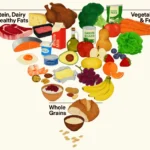
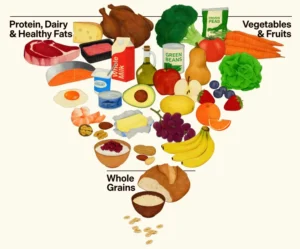
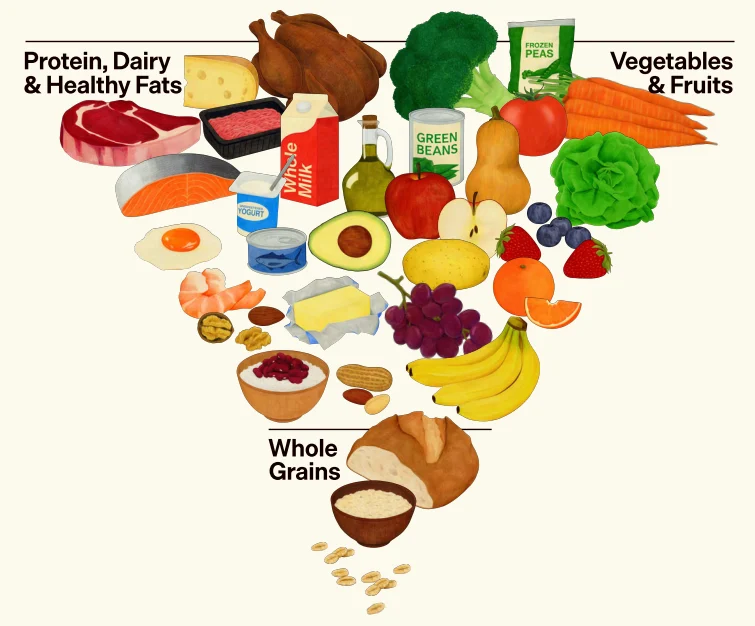
- The "New" Pyramid: A graphic representation that highlights steak, cheese, butter, and whole milk, creating a visual hierarchy that suggests these items are foundational to a healthy diet.
Chronology: A Troubled Path to Publication
The journey to the 2025–2030 guidelines was anything but standard. Traditionally, the DGAs are built upon a foundation laid by the Dietary Guidelines Advisory Committee (DGAC), an independent body of scientists who synthesize the latest nutrition research over a two-year period. Their report is meant to be the objective bedrock upon which government policy is built.
However, for the 2025 cycle, the process deviated significantly from historical norms. The administration opted to reject the initial Advisory Committee’s comprehensive report, commissioning instead a "supplemental scientific analysis" conducted by a panel selected via a federal contracting process.
Critics, including members of the original committee, have expressed profound concerns regarding this shift. Deirdre Tobias, an assistant professor in the Department of Nutrition at the Harvard T.H. Chan School of Public Health and a member of the original 2025-2030 Advisory Committee, has been vocal about the lack of transparency. The supplemental review process lacked the rigorous, peer-reviewed, and replicable methodology that has defined the DGAs for decades. Furthermore, investigative reports have surfaced highlighting that several members of this supplemental review panel maintained financial ties to the beef and dairy industries, raising immediate red flags regarding the objectivity of the final recommendations.
Supporting Data: The Saturated Fat Conundrum
Perhaps the most glaring contradiction in the new guidelines is the dissonance between the written text and the visual hierarchy of the pyramid. While the text retains the longstanding, science-backed limit that saturated fat should account for no more than 10% of total daily calories, the pyramid’s emphasis on animal products makes this target nearly impossible to reach for the average consumer.
To illustrate the "Saturated Fat Math," consider a standard 2,000-calorie daily intake. A 10% limit equates to approximately 22 grams of saturated fat. If a consumer follows the DGAs’ recommendation of three daily servings of dairy—opting for the full-fat versions featured in the pyramid—the math falls apart:
- 8 oz of whole milk: 5 grams of saturated fat.
- ¾ cup of full-fat Greek yogurt: 6 grams of saturated fat.
- 1 oz of cheddar cheese: 6 grams of saturated fat.
This totals 17 grams of saturated fat from dairy alone. If the consumer then follows the suggestion to use butter or beef tallow for cooking, they immediately exceed their daily limit. This does not even account for the saturated fat inherent in the red meat protein sources the pyramid promotes. As Dr. Frank Hu, chair of the Department of Nutrition at Harvard, notes: "The mixed messages surrounding saturated-fat-rich foods such as red meat, butter, and beef tallow may lead to confusion and potentially higher intake of saturated fat and increased LDL cholesterol and cardiovascular risk."
Official Responses and Expert Critique
The scientific community’s response has been one of cautious skepticism. While experts applaud the move away from ultra-processed snacks and the emphasis on fiber-rich whole grains, the lack of clarity regarding protein quality and fat sources is viewed as a major failure.
Dr. Hu emphasizes that while the guidelines mention olive oil, they fail to distinguish it adequately from animal fats. "All these plant oils have been shown to lower LDL cholesterol and cardiovascular risk compared with animal fats such as butter or tropical fats such as coconut oil and palm oil," Hu stated. By grouping these fats under a generic "healthy fat" umbrella without clear differentiation, the government has provided a dangerous loophole for consumers attempting to navigate their heart health.
Furthermore, the lack of consideration for environmental and socioeconomic impacts—a topic that has gained massive traction in global nutrition science—remains a glaring omission. In ignoring how diet choices affect the planet and how food environments dictate what families can actually afford to buy, the DGAs remain disconnected from the modern reality of food systems.
Implications for Public Health
The long-term implications of these guidelines are significant. Historically, Americans have struggled to adhere to government dietary recommendations, and the confusing, often contradictory nature of this new edition may exacerbate that trend. When images—which are far more memorable than text—clash with the underlying scientific recommendations, consumers are left to their own devices.
The shift in protein recommendations is also a concern. By pushing for substantially higher protein intake without emphasizing the "protein package"—the fiber, sodium, and saturated fats that accompany different protein sources—the guidelines may inadvertently encourage diets high in processed meats rather than the plant-based proteins or fish associated with better long-term outcomes.
Conclusion: Navigating the Confusion
As the 2025–2030 guidelines begin to influence federal programs, school lunches, and clinical advice, the public is left in a state of flux. If you find the new pyramid and the accompanying messaging difficult to reconcile, experts suggest relying on evidence-based resources that prioritize long-term cardiovascular health. The Healthy Eating Plate and the Healthy Eating Pyramid developed by nutrition scientists remain robust alternatives that emphasize the quality of food over the quantity of protein or the industry-friendly placement of dairy and beef.
Ultimately, the 2025 DGAs highlight an ongoing struggle between objective nutritional science and the political pressures of the food industry. Until the process returns to a state of complete transparency and rigorous, independent scientific review, consumers should approach these guidelines with a healthy dose of skepticism, focusing on whole, plant-forward nutrition rather than the stylized, and potentially misleading, visuals of a government-sanctioned pyramid.