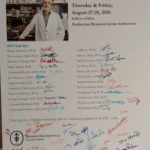

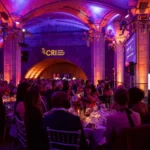

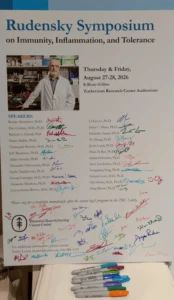

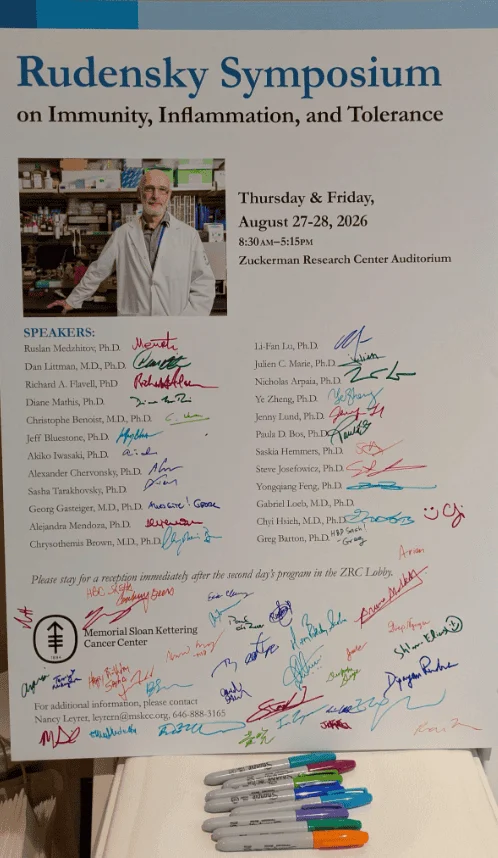
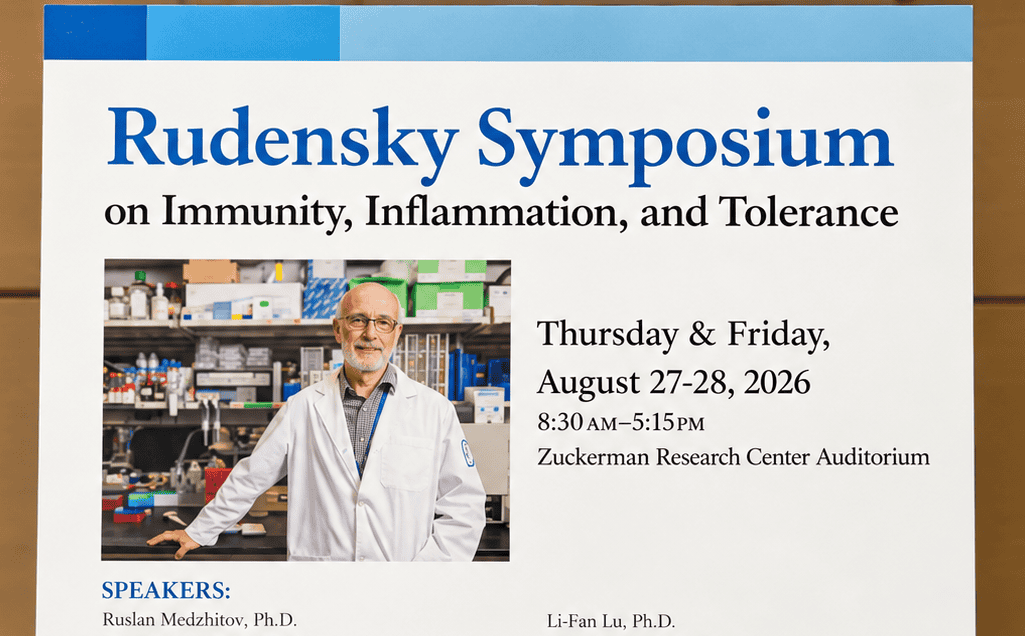
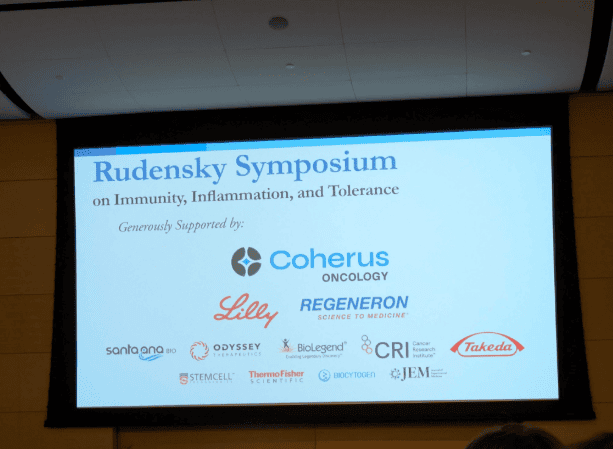
On August 27–28, 2026, the scientific community converged for a landmark event: The Rudensky Symposium on Immunity, Inflammation, and Tolerance. Hosted to commemorate the 70th birthday of Dr. Alexander “Sasha” Rudensky, a titan of immunology at the Memorial Sloan Kettering Cancer Center, the event transcended the traditional academic conference. It served as a living archive of a career defined by rigorous inquiry, collaborative spirit, and the cultivation of the next generation of scientific leaders.
For two days, the symposium acted as a bridge between the foundational principles of basic immunology and the cutting-edge clinical applications that are currently reshaping cancer treatment. Through a series of presentations that interwoven high-level data with personal testimonials, the meeting highlighted how decades of mentorship have fostered a "scientific family" capable of solving the most complex puzzles in human health.
The Foundation: A Legacy of Mentorship and Discovery
The Cancer Research Institute (CRI) has been a steadfast partner in Dr. Rudensky’s journey for over two decades. This relationship is not merely transactional; it represents a commitment to the "long game" of science. The CRI has supported more than a dozen of Dr. Rudensky’s fellows, many of whom have gone on to lead their own prestigious laboratories.
In 2015, the CRI recognized Dr. Rudensky’s monumental contributions by awarding him the William B. Coley Award. His pioneering work on regulatory T cells (Tregs)—the "peacekeepers" of the immune system that prevent autoimmunity and maintain tissue integrity—has become a cornerstone of modern immunology. The symposium served as a poignant reminder that while Dr. Rudensky’s accolades are numerous, his most significant legacy lies in the trainees who now populate the front lines of cancer research.
Chronology of Scientific Inquiry: From Tissue Homeostasis to Cancer Surveillance
The symposium’s program was meticulously curated to trace the evolution of immunological thought. It began with the fundamental biology of tissue maintenance, moved into the complexities of early cancer detection, and concluded with the multifaceted interactions within the tumor microenvironment.
Day 1: The Maintenance Crews of the Body
The first sessions challenged the traditional view of the immune system as purely a defense mechanism. CRI scientist and 2003 Coley Awardee Dr. Ruslan Medzhitov opened the proceedings with a compelling look at cellular "garbage collection." His research demonstrates that stressed cells recruit macrophages not just to fight infection, but to clear cellular debris—positioning immune cells as essential maintenance crews for healthy tissue.
Building on this, 2024 Coley Award winners Drs. Diane Mathis and Christophe Benoist provided deep dives into the versatility of Tregs. Their work revealed that these cells are far more specialized than previously understood; they are key orchestrators of muscle repair and are capable of sensing specific molecular targets to dictate their functional identity. This nuance is critical: when immune restraint is imprecise, the body suffers from either unchecked inflammation or, conversely, a permissive environment where cancer can thrive.
Day 2: Early Detection and the Tumor Ecosystem
The second day shifted focus toward the "pre-cancerous" state. Dr. Richard A. Flavell, a 2012 Coley Awardee, presented provocative findings on how the immune system monitors mutant stem cells before they ever manifest as clinical tumors. His research in mouse models suggests that the immune system is in a constant state of "competitive surveillance," identifying and eliminating cells with oncogenic mutations like BRAF.
Dr. Julien C. Marie further expanded on this by exploring the plasticity of immune cells. His research into the TGF-β signaling pathway illustrated that the inflammatory state of cells, such as Th17 cells, is not necessarily fixed. By manipulating these signals, researchers may one day be able to "reprogram" inflammatory environments to prevent the progression of DNA damage toward full-blown malignancy.
The Wider Ecosystem: Microbiome and Microenvironment
Perhaps the most significant shift in recent years is the realization that cancer does not exist in a vacuum. It is a product of its environment, from the gut microbiome to the physical architecture of the tumor itself.
The Gut-Tumor Axis
Dr. Dan Littman, a 2016 Coley Awardee, brought the conversation to the systemic level. His research has been instrumental in showing that the gut microbiome serves as a training ground for T cells. This finding suggests that a patient’s diet or microbiome composition could fundamentally dictate the efficacy of checkpoint immunotherapy. The implications are profound: if we can influence the gut-immune axis, we can potentially enhance the systemic anti-tumor response from within the patient’s own biology.
Engineering the Neighborhood
The symposium also highlighted structural challenges. Dr. Paula D. Bos presented work on how Tregs influence the "scaffolding" around breast cancer. By modulating the interaction between Tregs and macrophages, her team was able to disrupt the collagen fibers that act as "highways" for metastasis.
Dr. Nicholas Arpaia echoed this theme of spatial control, describing how tumors actively recruit fibroblasts to build protective, immunosuppressive "neighborhoods." His collaborative work with CRI Lloyd J. Old STAR awardee Dr. Tal Danino has pioneered the use of engineered bacteria to deliver therapeutics directly into these protected zones. This targeted approach aims to avoid the systemic toxicity often associated with broad immune modulation.
Implications for Clinical Practice
The overarching message of the symposium was clear: the wall between "basic science" and "clinical therapy" is increasingly porous. The research presented suggests several key takeaways for the future of oncology:
- Precision Restraint: We must learn to modulate Tregs with high specificity. Because they are essential for healthy tissue, "broad-spectrum" removal of Tregs is not a viable strategy. Future therapies must target only those Tregs that specifically enable tumor growth.
- Early Intervention: Immunotherapy is currently largely reserved for advanced disease. However, the data from Drs. Flavell and Marie suggests that the window for immune-mediated prevention might open years before a tumor is even visible.
- Holistic Approaches: The microbiome and the structural scaffolding of the tumor (the extracellular matrix) are no longer "secondary" factors. They are primary determinants of treatment success and must be integrated into future clinical trial designs.
Official Perspective: The CRI Commitment
The Cancer Research Institute’s involvement in the Rudensky Symposium reflects a broader organizational strategy. By fostering a community that values curiosity-driven research, the CRI ensures that the field of immunology does not stagnate.
"The Rudensky Symposium was more than a tribute to a distinguished career," noted a representative from the CRI. "It was a validation of our long-term funding model. We don’t just fund projects; we fund the scientists who are brave enough to ask the fundamental questions that lead to tomorrow’s breakthroughs."
This commitment to basic science is the engine of innovation. The "ripple effect" described by attendees—where a question about gut bacteria in 2010 leads to a breakthrough in lung cancer immunotherapy in 2026—is the hallmark of the scientific process.
Conclusion: A Living Legacy
As the symposium concluded, the focus returned to the human element. The sight of multiple generations of scientists—from the most senior investigators to the newest PhD candidates—sharing ideas, debating methodologies, and reminiscing about the late nights in the lab, served as a powerful reminder of how science actually progresses.
It is not just through journals and grant proposals, but through the rigorous mentorship and the "shared language" of a scientific community. Dr. Sasha Rudensky’s legacy is not confined to the pages of the textbooks he has helped write; it is etched into the careers of the hundreds of researchers he has mentored. As these scientists return to their labs, they carry with them not only new data but a renewed understanding of the interconnectedness of all life—from the way a cell repairs its DNA to the way an entire organism defends itself against the encroaching threat of cancer.
The symposium has set the stage for the next decade of discovery, reminding us all that the most transformative cures often begin as simple, fundamental questions about what it means to be healthy, and what it takes to restore that balance when it is lost.