









The recent diplomatic mission of U.S. Secretary of State Marco Rubio to the G7 summit in France has signaled a profound, albeit unspoken, turning point in modern military history. As the administration pivots from the bellicose rhetoric of total victory to an urgent, multilateral appeal for support, the reality on the ground—or more accurately, on the water—has become impossible to ignore. After eight months of intensive aerial bombardment, billions of dollars in military expenditure, and the tragic loss of American service members, the United States finds itself in a position that was once unthinkable: effectively locked out of the Strait of Hormuz, the world’s most critical energy artery.
The unfolding situation serves as a stark rebuke to the prevailing neocon strategy of the last two decades, which posited that American airpower could unilaterally dictate geographic and economic outcomes. As the U.S. Navy struggles to maintain freedom of navigation, the admission that the United States cannot solve this crisis alone represents a symbolic buckling of an empire that once took its global supremacy for granted.
A Chronology of Escalation: From Strategic Bombing to Diplomatic Desperation
To understand the current crisis, one must trace the timeline of the 2026 conflict. The initial phase, characterized by high-intensity aerial strikes, was sold to the American public as a surgical operation designed to degrade Iranian defensive capabilities and secure the Strait.
- Q1 2026: The onset of hostilities saw the U.S. military deploy extensive assets to the region, promising that Iranian threats to the Strait of Hormuz would be neutralized within weeks.
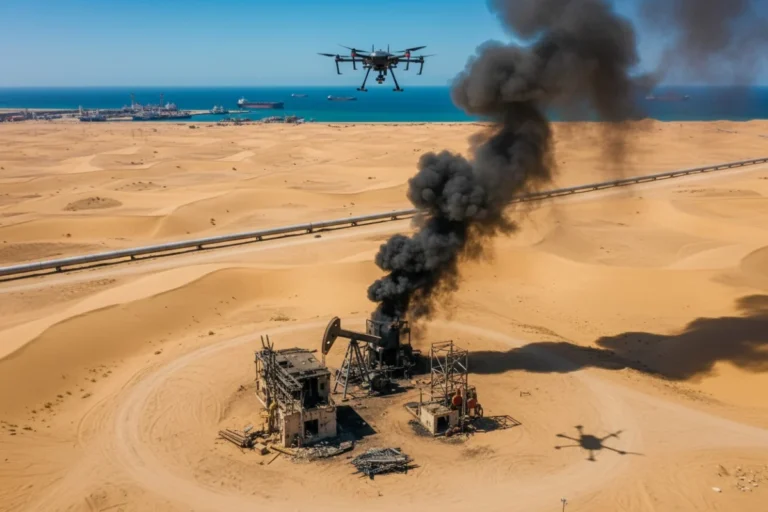
- May 2026: As bombing campaigns intensified, analysts began to note the resilience of Iranian defensive infrastructure, specifically the utilization of the Zagros Mountains and advanced subterranean missile batteries.
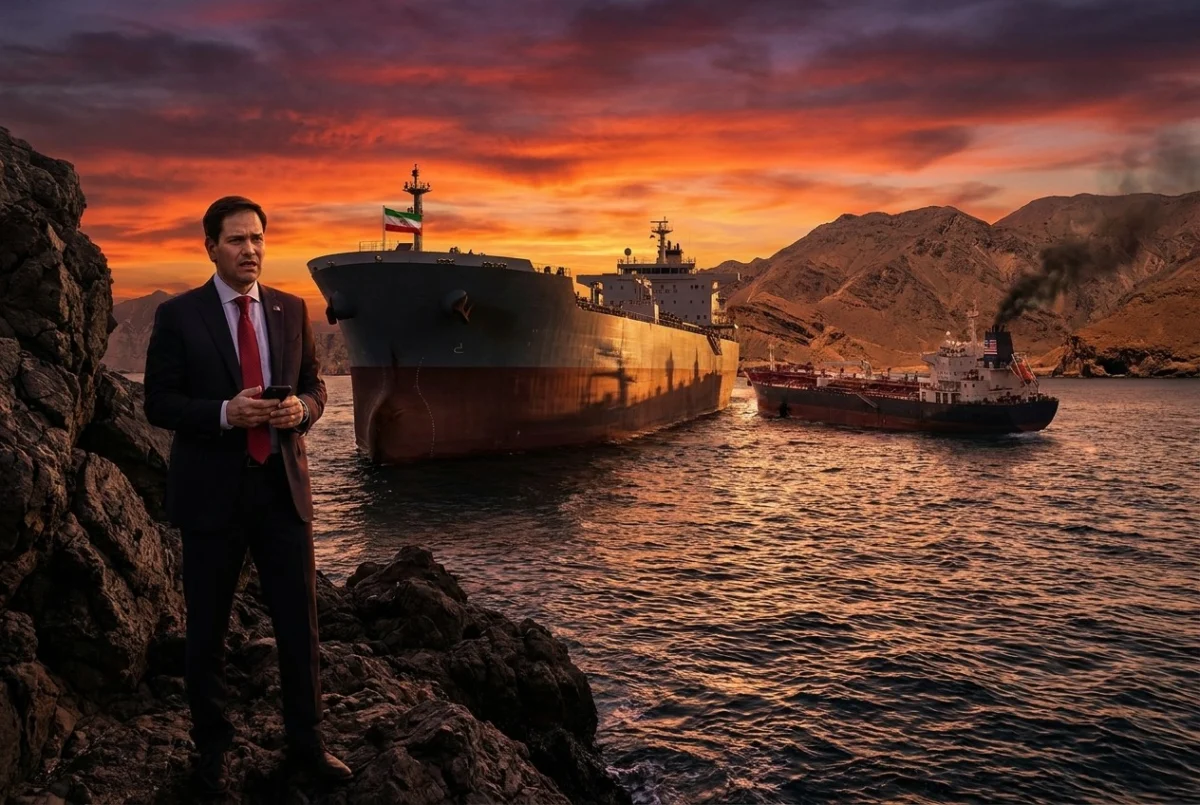
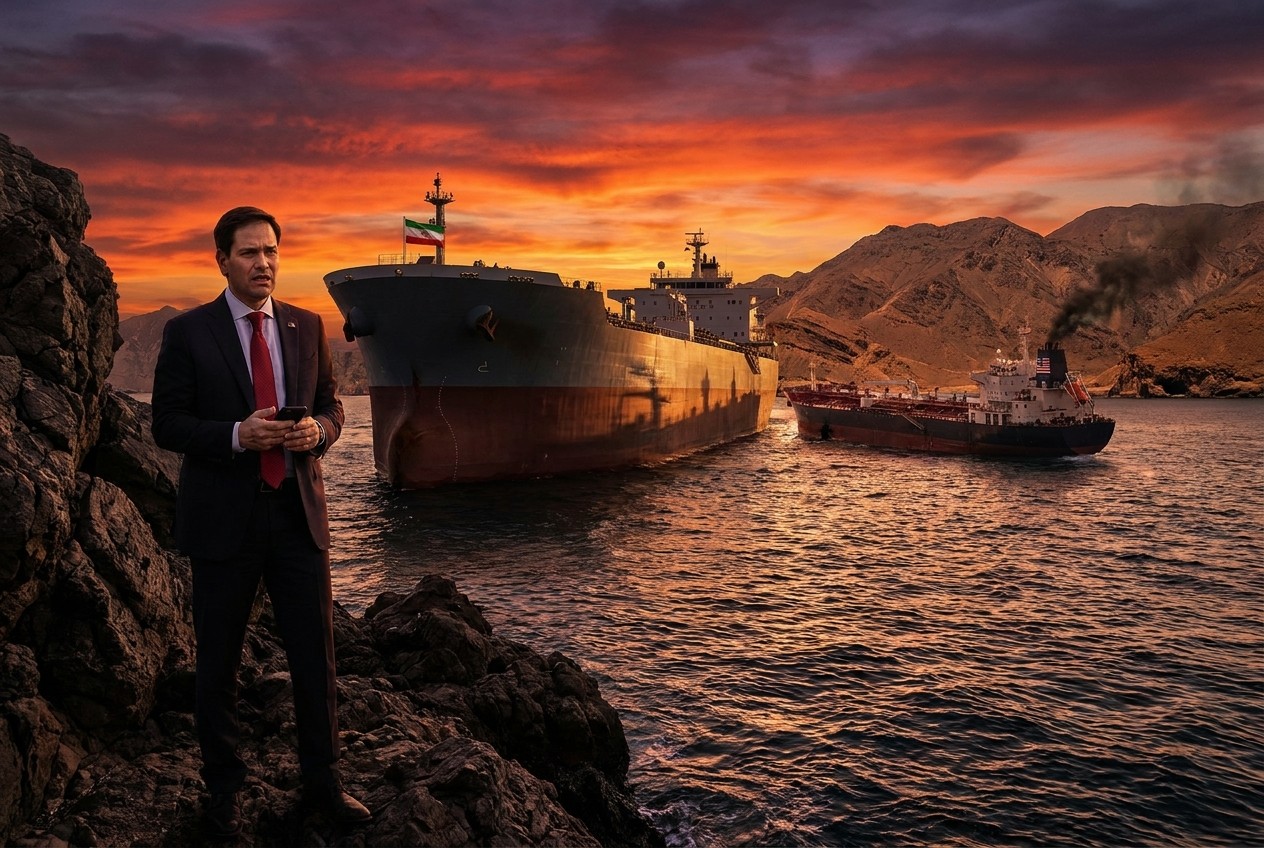
- October 2026: The situation reached a critical inflection point when two tankers were set ablaze off the coast of Oman. This incident, followed by Tehran’s overt claims of deploying naval mines, demonstrated that the U.S. had failed to deter Iranian asymmetric tactics.
- November 2026: The electoral fallout in the United States, which saw the loss of both legislative chambers for the incumbent party, underscored the domestic political toll of the protracted conflict.
- The Current Phase: Secretary of State Rubio’s appeal to the G7 marks the shift from "mission accomplished" narratives to the formation of an international coalition—a desperate move to share the burden of a failure that the U.S. Navy can no longer shoulder in isolation.
Supporting Data: The Geography of Defeat
The central failure of the current strategy lies in a fundamental misunderstanding of maritime geography. The Strait of Hormuz is not a "neutral" corridor; its narrowest points traverse the territorial waters of Iran and Oman. While Washington has long insisted on the doctrine of "international passage," the physical reality dictates that Iran possesses the high ground and the littoral proximity to effectively enforce its own regulations.
Reports citing high-level diplomats indicate that Tehran and Muscat are moving toward a joint management framework, which includes the implementation of a service fee for transiting vessels. While Rubio characterizes these as "illegal tolls," the economic reality is far more nuanced. Current global maritime insurance rates, driven by the uncertainty of the conflict, have spiked to nearly $1.5 million per day per vessel. In contrast, the proposed Iranian transit fee—estimated at approximately $1 million per tanker—is a mere fraction of the current "war tax" being paid by the global economy.
When analyzed from a strictly economic perspective, the current U.S. policy of non-recognition of these fees is arguably more costly to the global market than a negotiated settlement. However, the political imperative of the "war party" prevents such a pragmatic pivot, as it would constitute a de facto recognition of Iranian sovereignty and strategic success.
Official Responses and the "Uniparty" Stance
The response from Washington has been a study in contradiction. Marco Rubio, whose career has been marked by significant ideological pivots—from Tea Party fiscal conservatism to hawkish neocon interventionism—now finds himself the face of a failing policy. His insistence that the Strait must remain free of "illegal tolls" ignores the reality that the U.S. has effectively lost the leverage required to enforce that mandate.
When Rubio describes Iran’s demands—which include the lifting of port blockades and sanctions relief—as "outrageous," he is essentially communicating to the international community that the United States is out of cards. The refusal to engage in diplomatic negotiations regarding these terms is not, as Rubio claims, a defense of international law; it is a continuation of a propaganda campaign intended to justify further military escalation.
Furthermore, the domestic political landscape remains largely unchanged despite the midterm shift. The "uniparty" consensus in Washington, heavily influenced by pro-Israel donors and long-standing hawkish mandates, continues to push for a persistent military presence. Despite earlier campaign promises to wind down foreign military aid, current negotiations suggest a renewal of support through 2033, signaling that the establishment remains committed to a policy of regional interventionism, regardless of the mounting costs.
Global Implications and the Future of Maritime Security
The implications of this standoff extend far beyond the Persian Gulf. We are witnessing a fundamental reconfiguration of global geopolitical dynamics. As nations like India and China increasingly utilize alternative payment systems—such as the yuan—to facilitate trade through the Strait, the U.S. dollar’s role as the sole arbiter of international energy commerce is being challenged.
The "paper tiger" narrative, while often dismissed by mainstream media, carries weight when one observes the movement of naval assets. The continued presence of carrier groups and the rotation of B-2 bombers suggest that the U.S. is not preparing to withdraw, but rather is holding a "loaded gun" to the region. This posturing carries a significant risk: the possibility of a sudden, surprise escalation. Intelligence reports suggest that contingency plans for a ground invasion of Iran remain active, having been pushed into the shadows rather than discarded following the legislative losses of the ruling party.
For the American public, the reality is sobering. The conflict has not only inflated fuel prices through market instability but has also exposed the fragility of the post-WWII international order. The assumption that the U.S. Navy can guarantee the free flow of oil under any circumstances is no longer a viable security doctrine.
Conclusion: The Necessity of Strategic Realism
As the G7 nations deliberate on the U.S. request for assistance, they are faced with a difficult choice: join a failing effort to maintain a status quo that no longer exists, or acknowledge the shifting power dynamics in the Middle East and advocate for a pragmatic, diplomatic resolution.
The path forward for the United States, if it is to avoid further humiliation and the potential for a catastrophic regional war, must involve a shift from aggressive posturing to a genuine assessment of its limitations. The era of unchecked American naval hegemony in the Persian Gulf is effectively over. The question is not whether the U.S. can "win" the war, but whether its leadership has the political courage to accept the new reality before the costs—both economic and human—become irreversible.
For the average citizen, the lesson of the past eight months is clear: the mechanisms of the global economy are more fragile than they appear, and the decisions made in the corridors of power in Washington often have little correlation with the reality on the water. Preparation, awareness, and a critical eye toward the narratives provided by state actors remain the only reliable defenses in an increasingly volatile global landscape. The war with Iran may be in a state of suspended animation, but the underlying tensions remain a powder keg that could ignite at any moment.