








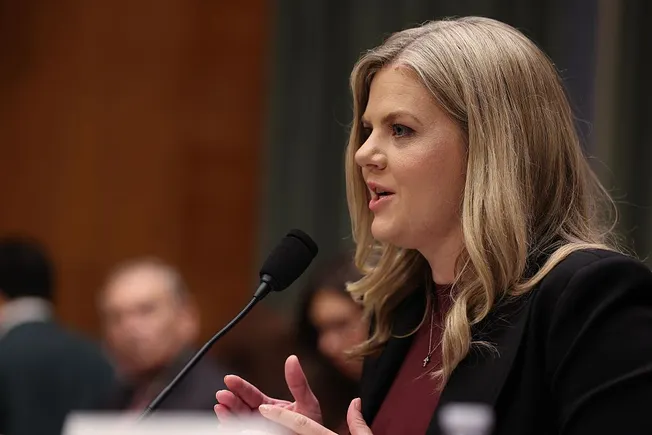
The White House has officially withdrawn the nomination of Dr. Heidi Overton to serve as the Commissioner of the Food and Drug Administration (FDA), a strategic retreat that signals deepening fissures within the Republican coalition regarding public health policy. The decision to abandon the confirmation effort comes after Overton’s complex record—spanning vaccine mandates, reproductive health access, and the regulation of flavored vaping products—failed to secure the necessary consensus among Senate lawmakers.
The failure to confirm a permanent successor to lead the nation’s top health regulator arrives at a critical juncture for the pharmaceutical and biotechnology industries. As the Trump administration faces a shifting political landscape, the FDA remains under the stewardship of an acting commissioner, leaving the agency in a state of extended transitional uncertainty.
Chronology of a Failed Confirmation
The timeline of Dr. Overton’s nomination reflects the broader volatility that has defined the FDA’s leadership in recent years.
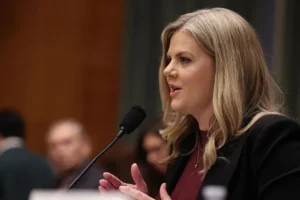
- September 2026: Dr. Heidi Overton sits before the Senate Health, Education, Labor and Pensions (HELP) Committee for her confirmation hearing. During testimony, she attempted to strike a balance between executive policy objectives and established scientific consensus, pledging to "follow the law" regarding vaccines and affirming that the medical abortion drug mifepristone met rigorous safety and efficacy standards.
- November 17, 2026: Reports surface via Axios suggesting the White House had begun to lose confidence in the viability of the nomination. Despite an urgent push by the administration to secure a permanent commissioner while the GOP still held the congressional majority, internal headcounts indicated that Overton lacked the requisite support to pass out of committee.
- November 18, 2026: The scheduled committee vote is effectively scrapped. Senate HELP Committee Chairman Bill Cassidy (R-La.) confirms the collapse of the nomination, expressing visible frustration and noting that he had previously been satisfied with Overton’s reassurances regarding her scientific independence.
- Present: The FDA continues to operate under the leadership of Kyle Diamantas, whose tenure as acting commissioner is extended by the reset of the federal 210-day "Vacancies Act" clock triggered by the withdrawal of a nominee.
The Policy Flashpoints: Why the Nomination Stalled
The derailment of Dr. Overton’s candidacy was not the result of a single political failure, but rather a confluence of high-stakes policy disagreements that alienated key wings of the Republican Party and the broader "Make America Healthy Again" (MAHA) movement.
The Vaccine Controversy
Central to the opposition was Overton’s alignment with executive directives regarding childhood immunizations. Specifically, her support for President Trump’s proposal to decouple the MMR (measles, mumps, and rubella) vaccine into three distinct injections—a strategy that the President famously labeled as preventing "lethal" side effects—met with significant pushback. While the administration viewed this as a compromise to address parental skepticism, many in the medical and scientific community viewed the move as an unnecessary disruption of a standard, highly effective public health protocol.
Reproductive Health and Mifepristone
Overton’s testimony regarding mifepristone created a "double-bind" for her candidacy. By acknowledging that the drug met existing safety standards, she drew the ire of anti-abortion factions and influential GOP lawmakers who have been pressuring the FDA to conduct a new safety review of the medication. Though an agency-led study is currently underway—with results expected in March 2027—Overton’s refusal to categorically denounce the drug’s current usage guidelines made her a target for the party’s right flank.
The Vaping Debate
A final, critical point of contention was Overton’s record on flavored vapes. Her history of supporting looser access to certain vaping products alienated health advocates and conservative lawmakers who prioritize a more restrictive regulatory posture. The combination of these three issues—vaccines, reproductive drugs, and tobacco regulation—created a "triad of opposition" that made a successful floor vote impossible.
Implications for Industry and Agency Stability
For the pharmaceutical and biotech sectors, the FDA’s leadership vacuum is a source of both anxiety and cautious optimism. The industry has long favored stability, particularly after the tumultuous tenure of Marty Makary, whose resignation earlier this year left the agency in a state of administrative disarray.
A Return to Traditionalism
Over the last several months, the FDA has been working to correct course. By reversing several controversial decisions made during the Makary era and installing traditional, experienced leaders at the agency’s two primary drug-review offices, the FDA has regained some semblance of internal order. Industry analysts, including RBC Capital Markets’ Brian Abrahams, have suggested that the current operations are running "reasonably smoothly" despite the lack of a permanent commissioner.
The "Expert Panel" Promise
One of the most significant aspects of Overton’s platform—which now remains unfulfilled—was her promise to re-institute the use of expert advisory panels. These panels had become a rarity under the previous leadership, and their absence led to concerns about the transparency of the FDA’s decision-making process. Overton’s advocacy for these panels, combined with her pledge to empower career staff scientists, had gained favor among drugmakers who prioritize regulatory predictability.
Official Responses and Future Outlook
In the wake of the withdrawal, Senate HELP Committee Chairman Bill Cassidy offered a candid assessment of the situation. "I think she would have had the votes to pass out of a committee and to pass the full Senate," Cassidy stated during the hearing. His surprise underscored the rapid deterioration of support in the final hours before the vote. Cassidy lamented the loss of the window of opportunity, noting, "Unfortunately, with the limited time left, confirming a permanent FDA commissioner appears to fall to Senate Democrats."
Who Comes Next?
The White House now faces the daunting task of finding a candidate who can satisfy the diverse demands of the Republican caucus while maintaining the trust of the medical establishment.
Reports indicate that Senator Roger Marshall (R-Kan.), a physician who recently lost his re-election bid, has emerged as a potential contender. Analysts view Marshall as a candidate who could potentially bridge the gap: he possesses a background in medicine, which satisfies the need for professional credibility, and he holds an "industry-friendly" record that would likely reassure biotech investors.
The Legal Framework: The Vacancies Act
The legal reality of the FDA’s current state is governed by the Federal Vacancies Reform Act. Acting Commissioner Kyle Diamantas, who was elevated to the role following the resignation of Marty Makary, is subject to a 210-day limit. The withdrawal of the Overton nomination effectively resets this clock, providing the agency with a temporary buffer against the need for immediate, high-pressure leadership changes. However, this is a stopgap, not a solution.
As the agency moves toward the first quarter of 2027, the focus will be on whether the current leadership team can maintain the stability required to oversee complex clinical trials and product approvals. The FDA is currently in the midst of a high-stakes study on the safety of mifepristone, and the results of that study will inevitably become a lightning rod for the next nominee, regardless of who the administration selects.
Conclusion
The failure to confirm Heidi Overton is a microcosm of the current tension between the Trump administration’s desire to reshape federal health policy and the institutional realities of the Senate. While the FDA’s day-to-day operations remain functional, the lack of a permanent, Senate-confirmed leader serves as a constant reminder of the fragility of the agency’s mission. For now, the "MAHA" agenda and the needs of the pharmaceutical industry remain in a state of uneasy suspension, waiting for a candidate who can navigate the narrow corridor between political ideology and regulatory rigor.