










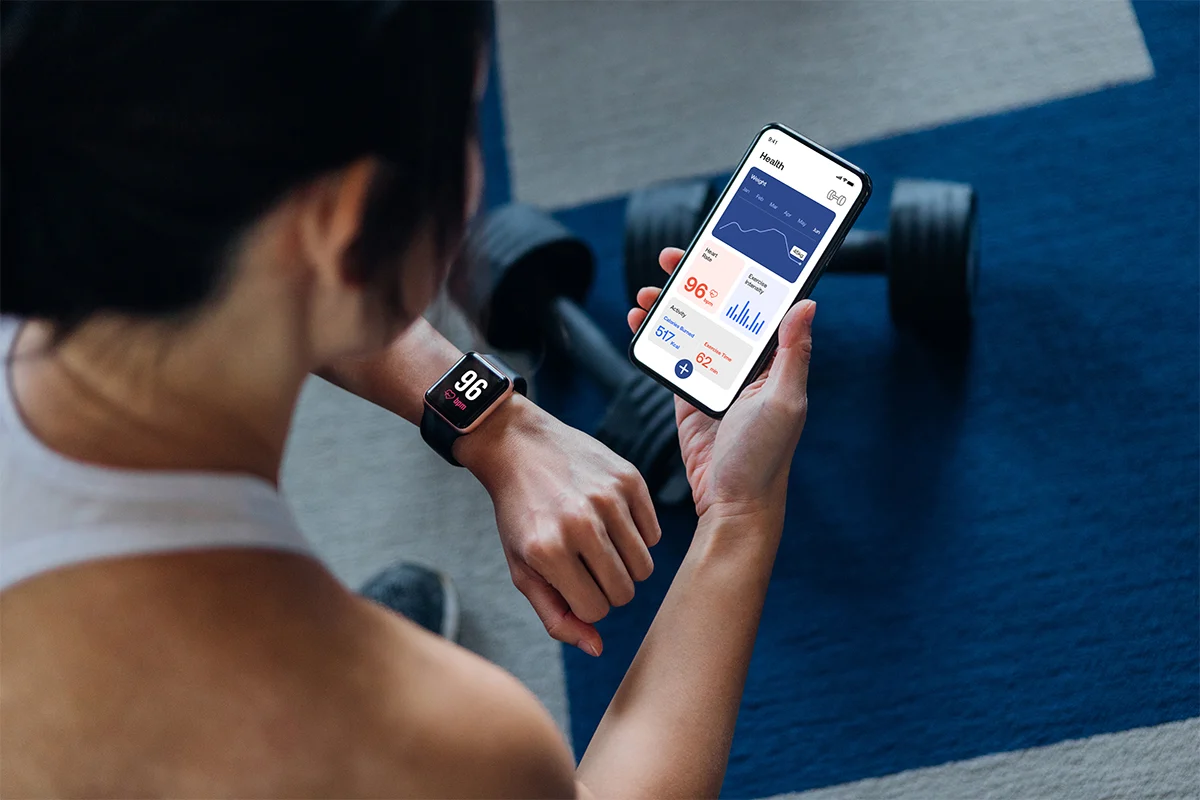
In the last decade, the landscape of personal health management has been transformed by a sleek, ubiquitous accessory: the consumer fitness tracker. From wrist-worn pedometers to sophisticated smartwatches capable of measuring blood oxygen saturation and heart rate variability (HRV), these devices have democratized biometric monitoring. However, as the industry matures, a growing body of clinical research suggests that while these tools are powerful, they are not infallible. The allure of "quantified self" data often masks a significant technical reality: consumer-grade wearables operate with a margin of error that, while acceptable for general wellness, falls short of the rigorous standards required for clinical diagnostics.
Main Facts: The Accuracy Paradox
The fundamental tension in the wearable industry lies between accessibility and precision. While a clinical-grade electrocardiogram (ECG) or a polysomnography (PSG) sleep study utilizes medical-grade sensors and rigorous calibration, consumer wearables rely on photoplethysmography (PPG)—a process that uses light sensors to detect blood volume changes in the wrist.
Research consistently highlights that these devices are highly effective at tracking activity trends, yet they struggle with granular precision in three specific domains:
- Calorie Expenditure: Algorithms often overestimate energy expenditure by relying on generic metabolic equations that fail to account for individual variations in muscle mass, resting metabolic rate, and thermic effect of food.
- Sleep Staging: Distinguishing between light, deep, and REM sleep based solely on movement and heart rate remains a significant challenge. Most wearables lack the electroencephalogram (EEG) capabilities required to truly map brain activity, leading to frequent misclassifications.
- Recovery Metrics: Metrics like HRV are sensitive to environmental factors, hydration, and skin temperature. When a device reports a low "readiness score," it may be capturing a temporary spike in stress rather than a genuine physiological need for rest.
Chronology of the Wearable Evolution
The trajectory of wearable technology has moved from simple pedometers to complex biometric command centers.
- 2008–2012: The Step-Counting Era. The market was dominated by basic accelerometers that prioritized step counting as the primary proxy for health. The technology was rudimentary, often failing to distinguish between walking and simple arm movements.
- 2013–2017: The Heart Rate Integration. This period saw the mass adoption of optical heart rate sensors. Manufacturers began moving beyond steps to focus on "active minutes" and continuous heart rate monitoring, though the reliability of these sensors during high-intensity interval training (HIIT) remained questionable.
- 2018–2022: The Clinical Pivot. Industry leaders began integrating ECG sensors, SpO2 monitors, and skin temperature sensors. This was a strategic push to position wearables as health-monitoring devices rather than just fitness toys.
- 2023–Present: The Contextual Analytics Phase. The current focus has shifted from raw data collection to "insights." Companies are now marketing AI-driven coaching, sleep coaching, and recovery optimization. The challenge has moved from "Can we measure it?" to "Can we interpret it correctly?"
Supporting Data: Understanding the Variance
To understand why the "gap" matters, one must look at the data variance between consumer devices and gold-standard clinical equipment.
The Calorie Calculation Fallacy
A study published in the Journal of Personalized Medicine evaluated several leading wearables and found that error rates for energy expenditure could exceed 30% depending on the intensity of the activity. When an individual relies on these numbers to calibrate their nutritional intake, a 30% error rate can lead to significant metabolic imbalances—either under-fueling for performance or over-consuming, leading to unintentional weight gain.
Sleep and the "Black Box" Problem
Polysomnography remains the gold standard for sleep studies, measuring brain waves, eye movement, and muscle activity. Consumer wearables, however, rely on a "black box" of proprietary algorithms. Comparative studies have shown that while wearables are moderately accurate at identifying total sleep time, their accuracy in identifying "REM sleep" drops significantly, often showing a discrepancy of 20–40% compared to lab-confirmed PSG results.
The Variability of HRV
Heart Rate Variability is touted as the "holy grail" of recovery metrics. However, data suggests that different devices use different sampling frequencies. A device that samples heart rate every five minutes will produce a vastly different HRV calculation than a clinical monitor that samples continuously. This leads to "data jitter," where a user might wake up feeling fully recovered, only to be told by their watch that they are in a state of high stress, causing unnecessary anxiety.
Official Responses and Industry Stance
Major tech manufacturers have addressed these criticisms by emphasizing that their devices are intended for "wellness and fitness purposes only" and are not medical devices.
In official documentation, companies clarify that their algorithms are trained on large, diverse datasets, but acknowledge that individual physiology—such as skin tone, tattoo placement, or wrist anatomy—can impact sensor performance. Industry advocates argue that the value of the device is not in the absolute number, but in the longitudinal trend. "We aren’t trying to replace the hospital," a spokesperson for a leading wearable manufacturer noted in a recent industry forum. "We are trying to give the user a mirror into their daily behavior so they can make better, informed choices over months and years."
Implications for Professionals and Consumers
The most significant risk posed by the current state of wearable technology is the "data-action" loop. When a client treats wearable data as absolute truth rather than a directional compass, it can lead to harmful outcomes.
The Risk of Over-Reliance
For athletes, an over-reliance on "recovery scores" can lead to the psychological trap of "nocebo" effects. If an athlete feels physically capable of training but sees a "low recovery" score on their device, they may skip a necessary workout, leading to a loss of fitness. Conversely, ignoring symptoms of overtraining because a watch indicates "readiness" can lead to injury.
The Role of Fitness Professionals
For coaches and personal trainers, the professional shift must be toward contextual interpretation.
- Prioritize Trends over Snapshots: A single day’s low sleep score is noise; a consistent three-week downward trend in sleep quality is a signal that requires intervention regarding the client’s lifestyle or training load.
- Use Data as a Conversation Starter: Instead of telling a client, "Your watch says you didn’t sleep," a professional should ask, "I notice your sleep metrics have been trending lower lately. How are you feeling during the day?"
- Education on Limitations: It is the duty of the fitness professional to educate clients on the margin of error. Explaining that the watch is a "directional tool" helps remove the stress associated with daily fluctuations in metrics.
The Future of Biometric Monitoring
As artificial intelligence continues to integrate with sensor data, the accuracy of consumer wearables is expected to improve. We are moving toward a future where devices incorporate more environmental data—such as air quality, altitude, and ambient light—to better contextualize physiological readings.
However, the human element remains irreplaceable. The most sophisticated wearable cannot account for the emotional stress of a difficult workday, the nutritional impact of a social gathering, or the subjective feeling of "being in the zone" during a workout.
Conclusion: Toward a Balanced Approach
The wearable revolution is not a failure; it is a work in progress. These devices have successfully encouraged millions to walk more, pay attention to their sleep, and consider the impact of stress on their physiology. The challenge lies in our psychological relationship with the data.
To maximize the value of these tools, we must adopt a posture of "skeptical curiosity." We should view the numbers on our wrists as feedback, not fate. By understanding the technological limitations of our devices, we can reclaim our agency, using the data to guide our decisions rather than letting the data dictate our lives. Whether you are a competitive athlete or a wellness enthusiast, the ultimate metric remains the same: how you feel, how you perform, and how you sustain your health over the long arc of your life. Wearables are the signposts, but you remain the driver.