











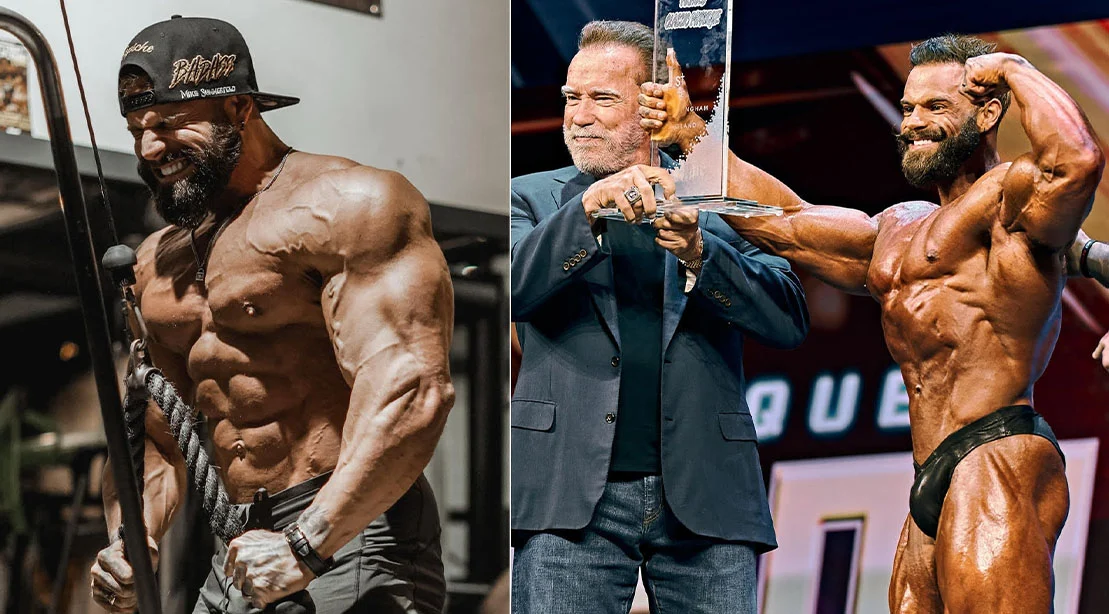
In the high-stakes world of professional bodybuilding, the culture of "no days off" has long been the gold standard. Athletes are often conditioned to believe that more volume, more intensity, and more frequency are the only pathways to the Olympia stage. However, Classic Physique standout Mike Sommerfeld, affectionately known as "The Badass," is challenging this dogmatic approach.
After a blistering run of competition that saw him secure a runner-up finish at the 2025 Olympia and back-to-back victories at the Arnold Classic U.S. and Arnold Classic U.K., the German powerhouse has stepped back to deliver a sobering message: the most dangerous time for a bodybuilder isn’t the contest prep—it’s the period immediately following the stage lights dimming.
The Paradigm Shift: From Constant Grinding to Strategic Recovery
For years, Sommerfeld was the embodiment of relentless training. With over 800,000 followers tracking his every set on Instagram, the pressure to maintain an image of superhuman durability was immense. Yet, in a recent, deeply personal reflection, Sommerfeld confessed that his pursuit of the "perfect body" had led him into a trap of chronic overtraining.
"I was constantly overtraining," Sommerfeld admitted. "The desire to construct the perfect physique pushed me to lean into more reps, more sets, and more intensity, neglecting the fundamental biological necessity of recovery."
Sommerfeld’s realization highlights a critical nuance in sports science: the difference between muscular fatigue and systemic exhaustion. While a muscle group might recover from a brutal session within 48 to 72 hours, the human body as a whole—encompassing the central nervous system (CNS), hormonal balance, and structural integrity—requires a far longer timeline to reach homeostasis.
Chronology of a Champion: A Career Built on Intensity
To understand the weight of Sommerfeld’s current recovery strategy, one must look at the trajectory that brought him to the pinnacle of the sport.
- 2019: Sommerfeld officially turns pro in the 212 division, marking his entry into the elite ranks of the IFBB.
- 2020: Recognizing his aesthetic potential, he transitions to the Classic Physique division, securing a notable runner-up position at the IFBB British Grand Prix.
- 2025: A breakout year for the German star. He solidifies his status as a world-class contender with a runner-up finish at the Olympia, followed by a prestigious victory at the Arnold Classic U.S.
- 2026: Sommerfeld continues his momentum, capturing the title at the Arnold Classic U.K. in March.
This relentless competitive schedule, however, acted as a double-edged sword. While it cemented his status as a top-tier athlete, it also pushed his physiology to the absolute brink. The "sprinting from stage to stage" mentality, as Sommerfeld describes it, is a taxing endeavor that leaves little room for the body to repair the micro-trauma accumulated during the months of contest dieting and heavy training.
Supporting Data: The Science of Systematic Rest
Sommerfeld’s intuition regarding recovery is supported by robust exercise physiology. Research published by Pritchard et al. (2019) in the Journal of Strength and Conditioning Research demonstrated that athletes who incorporated varying periods of rest (3.5 to 5.5 days) showed similar improvements in strength markers, such as the bench press. This suggests that the body is highly efficient at recovering local muscle groups, provided it is given a sufficient window of inactivity.
However, as Sommerfeld points out, muscle tissue is only one piece of the puzzle. Tendons and ligaments, which are crucial for the structural integrity of a bodybuilder, have significantly lower vascularity than muscle tissue. Because they receive less blood flow, their repair process is exponentially slower.
When a bodybuilder ignores the structural signals of fatigue—joint pain, tendonitis, or lingering inflammation—they risk catastrophic injury. Furthermore, the mental tax of competitive bodybuilding is significant. The "cognitive health" aspect of recovery is often ignored, yet it is a primary driver of sustained performance. As Sommerfeld notes, a rested mind is as vital as a rested muscle when it comes to maintaining the discipline required for elite-level prep.
The Danger Zone: Why Post-Show Recovery is Critical
Perhaps the most startling revelation from Sommerfeld’s recent commentary is his assessment of the "post-show" period. Conventional wisdom suggests that after the show is over, an athlete can let their guard down. Sommerfeld argues the opposite.
"Bodybuilding shows are fun," Sommerfeld stated. "After that, the fun is over and you can hurt yourself tremendously."
This "post-contest rebound" is a dangerous phase where athletes often transition from extreme caloric deficits to high-calorie intake while attempting to return to heavy training immediately. The sudden shift in load on joints that have been depleted of nutrients and hydration during prep can lead to significant injury. Sommerfeld characterizes his current phase as "preservation instead of construction." He believes that by intentionally slowing down his training intensity now, he is buying himself the longevity required to secure his first Olympia title in 2026.
Implications for the Modern Bodybuilder
Sommerfeld’s transition from a "more is better" mindset to a "recovery-first" philosophy serves as a blueprint for the next generation of bodybuilders. The implications of his approach are clear:
- Macro-Cycling Recovery: Just as bodybuilders periodize their nutrition and training, they must periodize their recovery. This means scheduling mandatory "de-load" weeks or months, even when the body doesn’t feel like it is screaming for a break.
- Structural Awareness: Recognizing that tendons and joints heal slower than muscles. If a bodybuilder feels joint discomfort, the smart play is to scale back before a chronic injury sidelines them for months.
- Mental Health Integration: Acknowledging that the stress of the stage, travel, and public scrutiny takes a toll on the brain. Recovery should include mental decompression, not just physical inactivity.
Conclusion: The Path to the 2026 Olympia
For Mike Sommerfeld, the goal remains the same: the Olympia stage. However, the path has changed. By prioritizing his long-term health over the short-term gratification of constant gym intensity, he is positioning himself to return to the stage fresher, fuller, and more structurally sound than ever before.
"I want to recover now to be even more prepared later," Sommerfeld says. His strategy is one of calculated patience. He understands that in a sport where the smallest margin can determine a winner, the ability to sustain a high-performance output is not about who can work the hardest, but who can recover the smartest.
As he eyes the 2026 Olympia, "The Badass" has proven that true strength isn’t just found in the weight you move, but in the wisdom to know when to put the weights down. For his followers, the message is clear: if you want to build a body that lasts, you must be willing to respect the limits of the one you have.