










For decades, the global health community has preached a simple mantra: "Move more." Whether through brisk walking, vigorous running, or hitting the gym, the consensus has long been that physical activity is a cornerstone of longevity. However, a landmark study published in the journal BMJ Medicine suggests that the traditional approach to exercise may be missing a critical component. It isn’t just about the sheer volume of sweat equity you invest; it is about the diversity of the movements you perform.
The research indicates that while physical activity is unequivocally linked to a reduced risk of premature death, the benefits are not infinite. There is a "Goldilocks zone" for exercise volume, beyond which the marginal gains begin to plateau. Most significantly, the study reveals that individuals who incorporate a wide variety of activities into their routines experience a substantially lower mortality risk, independent of how many hours they spend exercising in total.
The Core Findings: A New Paradigm for Exercise
The study, which analyzed over three decades of data from more than 170,000 participants, challenges the "more is better" philosophy. The findings suggest that the relationship between physical activity and mortality is non-linear. Specifically, the health benefits associated with total volume appear to reach a saturation point at approximately 20 Metabolic Equivalent (MET) hours per week.
A MET is a unit used to estimate the energy expenditure of physical activities; one MET represents the energy you burn while sitting still. Reaching 20 MET hours—the equivalent of a moderate-to-vigorous exercise routine—appears to provide the most significant protective effect. Pushing beyond this threshold does not necessarily yield proportional increases in longevity, suggesting that once the body has reached a certain level of adaptation, the type of stimulus becomes more important than the amount of effort.
A Thirty-Year Chronology of Movement
To reach these conclusions, researchers leveraged two of the most robust long-term health databases in existence: the Nurses’ Health Study and the Health Professionals Follow-Up Study.
The Methodology
The study followed 121,700 female participants and 51,529 male participants for over 30 years. Beginning in 1986, participants provided comprehensive updates on their health, lifestyle, and exercise habits every two years. This longitudinal approach allowed researchers to capture not just a snapshot of health, but a lifetime trajectory of movement.
The range of activities recorded was vast. From the early days of the study, participants logged staples like walking, jogging, running, and cycling. As the study progressed and fitness trends evolved, researchers added more granular categories, including:
- Strength and Resistance: Weight training and callisthenics.
- Low-Intensity Movement: Yoga, stretching, and toning.
- Functional Tasks: Heavy outdoor work, such as digging and chopping, as well as moderate chores like gardening.
- Micro-movements: Climbing flights of stairs, calculated by the average eight-second duration required to ascend a single flight.
By tracking these habits over three decades, the researchers were able to correlate specific patterns of behavior with mortality outcomes, accounting for 38,847 deaths that occurred over the study period.
Supporting Data: Which Movements Move the Needle?
The data provides a fascinating "menu" for longevity, highlighting which activities offer the highest return on investment. While swimming was the only activity analyzed that did not show a direct link to a lower mortality risk in this specific cohort, almost every other form of exercise proved protective.
The Power of Routine and Variety
The most potent associations were found in:
- Walking: The most common form of leisure exercise, those who walked the most enjoyed a 17% lower risk of death compared to the least active participants.
- Racquet Sports: Tennis, squash, and racquetball were associated with a 15% reduction in mortality risk.
- Strength Training: Weight training and resistance exercises were linked to a 13% reduction.
- Stair Climbing: A simple, everyday activity that correlates to a 10% lower risk of death.
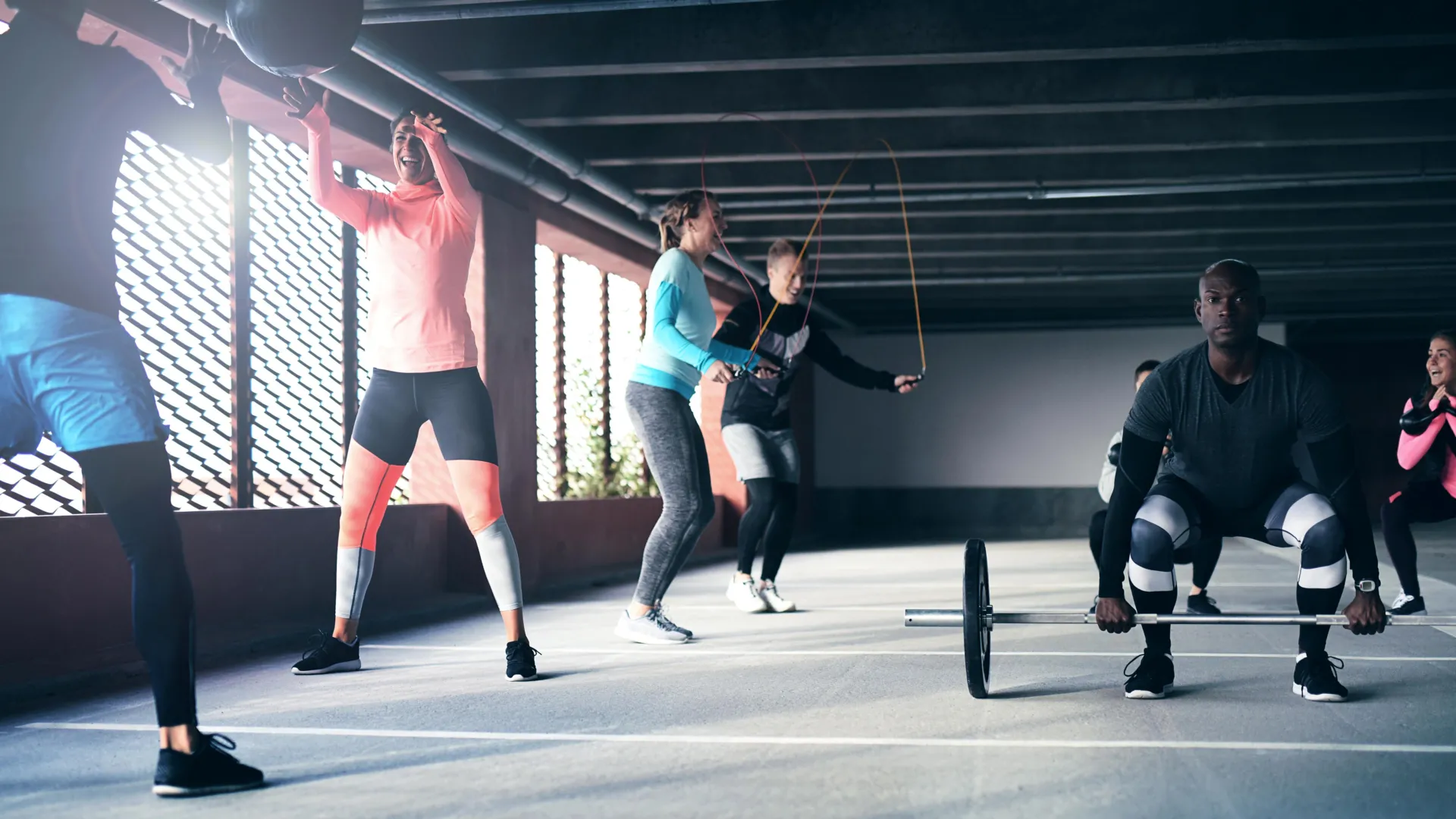
However, when researchers analyzed the variety of activities—the "diversity score"—the results were striking. Participants who engaged in the most diverse set of exercises had a 19% lower risk of death from all causes compared to those who stuck to only one or two types of movement. This benefit held true even when the total volume of exercise was statistically controlled, proving that cross-training or "mixing it up" provides a unique physiological advantage.
Health Profiles and Lifestyle Correlations
The researchers noted that high-activity individuals naturally occupied a different health ecosystem than their sedentary counterparts. Higher levels of physical activity were consistently linked to:
- Lower BMI (Body Mass Index).
- Lower blood pressure and improved cholesterol profiles.
- Higher likelihood of healthy dietary choices.
- Reduced rates of smoking.
- Stronger social connections.
While these factors are classic markers of health, the study’s statistical models adjusted for these variables, confirming that the protective effect of exercise variety is an independent driver of longevity.
Official Responses and Medical Implications
The medical community has received these findings as a pivot point in exercise prescription. Historically, doctors have focused on "dose"—telling patients to hit 150 minutes of moderate activity per week. This new data suggests that the "menu" is just as important as the "dose."
"The message here is not that we should stop moving," one independent expert noted. "It is that the human body is a complex machine that benefits from varied mechanical, metabolic, and neurological stimuli." By alternating between the cardiovascular demands of running, the structural loading of weightlifting, and the mobility requirements of yoga, individuals can avoid the overuse injuries associated with repetitive motion while optimizing different physiological systems.
Limitations: What the Data Can’t Tell Us
Despite the massive sample size, the researchers were quick to acknowledge the study’s limitations. As an observational study, it cannot definitively prove that exercise variety causes longer life; it only proves that the two are strongly correlated. It is possible that individuals who enjoy a variety of sports also possess personality traits—such as high openness or socioeconomic advantages—that lead to better health outcomes.
Furthermore, the reliance on self-reported data introduces potential for recall bias. Participants may have overestimated their intensity or the frequency of their activities. Additionally, the study population was predominantly White, which raises questions about how these findings translate to more diverse populations with different cultural approaches to physical activity and varying access to sports facilities.
Implications: Building Your "Longevity Portfolio"
What does this mean for the average person? If you currently spend all your time running, you may be hitting a point of diminishing returns. The study suggests that adding resistance training or functional activities—like gardening or climbing stairs—could provide the "extra layer" of protection needed to reach the 19% reduction in mortality risk.
The primary takeaway is one of empowerment. You do not need to be a professional athlete or a marathon runner to reap the benefits of a long life. Instead, you should aim to build a "longevity portfolio." Just as a diversified financial portfolio protects against market volatility, a diversified movement portfolio protects against the physical decline associated with aging.
By mixing low-intensity tasks (stretching, gardening) with high-intensity challenges (racquet sports, resistance training) and consistent daily habits (walking, stairs), you can tap into the synergistic effects of different physical stimuli. As the research concludes, long-term engagement in multiple types of physical activity is a highly effective, low-cost intervention for extending the human lifespan.
In an era where "biohacking" and expensive supplements dominate the longevity conversation, this study brings us back to the basics: the most effective way to live longer is to move often, move well, and above all, keep moving in as many different ways as possible.