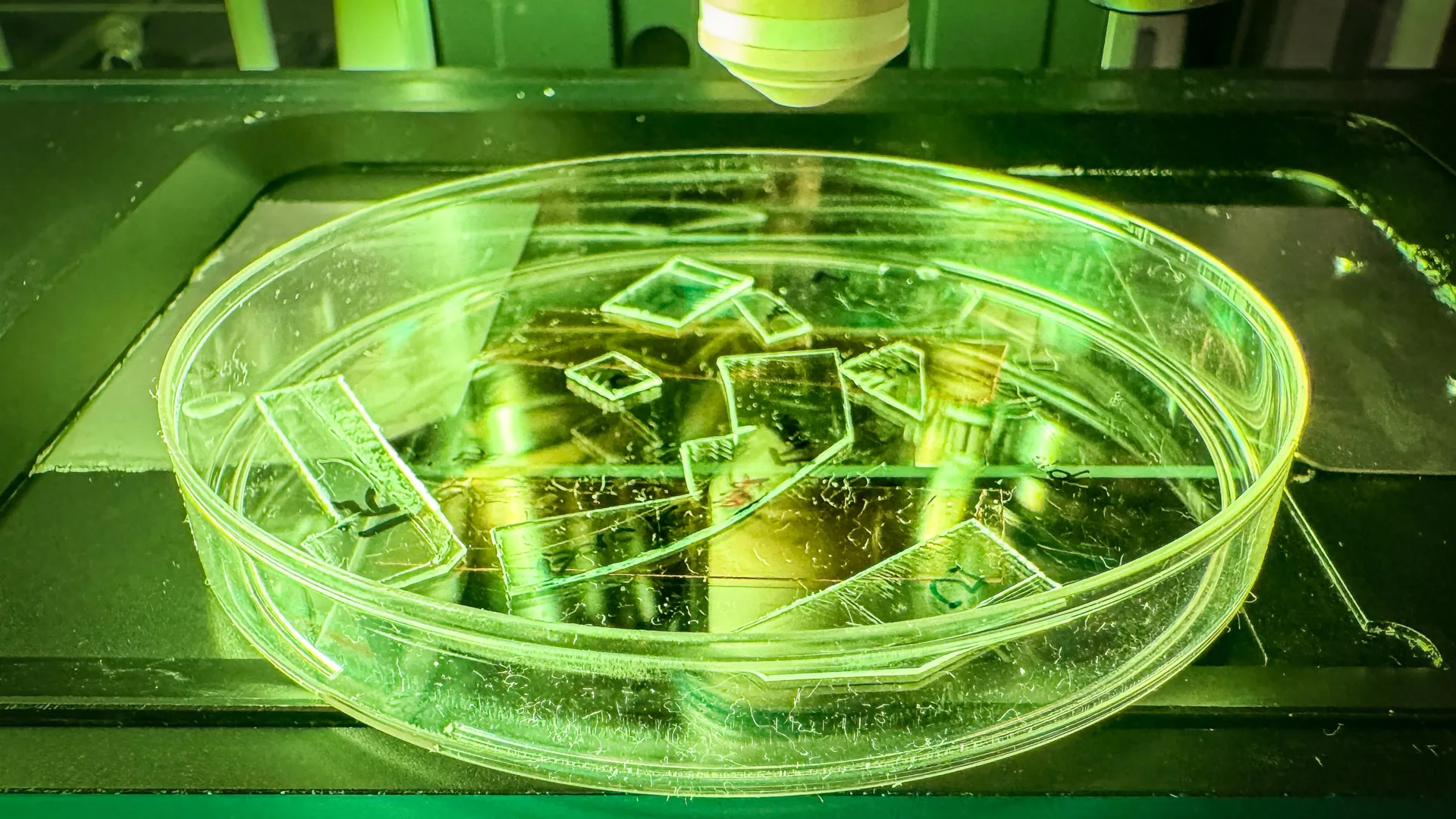
In a world increasingly conscious of the invisible threats lurking on our everyday surfaces, a team of researchers from RMIT University in Australia has unveiled a revolutionary breakthrough that could fundamentally change how we interact with our environment. Scientists have successfully engineered a thin, flexible plastic film capable of physically destroying viruses the moment they make contact with its surface. By abandoning chemical disinfectants in favor of sophisticated mechanical engineering at the nanoscale, this new material offers a scalable, sustainable solution to curbing the spread of infectious diseases.
The Dawn of Mechanical Virus Neutralization
For decades, the standard protocol for mitigating the spread of pathogens on frequently touched items—such as smartphones, hospital handrails, and public keyboards—has been the application of chemical sanitizers. While effective, these solutions are temporary, requiring constant reapplication, and often rely on harsh chemicals that can degrade surfaces or pose health risks over time.
The RMIT team’s innovation represents a paradigm shift. Rather than chemically poisoning a virus, the new plastic film utilizes "nanopillars"—microscopic, needle-like structures that grip and stretch the outer membrane of a virus until it ruptures. This mechanical approach, detailed in the journal Advanced Science, ensures that the virus is physically disabled, rendering it incapable of infecting a host or reproducing.
A Chronology of Nanoscale Innovation
The journey toward this breakthrough did not happen overnight. It is the culmination of years of research into biomimetic surfaces—materials that replicate the natural defensive properties found in nature, such as the wings of dragonflies or cicadas, which are known to kill bacteria upon contact.
Early Experiments with Rigid Materials
Initial studies in the field focused on rigid substrates like silicon or black metal. These early iterations proved that nanostructures could indeed puncture or disrupt pathogens. However, these materials were brittle, expensive to manufacture, and difficult to apply to the curved or flexible surfaces that define our modern technological world.
Refining the Architecture
Recognizing the limitations of rigid materials, the RMIT research team shifted their focus to acrylic polymers. The goal was to create a material that was not only effective at pathogen inactivation but also mass-producible using existing industrial processes. Over several years of testing, the team moved away from the "puncture" model—which was often ineffective against certain viral structures—and toward a "stretching" model. By adjusting the geometry of the nanopillars, they discovered that they could apply tension to the viral envelope, causing it to collapse under its own structural stress.
Recent Breakthroughs
In the most recent phase of testing, the team successfully demonstrated that this film could neutralize the human parainfluenza virus 3 (hPIV-3). Within a single hour of exposure, 94% of the viral particles were destroyed or rendered inert. This milestone has provided the empirical foundation necessary to move from laboratory curiosity to potential commercial application.
Supporting Data: The Mechanics of Destruction
The efficacy of the film lies in its precise, engineered geometry. Through rigorous testing, the researchers identified a fundamental "design rule" for antiviral surfaces: the spacing of the nanopillars is the critical variable, significantly outweighing the height of the pillars in importance.
The 60-Nanometer Threshold
The data collected during the study revealed a clear correlation between spacing and performance:
- 60 Nanometers: The "sweet spot" for maximum antiviral activity. At this density, the pillars act in concert to maximize the tension applied to the virus.
- 100 Nanometers: As the spacing increases, the surface’s ability to "grip" the virus decreases, leading to a marked drop in performance.
- 200 Nanometers: At this distance, the effect is almost entirely negated. The virus can effectively "fit" between the pillars without being stretched to the point of rupture.
This discovery is significant because it provides manufacturers with a clear roadmap for production. It confirms that by packing these structures tightly, scientists can ensure that multiple pillars press on a single viral particle simultaneously, stretching its outer shell past the breaking point.
Official Responses and Expert Insights
The lead author of the study, PhD candidate Samson Mah, believes this technology is a turning point for public health. "As nanofabrication tools get better, our results give a clearer guide to which nanopatterns work best to kill viruses," Mah stated. "We could one day have surfaces like phone screens, keyboards, and hospital tables covered with this film, killing viruses on contact without using harsh chemicals."
Mah emphasizes the importance of scalability. "Our mold can be adapted to roll-to-roll manufacturing, meaning antiviral plastic films could be produced at scale with existing factory equipment." This focus on industrial integration is what sets this research apart from previous academic exercises.
Distinguished Professor Elena Ivanova, a co-author on the study, highlights the readiness of the technology. "We think this texturing is a strong candidate for everyday use, and we’re ready to partner with companies to refine it for large-scale manufacturing," she remarked. The team’s focus has now shifted toward forming strategic partnerships that can bridge the gap between the laboratory and the consumer market.
The Implications for Global Health and Technology
The implications of a self-sanitizing plastic film are vast, touching on everything from healthcare infrastructure to consumer electronics and public transit.
Transforming Healthcare Environments
Hospitals are high-risk environments where the persistence of pathogens on surfaces can lead to healthcare-associated infections. By integrating this nanopillar technology into medical equipment, hospital beds, and common surfaces, facilities could create a "passive" defense system that works 24/7, reducing the burden on cleaning staff and lowering the transmission rates of dangerous viruses.
The Future of Consumer Electronics
For the average consumer, the benefits are equally tangible. Smartphones and tablets are notorious reservoirs for bacteria and viruses. A factory-applied screen protector or a casing manufactured with this nanotechnology could turn a personal device into a sterile environment, providing peace of mind for users who handle their phones in public spaces, kitchens, or transit systems.
Addressing New Challenges
While the results with hPIV-3 are promising, the researchers are already looking toward the next frontier: non-enveloped viruses.
- Enveloped Viruses: These have a fragile, fatty membrane that is easily compromised by the stretching action of the nanopillars. This includes viruses like influenza and potentially SARS-CoV-2.
- Non-enveloped Viruses: These lack the fatty membrane, making them inherently more robust. The team is currently investigating whether the current design can be adapted or if a new "geometry" of nanopillars is required to handle these tougher, more resilient pathogens.
Furthermore, the team is exploring the physics of curved surfaces. Since the curvature of an object (like the edge of a smartphone or a door handle) can alter the effective spacing between nanopillars, the researchers must determine how to maintain that critical 60-nanometer density regardless of the underlying substrate’s shape.
Conclusion: A New Era of Surface Hygiene
The development of this antiviral plastic film marks a significant milestone in the field of nanotechnology. By moving away from chemical-based sanitization and toward a purely mechanical solution, scientists have opened the door to a future where surfaces can autonomously protect us from the invisible threats we encounter every day.
As the RMIT team moves toward commercial partnerships and expanded testing, the vision of a cleaner, safer world feels more attainable than ever. Through the marriage of precise engineering and scalable manufacturing, the "silent sentinels" of nanopillar plastic may soon become an invisible, essential part of our daily lives, ensuring that while the world remains busy, the surfaces we touch remain clean.