








TENERIFE, Canary Islands — An unprecedented international medical evacuation operation is underway in the Canary Islands, as the MV Hondius, a cruise ship recently identified as the epicenter of a harrowing hantavirus outbreak, remains under strict lockdown in the port of Granadilla. Following days of uncertainty at sea, the vessel has become the focus of a high-stakes, multi-nation effort to repatriate hundreds of passengers while containing a pathogen that has already claimed three lives.
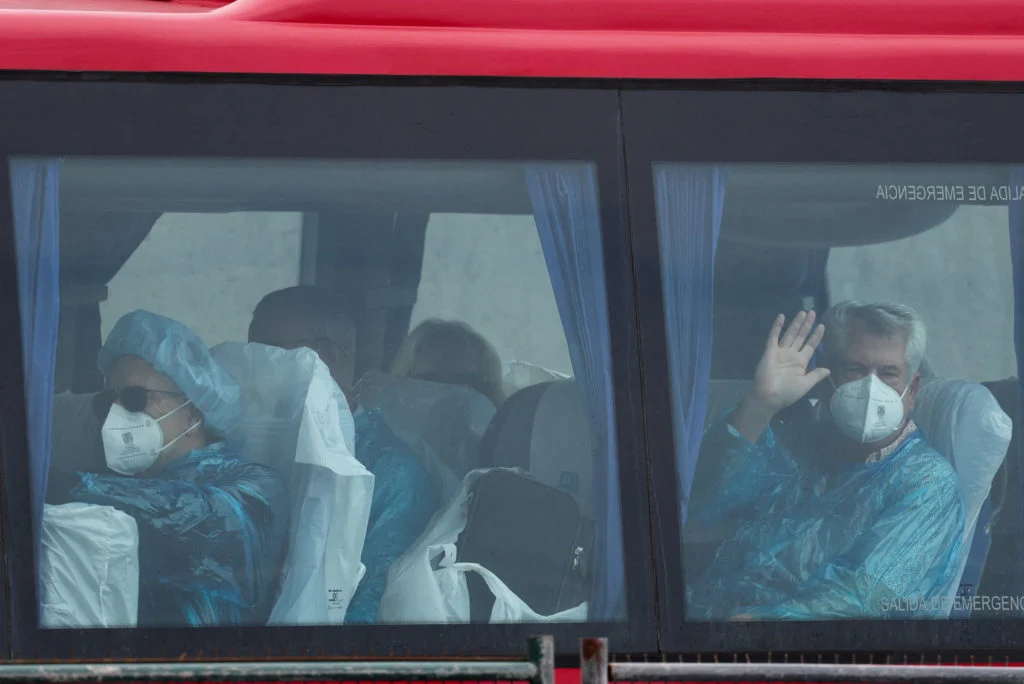
The arrival of the ship in Tenerife marked the beginning of a logistical challenge of immense proportions. As passengers disembark, they are met by a phalanx of health officials clad in full-body hazardous-materials (HAZMAT) suits, respirators, and face shields. The atmosphere at the port is one of disciplined urgency, characterized by the mechanical hum of decontamination sprays and the sterile, clinical precision of military-grade isolation protocols.
Main Facts: A Complex Viral Crisis
The MV Hondius outbreak centers on the "Andes" strain of the hantavirus. Unlike common respiratory illnesses, hantavirus is primarily transmitted through contact with the excreta of infected rodents. However, the specific strain detected on the Hondius has raised alarms among epidemiologists because of the rare possibility of human-to-human transmission, a characteristic that necessitates extreme caution.
To date, the outbreak has been linked to five confirmed infections among those who disembarked the ship prior to the vessel’s arrival in Tenerife. Tragically, three individuals have succumbed to the disease, underscoring the severity of the situation. As of Sunday, the remaining passengers and crew are undergoing rigorous screening, with all individuals forbidden from interacting with the local population of Tenerife.
Chronology of the Outbreak and Response
The crisis began to unfold weeks ago, though the gravity of the situation only became clear as the Hondius navigated toward the Canary Islands.
- Initial Exposure: Passengers and crew were exposed to the virus, likely through rodent-contaminated areas on the ship. The incubation period for hantavirus—typically one to eight weeks—meant that symptoms did not manifest immediately, allowing the ship to continue its voyage before the alarm was raised.
- The First Fatalities: As passengers departed the ship at various intervals during the cruise, health authorities began reporting illnesses. A Dutch passenger who died in Johannesburg served as a critical early warning.
- The Lockdown: Upon realizing the scale of the threat, the MV Hondius was directed to Tenerife. Upon its arrival, the vessel was immediately quarantined.
- Sunday Evacuations: The repatriation process commenced on Sunday. Spanish passengers were the first to be evacuated, transported directly to a military hospital in Madrid. Subsequently, a French plane arrived in Paris, where passengers were met by emergency responders. By evening, a Dutch flight landed in Eindhoven, carrying citizens from a dozen nations.
- Ongoing Operations: Evacuations are expected to continue through Monday, with Australian and Norwegian aircraft scheduled to assist in the final stages of the international airlift.
Supporting Data: The Logistics of Containment
The logistical requirements for this operation are staggering. Because the virus can survive on surfaces and in clothing, the evacuation protocols are exceptionally stringent. Passengers were permitted to carry only a minimal amount of personal belongings—a single bag containing essential documents, a phone, and a charger. All other luggage was left behind on the vessel.
Once the final passengers are cleared from the ship, the MV Hondius will embark on a five-day voyage to Rotterdam, Netherlands. There, the vessel will undergo a massive, industry-standard disinfection process to eliminate any remaining viral reservoirs. The ship’s remaining crew members will remain in quarantine aboard the vessel during this transit.
The international response has been highly varied, reflecting the diverse medical policies of the affected nations:
- United Kingdom: Authorities have mandated a 72-hour hospital quarantine for all British returnees, followed by six weeks of self-isolation.
- France: Prime Minister Sebastien Lecornu confirmed that the five French passengers are being kept in strict hospital isolation "until further orders" after one individual displayed symptoms during the flight.
- United States: The CDC has directed returning Americans to a specialized, federally funded quarantine facility at the University of Nebraska. There, they will be assessed for risk levels before a determination is made regarding further isolation.
- The Netherlands: Dutch officials are coordinating medical transport for their citizens, who will face a six-week self-quarantine period.
Official Responses: Managing Public Panic
Despite the visible intensity of the HAZMAT operations, global health leaders have been consistent in their messaging: the risk to the general public remains extremely low.
World Health Organization (WHO) Director-General Tedros Adhanom Ghebreyesus has moved to temper public anxiety, which has been exacerbated by the visual similarities between the HAZMAT-clad evacuation and the early days of the COVID-19 pandemic. "This is not another COVID," Dr. Tedros stated during a briefing. "The risk to the public is low. People should not be scared, and they should not panic."
Diana Rojas Alvarez, the WHO health operations lead currently on the ground in Tenerife, noted that while the situation is serious, the passengers themselves have exhibited a sense of profound relief. "It has been heartening to see the buses arrive and to witness the passengers finally reaching land," she said. "The coordination between the Spanish authorities and the international teams has been exemplary."
Implications for Global Health Security
The Hondius incident has prompted a broader discussion regarding the monitoring of remote travel and the potential for zoonotic diseases to infiltrate civilian transport.
The Tristan da Cunha Intervention
The reach of this crisis extended far beyond the ship itself. In a remarkable demonstration of rapid-response medicine, the British military conducted a high-risk operation on the remote territory of Tristan da Cunha. A team of six paratroopers and two medical clinicians parachuted onto the island—which lacks an airstrip—to treat a resident who had been a passenger on the Hondius and had developed symptoms after returning home. This mission, which included dropping oxygen and vital medical equipment, highlights the extreme difficulty of providing care in the world’s most isolated locations.
Future Protocols
Epidemiologists, including the WHO’s top expert Maria van Kerkhove, are now emphasizing the need for standardized post-travel surveillance. While the WHO has provided clear guidelines for daily health checks, the implementation of these policies remains the responsibility of individual sovereign nations. The variability in these responses—ranging from 72-hour hospitalizations to six-week home monitoring—suggests that international health policy may need to move toward a more unified framework for dealing with isolated, high-risk biological threats.
As the final planes depart the Canary Islands, the focus will shift from the immediate evacuation to long-term monitoring. For the hundreds of passengers, the end of the cruise does not mark the end of the ordeal. Their lives remain, for now, tethered to the health reports generated by the very agencies that rescued them.
The MV Hondius incident will undoubtedly serve as a case study for years to come—a testament to the resilience of international cooperation in the face of a hidden, microscopic threat, and a sobering reminder of the complexities of modern global travel in an era of emerging infectious diseases.