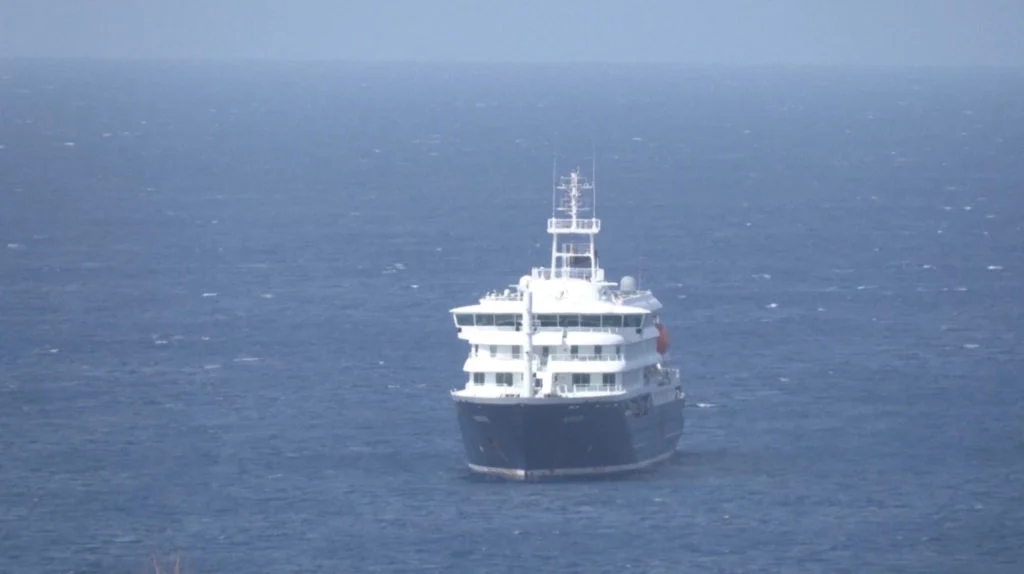
The MV Hondius, a vessel designed for the pristine isolation of polar expeditions, has become the site of a harrowing medical emergency. Currently anchored off the coast of Cape Verde in the Atlantic Ocean, the Dutch-flagged cruise ship is at the center of a rare and lethal hantavirus outbreak that has claimed three lives and left authorities scrambling to coordinate a safe, controlled disembarkation.
For the nearly 150 passengers and crew members remaining on board, the ship has transformed from a luxurious gateway to the Antarctic into a floating quarantine zone. Recent footage captured from the deck paints a somber picture: deserted public areas, medical teams clad in full-body personal protective equipment (PPE), and the vast, empty horizon of the Atlantic serving as a constant reminder of their forced isolation.
The Nature of the Threat: Understanding Hantavirus
Hantavirus is a severe respiratory disease typically transmitted to humans through contact with the urine, droppings, or saliva of infected rodents. While human-to-human transmission is rare, global health authorities are investigating whether the close quarters of the MV Hondius have facilitated an atypical spread of the virus.
Symptoms of the illness—which can include fever, muscle aches, and severe respiratory distress—often have a long incubation period, sometimes manifesting up to eight weeks after initial exposure. The mystery surrounding this outbreak is compounded by the fact that ship operators have reported no evidence of a rodent infestation on the vessel, leading officials to suspect that the index case likely contracted the virus prior to boarding the ship in Argentina on April 1.
A Chronology of the Crisis
The tragedy began to unfold shortly after the Hondius embarked on its month-long journey toward the South Pole. The timeline of the outbreak underscores the challenges of managing medical crises in remote international waters:
- April 1: The MV Hondius departs from Argentina, carrying passengers destined for the Antarctic and remote islands of the South Atlantic. At the time of departure, Argentine health authorities confirmed that no passengers exhibited symptoms.
- April 11: The first fatality occurs. A Dutch national dies on board, marking the grim beginning of the crisis.
- Late April: As the ship continues its journey, the situation deteriorates. The deceased Dutch man’s body is eventually disembarked at the British territory of St. Helena, roughly 1,200 miles off the African coast.
- April 26: The crisis claims its second victim. The wife of the first fatality, who had traveled by air from St. Helena to South Africa, collapses at Johannesburg’s O.R. Tambo International Airport. She later passes away in a local hospital.
- Late April/Early May: A British passenger becomes critically ill. He is evacuated to Ascension Island and subsequently flown to South Africa, where he remains in intensive care.
- Current Status: The ship remains anchored off the coast of Cape Verde. While the vessel is currently in a holding pattern, the World Health Organization (WHO) has confirmed seven total cases linked to the voyage, including the three deaths and the passenger currently in intensive care.
The Human Toll: Life Inside the Quarantine
Despite the uncertainty, those trapped on the MV Hondius are attempting to maintain a semblance of normalcy. Qasem Elhato, a 31-year-old passenger who has provided video documentation of the ordeal, described the atmosphere as a surreal "waiting game."
"Our days have been close to normal, just waiting for authorities to find a solution," Elhato noted via messaging app. "Morale on the ship is high, and we’re keeping ourselves busy with reading, watching movies, and having hot drinks."
Other passengers have expressed a mix of stoicism and frustration. Helene Goessaert, another traveler, noted to Belgian broadcaster VRT that the experience has fundamentally changed the nature of their journey. "You don’t embark on a trip with the idea that one of your fellow passengers won’t make it," she said. The arrival of fresh produce, she added, was a welcome morale booster, signaling that while the ship is isolated, it is not forgotten.
Official Responses and Diplomatic Friction
The logistics of evacuating a vessel suspected of harboring a dangerous pathogen are complex, involving multiple nations and international bodies. The WHO has been at the forefront of the coordination effort, but plans remain fluid.
Dr. Maria Van Kerkhove, the WHO’s director of epidemic and pandemic preparedness, stated earlier this week that the organization is working toward moving the ship to the Canary Islands, where the most vulnerable passengers can receive specialized care. However, this has been met with caution by Spanish officials.
In a statement, the Spanish Ministry of Health confirmed they are monitoring the situation closely but have yet to grant formal permission for the ship to dock. "The most appropriate port of call will be decided," the statement read. "Until then, the Ministry of Health will not adopt any decision."
Meanwhile, local authorities in Cape Verde have taken proactive measures. Medical teams have been deployed to the vessel to perform health screenings, and the port of Praia has increased safety protocols to prevent any potential spillover of the virus into the local population, despite the low likelihood of transmission.
Supporting Data and Medical Precautions
The MV Hondius operator, Oceanwide Expeditions, has activated its highest level of emergency protocols. This includes strict cabin isolation, rigorous hygiene maintenance, and continuous medical monitoring of the remaining passengers.
The ship’s internal environment now mirrors the early, restrictive days of the COVID-19 pandemic. Passengers are required to wear masks and adhere to social distancing guidelines whenever they are permitted to leave their cabins. While the chance of a widespread public health threat is considered low, South African health officials have initiated contact tracing as a precaution, particularly for those who may have come into contact with the passengers evacuated through Johannesburg.
Implications for Future Expedition Travel
The crisis aboard the MV Hondius serves as a stark reminder of the vulnerabilities inherent in long-distance maritime travel. As climate change continues to shift the distribution of wildlife and, by extension, the zoonotic diseases they carry, the risk of outbreaks during expedition travel may evolve.
Experts suggest that this incident will likely trigger a review of maritime medical safety protocols. The ability to quickly identify, contain, and manage rare pathogens in remote environments is becoming an essential requirement for cruise operators, particularly those venturing into isolated regions where medical infrastructure is non-existent.
For the passengers of the Hondius, the journey has been one of unexpected endurance. As they wait for the diplomatic gears to turn and a final port to be designated, they remain a testament to the resilience of the human spirit in the face of an invisible, silent threat. For now, the ship remains a ghost vessel in the Atlantic, its fate tethered to the cautious decisions of international governments and the ongoing, meticulous work of global health monitors.