









In a move that marks the end of one of the most volatile chapters in the history of the U.S. Food and Drug Administration, Marty Makary has resigned as commissioner. His departure, confirmed by President Donald Trump during a Tuesday press briefing, concludes a tenure defined by ambitious, industry-disrupting policy goals and a simultaneous collapse of internal institutional stability.
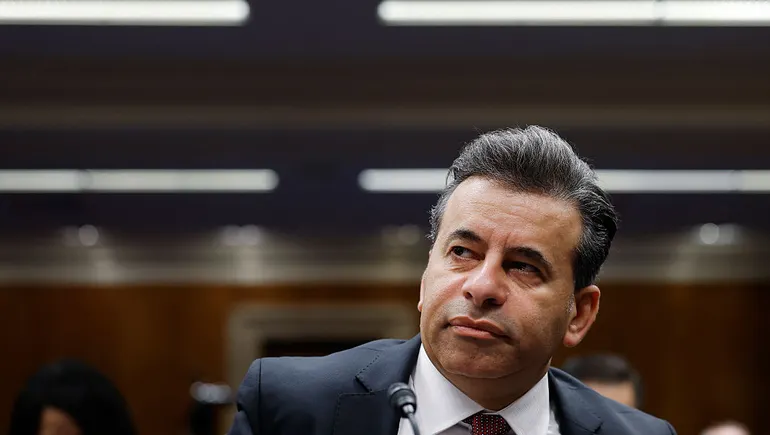
The exit of the prominent surgeon and researcher, who was once seen as a stabilizing, traditional pick for the top health regulatory post, leaves the agency at a precarious crossroads. Kyle Diamantas, the FDA’s current deputy commissioner for food, has been tapped to serve as the acting commissioner.
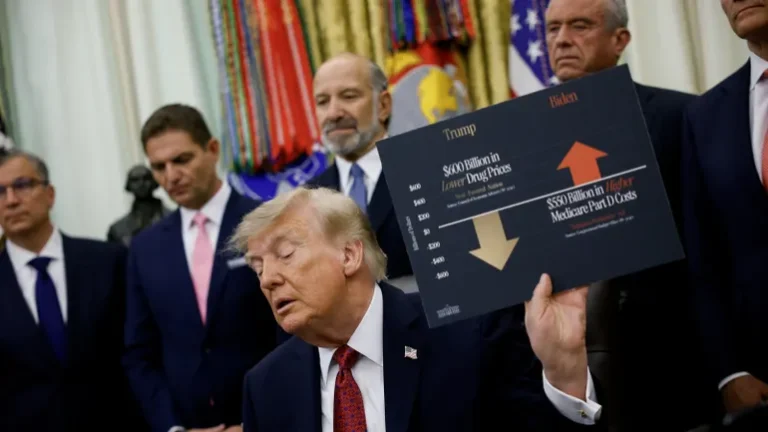
"Marty’s a great guy, he’s a friend of mine, and he’s a wonderful man," President Trump told reporters. "He was having some difficulty," the President added, signaling a recognition of the friction that defined the final months of Makary’s leadership. "But he’s going to go on and he’s going to do well. Everybody wants that job."
The Chronology of a Controversial Tenure
When Marty Makary was nominated in November 2024, the public health and biotechnology sectors viewed his appointment with cautious optimism. A prolific academic surgeon known for his advocacy in patient safety and medical transparency, Makary entered the FDA with a mandate to modernize a regulatory body he had long criticized as suffering from "scientific groupthink."
A Rapid Rise
- November 2024: Makary is nominated by President Trump, praised for his work on pancreatic surgery protocols and his skepticism regarding the bureaucratic status quo of public health agencies.
- March 2025: Makary easily clears his Congressional confirmation hearing, buoyed by his reputation as an outsider capable of streamlining the drug approval process.
- May 2025: The agency begins a series of structural shifts, including the appointment of Vinay Prasad as head of the Office of Vaccines and Gene Therapies.
- Late 2025: Tensions escalate as high-level officials begin to resign, coinciding with mass layoffs within the Department of Health and Human Services (HHS).
- November 2025: The resignation of George Tidmarsh, head of the Center for Drug Evaluation and Research (CDER), amid a conduct investigation, signals the start of a deep-seated leadership crisis.
- Spring 2026: The retirement of oncology stalwart Richard Pazdur and the rapid revolving door of personnel in CDER lead to a public outcry from biotech leaders.
- May 2026: Makary formally submits his resignation.
Modernization Efforts vs. Institutional Reality
Makary’s vision for the FDA was rooted in a desire for speed and flexibility. Throughout his tenure, he championed initiatives designed to slash the time between clinical trials and market availability. Among his most significant policy efforts were:
- The Single-Trial Framework: Makary pushed to replace the long-standing industry standard of two pivotal clinical trials with a requirement for only one, arguing that modern data collection makes redundant trials a barrier to innovation.
- The Voucher Program: He implemented a new category of priority review vouchers to incentivize the development of therapies for previously neglected conditions.
- Ultra-Rare Disease Approval: He introduced a novel framework specifically for "N-of-1" therapies and CRISPR-based treatments, aiming to provide paths to market for patients with rare genetic conditions.
- AI Integration: Makary aggressively pushed for the integration of artificial intelligence into the FDA’s review process to shorten the administrative lifecycle of drug applications.
However, these ambitious shifts were met with significant pushback. While industry stakeholders initially applauded the goal of faster approvals, the reality of the implementation proved chaotic.
Supporting Data and the Crisis of Confidence
The fundamental issue facing the agency under Makary was not a lack of vision, but a lack of operational consistency. As the agency underwent mass restructuring and turnover, the predictability of the regulatory environment—the lifeblood of the biotechnology industry—evaporated.
Industry analysts have been vocal about the decline in the FDA’s reliability. Paul Matteis of Stifel, in a noted assessment late last year, summarized the industry sentiment: "The FDA—and our ability to predict the FDA—is about as uncertain as it’s been in the past decade or longer."
This uncertainty was exemplified by the agency’s handling of a closely watched gene therapy for Huntington’s disease. The sudden, unannounced about-face on the application left investors and researchers in shock, serving as a bellwether for the internal dysfunction that would define the following months.
The Turnover Toll
The leadership vacuum was perhaps most visible in the rapid churn of top-tier talent:
- Vinay Prasad: Hired to reform the vaccine and gene therapy office, Prasad resigned, was rehired, and ultimately left again in April 2026.
- George Tidmarsh: The former CDER chief resigned amid an internal probe, leaving one of the agency’s most critical roles vacant for a significant period.
- Richard Pazdur: A legendary figure in cancer drug development, Pazdur’s planned retirement was widely reported to be a result of his disagreement with the rapid, "fast-track-at-all-costs" mentality being pushed by Makary’s inner circle.
Official Responses and Political Pressure
The Department of Health and Human Services has maintained a posture of silence regarding the specific reasons for the internal friction, declining to respond to formal requests for comment. Behind the scenes, however, sources indicate that Makary was caught between two fires: the demands of the White House and the concerns of the scientific establishment.
Reports from within the administration suggest that the President’s office frequently pressured Makary on politically sensitive issues. This included frustration from conservative factions regarding the pace of safety studies for mifepristone, as well as executive pressure to clear flavored vaping products—a move that conflicted with the FDA’s traditional stance on public health risks.
Implications for the Future of Healthcare Regulation
The resignation of Makary serves as a warning for future commissioners. While there is a clear appetite in the U.S. government to accelerate the pace of medical innovation, the FDA’s power lies in its credibility. When the agency’s guidance becomes erratic, the cost is not just measured in stock market volatility for biotech firms, but in the erosion of public trust in the medical products that reach the market.
John Crowley, head of the Biotechnology Innovation Organization (BIO), issued a stark warning following the Pazdur retirement announcement: "We need organizational strength and stability at the agency. It is time to right the ship."
As Kyle Diamantas steps into the role of acting commissioner, the agency faces a daunting task. The "ship" is currently rudderless, with morale at historic lows and the institutional memory of the FDA severely depleted by the exodus of senior civil servants.
What Lies Ahead?
The next permanent commissioner will face three immediate, non-negotiable challenges:
- Restoring Credibility: The FDA must return to a predictable, evidence-based guidance model to soothe the concerns of the pharmaceutical industry.
- Stabilizing Personnel: The agency must retain or recruit high-caliber scientists who are currently wary of the political volatility associated with the top job.
- Balancing Speed and Safety: While the push for faster drug approvals remains popular, the new leadership must determine if the "one-trial" model is sustainable without risking patient safety or public confidence.
For now, the era of Marty Makary has ended, leaving behind a complex legacy of bold policy experimentation and administrative collapse. The question remains whether the FDA can recover its status as the world’s most trusted regulatory body, or if the disruptions of the last 18 months have fundamentally altered its trajectory for the worse.