











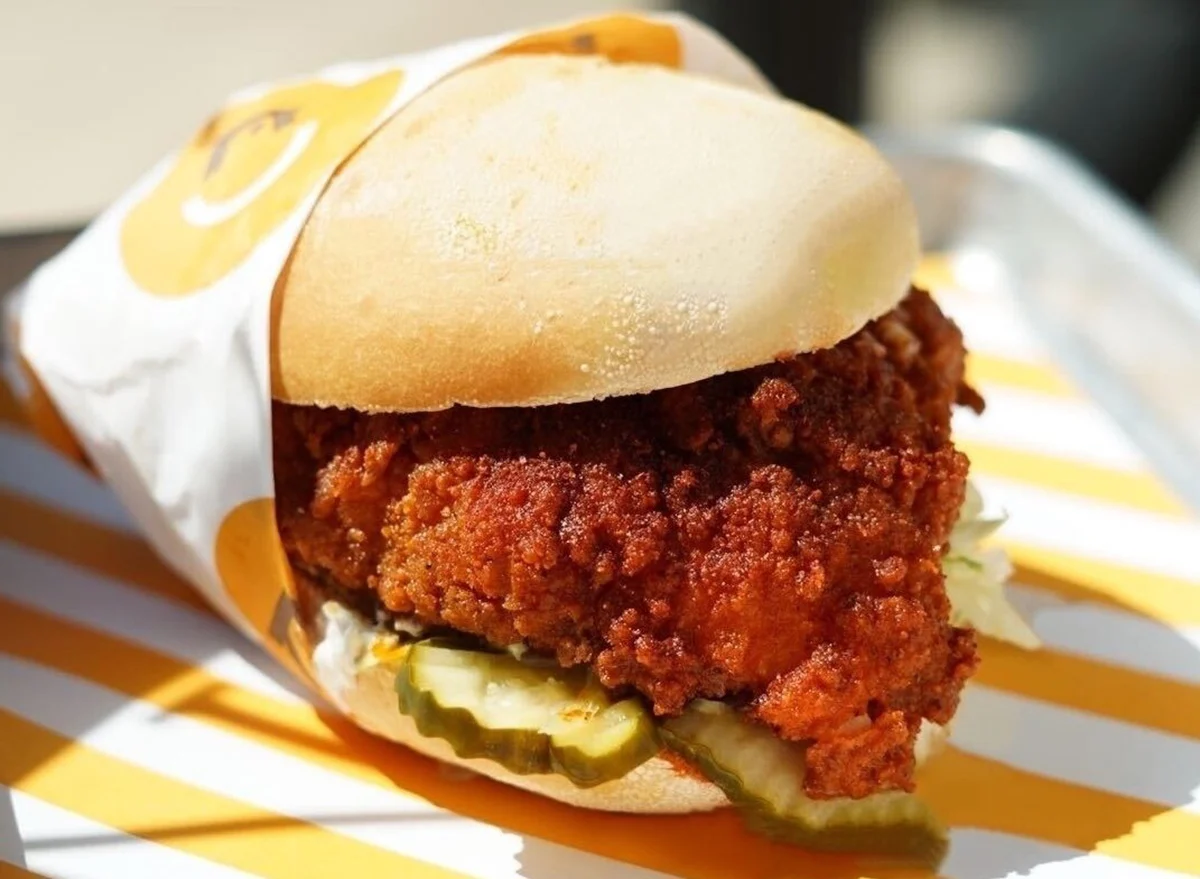
In the competitive landscape of modern quick-service restaurants (QSR), the "chicken sandwich wars" have evolved from a simple marketing battle into an all-out arms race for culinary legitimacy. As consumer palates become increasingly sophisticated, the demand for quality has shifted the focus away from mass-produced, machine-processed patties toward a more artisanal approach: the hand-breaded fillet.
While fried chicken spots are becoming a dime a dozen, a select group of industry leaders has distinguished itself by returning to the fundamentals. By prioritizing the labor-intensive process of hand-breading, these establishments are elevating the humble chicken sandwich into a premium dining experience. This shift represents a broader trend in the food industry—a transition toward transparency, texture, and a commitment to "fresh-from-scratch" preparation.
The Evolution of the Fried Chicken Market: A Chronology of Quality
To understand why the hand-breaded sandwich has captured the national imagination, one must look at the trajectory of fast-casual dining over the last two decades.
- The Early 2000s: The market was dominated by pre-formed, frozen chicken patties. While efficient for supply chains, these products often lacked the structural integrity and flavor profile that diners craved.
- The 2010s: The rise of "better-burger" chains brought a new level of expectation to fast food. Customers began asking, "If my burger is made of high-quality beef, why is my chicken sandwich processed?"
- The 2020s: The "Chicken Sandwich Wars" reached a fever pitch. Chains that could prove their chicken was hand-breaded and never frozen began to outpace those relying on industrial manufacturing. This era cemented the hand-breaded fillet as the gold standard for any serious poultry-focused restaurant.
Today, the industry is no longer competing solely on price or speed, but on the "crunch factor"—a metric that can only be reliably achieved through the meticulous application of flour, spice, and heat by human hands.
The Science of the Crunch: Why Hand-Breaded Matters
Why do chefs and food scientists agree that hand-breading is superior to machine-coating? The answer lies in the physics of the crust.
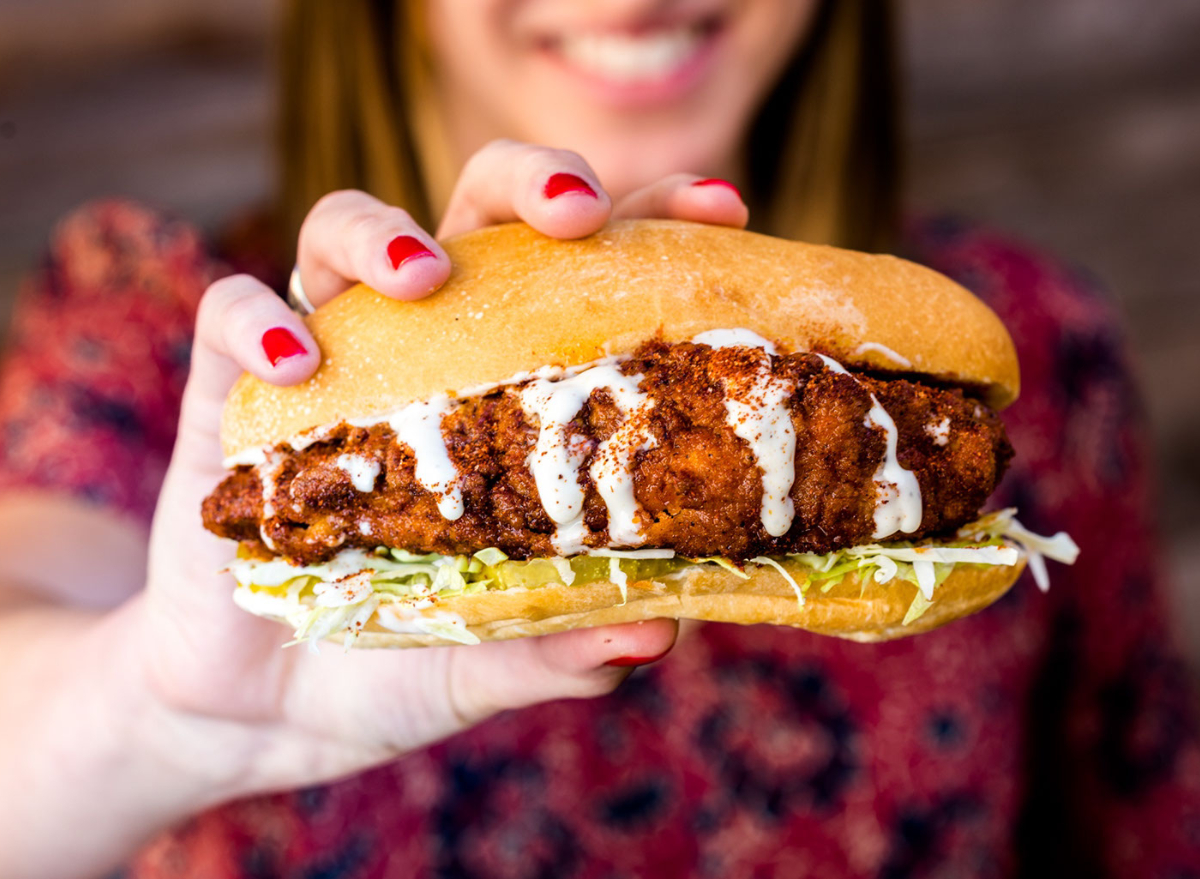
When chicken is battered by hand, the coating is applied in layers that allow for a varied, irregular surface area. This irregularity is exactly what creates the "nooks and crannies" that trap oil and crisp up during the frying process. Machine-coated chicken often features a uniform, smooth breading that can become soggy or overly dense. Conversely, hand-breading ensures that the ratio of chicken to crust is controlled, resulting in a golden-brown finish that provides a satisfying, audible crunch with every bite.
Furthermore, hand-breading allows for the use of more delicate spice blends. When a fillet is dipped in a buttermilk bath and tossed in a proprietary flour mix by hand, the seasonings adhere more effectively to the protein, ensuring that the flavor permeates the crust rather than simply sitting on top of it.
The Top Five Hand-Breaded Champions
If you are seeking the pinnacle of this culinary craft, these five institutions have set the benchmark for quality, texture, and taste.
1. Starbird: The Modern Artisan
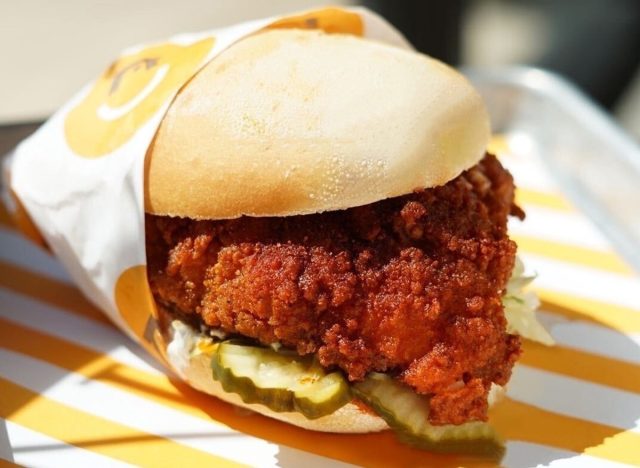
Starbird has made a name for itself by challenging the status quo of fast food. Their commitment is clear: no antibiotics, never frozen, and always hand-breaded in a secret blend of gluten-free flour and spices. Whether you are ordering the fiery Nashville HotBird or the savory Cali Gold BBQ Bacon Sandwich, the consistency is remarkable. One loyal customer noted, "The filet was crunchy, the texture was perfect, and the star sauce they have is delightful." Their dedication to high-quality sourcing makes them a leader in the next generation of chicken-centric dining.
2. Raising Cane’s: The Simplicity of Excellence
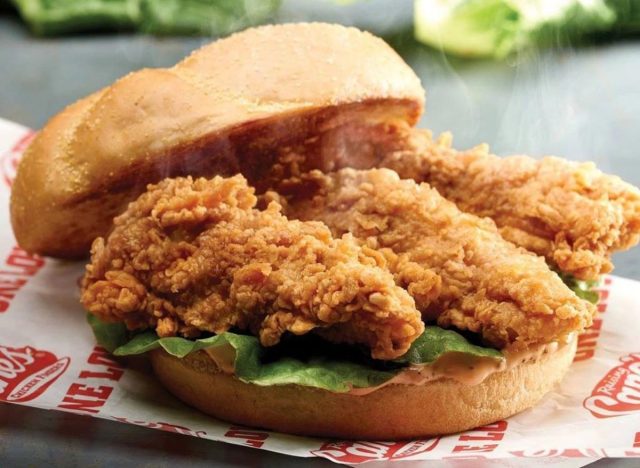
Raising Cane’s has built a massive cult following by focusing on doing one thing better than anyone else. Their chicken tenders—the foundation of their famous sandwich—are hand-battered and cooked to order. The sandwich itself is a masterclass in minimalism: three crispy tenders, signature Cane’s Sauce, and crisp lettuce on a toasted bun. By refusing to compromise on the cook-to-order model, Cane’s ensures that the juice and flavor of the chicken remain intact, providing a balanced, savory experience that remains the gold standard for many diners.
3. Huey Magoo’s: Controlling the Ratio
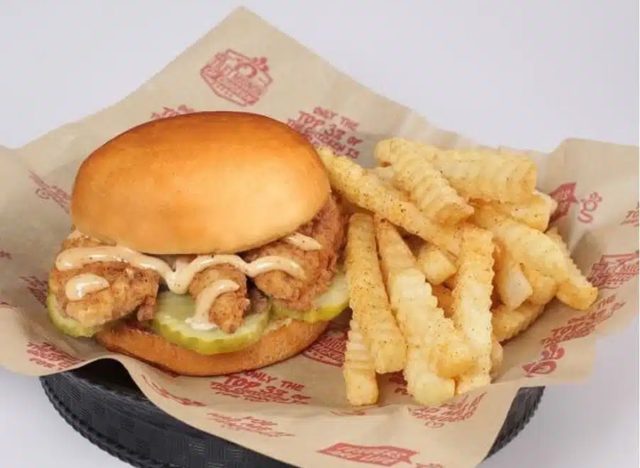
Huey Magoo’s brings a technical perspective to the craft. The chain emphasizes that hand-breading provides the chef with superior control over the chicken-to-breading ratio. This is particularly evident in their signature sandwich, which features tenders on a premium toasted bun with thick-cut pickles and a signature dip. Their approach ensures that every bite is perfectly balanced, avoiding the common pitfalls of overly breaded or under-seasoned fillets.
4. Hardee’s: The Buttermilk Advantage
Hardee’s has successfully bridged the gap between traditional fast food and elevated quality with their Hand-Breaded Chicken Sandwich. The secret here is the buttermilk soak. By hand-dipping premium white meat in buttermilk, they achieve a tender interior that contrasts beautifully with a light, golden-brown crust. When topped with pickles and mayonnaise on a brioche-style bun, it provides a nostalgic, diner-style quality that is difficult to find elsewhere.
5. Chick-fil-A: The Historic Standard
It would be impossible to discuss the chicken sandwich without mentioning the titan of the industry. For nearly 60 years, Chick-fil-A has relied on the same fundamental process: a boneless breast of chicken, seasoned and hand-breaded, pressure-cooked in 100% refined peanut oil. Their commitment to the "original recipe" has allowed them to maintain a level of consistency that few, if any, other global chains have achieved. Their strips and nuggets follow the same rigorous hand-breading process, cementing their place as the baseline for the industry.
Official Industry Perspectives: The Human Element
The consensus among culinary experts and chain operators is that the "human element" is the most expensive, yet most vital, ingredient in the supply chain. While automation can reduce labor costs, it cannot replicate the intuition of a line cook who knows exactly how to dredge a fillet to ensure perfect adhesion.
"When the tenders are made by hand, the breading is even and the ratio of chicken to breading is easier to control," representatives from Huey Magoo’s noted in a recent statement. This sentiment is echoed across the industry; restaurants that invest in training their staff to hand-bread are effectively investing in their brand’s reputation.
The Broader Implications for the Future of Dining
The rise of the hand-breaded chicken sandwich is not just a passing fad; it is an indicator of where the broader restaurant industry is headed. As customers demand more transparency regarding food origins and processing methods, the "hand-breaded" label has become a proxy for quality.
This trend has several long-term implications:
- Labor Market Shifts: As restaurants move back toward manual preparation, the demand for skilled kitchen staff will increase, potentially leading to better wages and training programs within the QSR sector.
- Supply Chain Transparency: Consumers are increasingly skeptical of "mystery meat." Chains that can trace their chicken to specific, ethical farms and highlight their preparation methods are winning the trust of younger demographics.
- Menu Innovation: We are seeing an increase in regional flavor profiles (like Nashville Hot) and gourmet toppings (like brioche buns and artisan pickles) being applied to these hand-breaded foundations.
Conclusion
The hand-breaded chicken sandwich has evolved from a simple fast-food staple into a complex, satisfying, and artisanal product. Whether it is the buttermilk-soaked fillets at Hardee’s, the precision of Huey Magoo’s, or the consistency of Chick-fil-A, the message is clear: quality cannot be automated.
As we move further into the decade, the restaurants that thrive will be those that continue to honor the process—prioritizing fresh ingredients and the expert touch of a hand-breaded finish. For the consumer, this means better meals, more exciting flavors, and the comforting assurance that in a world of machines, there is still a place for the human hand in the kitchen.