










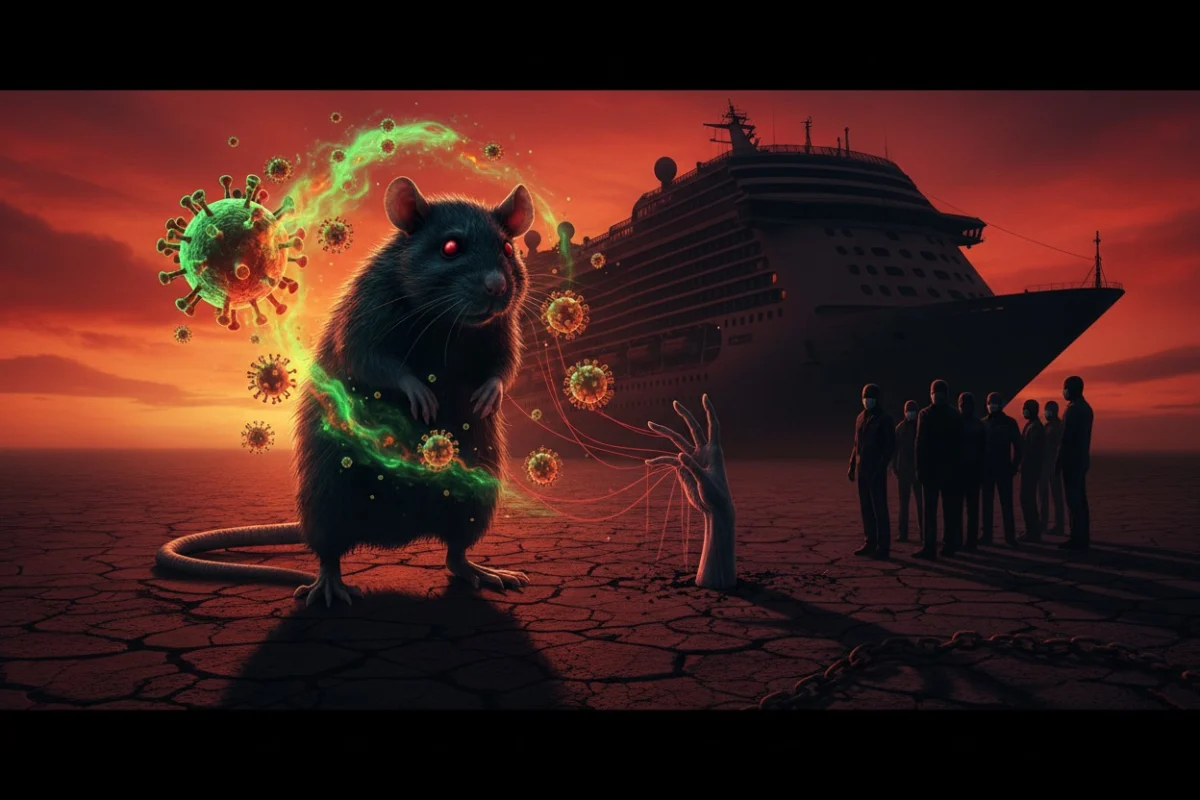
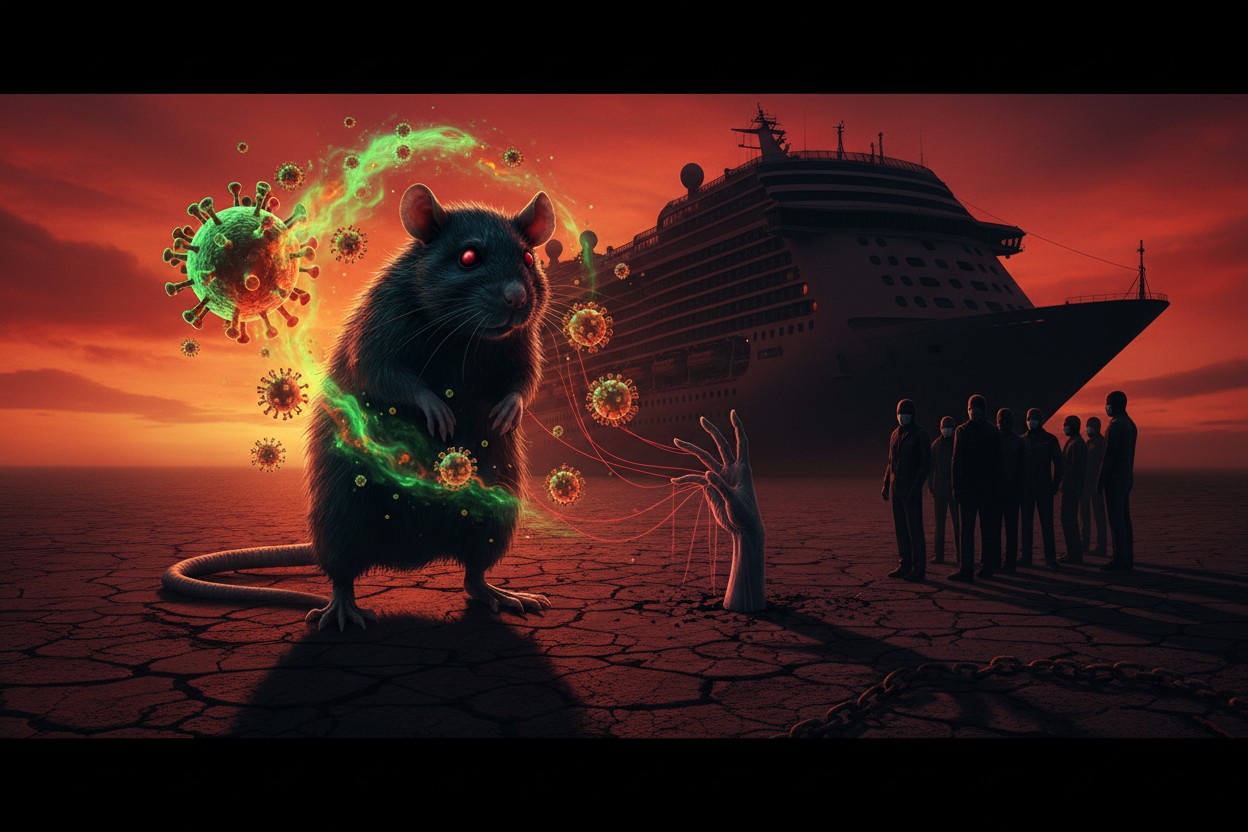
As the global community continues to navigate the complexities of post-pandemic geopolitics, a provocative new work, Viral Deception II: The Hantavirus Script and the Rise of Plandemic 2.0, has emerged, positing a startling thesis: that the next major global health crisis is not a natural phenomenon, but a manufactured event designed to consolidate state control. The book centers on a hypothetical 2026 cruise ship outbreak—a scenario it claims serves as the "patient zero" trigger for a planned global response.
This investigative analysis explores the arguments presented in the text, examining the historical, scientific, and geopolitical threads that the authors suggest form the blueprint for a future pandemic.
The 2026 Cruise Ship Trigger: A Manufactured Narrative?
According to Viral Deception II, the alleged script begins with a Royal Caribbean cruise ship docking in Miami. The vessel, carrying passengers exhibiting symptoms of severe respiratory distress, supposedly serves as the catalyst for a synchronized global media response.
The book claims that within hours of the ship’s arrival, major networks—specifically citing CNN and the BBC—deployed a pre-coordinated narrative. By utilizing alarmist terminology such as "mysterious outbreak" and "deadly new threat," the media effectively bypassed objective inquiry, moving immediately to a state of heightened public anxiety.
The authors argue that this phase relies on the weaponization of diagnostic tools. They allege that the U.S. Centers for Disease Control and Prevention (CDC) and the World Health Organization (WHO) utilize Hantavirus PCR tests with high cycle thresholds. By inflating these thresholds, the book contends, agencies can generate false-positive results for individuals suffering from common seasonal ailments, thereby manufacturing the appearance of a widespread, rapid-onset epidemic. This, the authors state, leads inevitably to the declaration of a Public Health Emergency of International Concern (PHEIC), paving the way for lockdowns, mandates, and the rapid deployment of novel pharmaceutical interventions.
Chronology: From the Hantaan River to Modern Preparedness
To understand the current suspicion surrounding Hantavirus, the authors urge readers to examine the historical trajectory of the pathogen.
The Korean Origins
The virus takes its name from the Hantaan River in South Korea. Its initial emergence into the annals of medical history occurred during the Korean War, where roughly 3,000 United Nations troops fell victim to a previously unidentified illness—Korean hemorrhagic fever. This established the pathogen’s association with military conflict and isolated geographical zones.
Fort Detrick and Bioweapon Research
Viral Deception II asserts that declassified archives suggest the U.S. Army’s interest in rodent-borne pathogens dates back to 1948 at the Fort Detrick biological warfare laboratories. The authors argue that this historical continuity indicates a long-standing interest in the virus not just as a medical curiosity, but as a potential biological asset.
Simulations and Tabletop Exercises
The book draws significant parallels between current warnings and past simulation exercises. It highlights "Crimson Contagion," a high-level drill conducted by the Department of Health and Human Services and the Department of Homeland Security. This exercise simulated a fictional outbreak of a hantavirus-like illness, practicing the logistics of city-wide shutdowns, martial law, and the mobilization of military assets to enforce quarantine measures.
Furthermore, the book references whistleblower testimony from former Chinese government scientist Dr. Li-Meng Yan, who alleged that the Chinese Communist Party had actively researched hemorrhagic fever viruses. These claims are bolstered by reports that U.S. agencies were purportedly prepared for a similar release during the 2022 Beijing Winter Olympics, suggesting that the "script" has been under development for several years.
Supporting Data: The Science of "Lab Fingerprints"
The most technical arguments in the book concern the classification and genetic structure of Hantavirus.
Category A Designation
The National Institute of Allergy and Infectious Diseases (NIAID) and the Department of War classify Hantavirus as a Category A pathogen. The authors find this suspicious, as Category A is typically reserved for highly infectious, human-to-human transmissible agents like anthrax or smallpox. Because Hantavirus is traditionally rodent-borne and lacks a natural mechanism for human-to-human transmission, its placement in this high-threat tier is framed as evidence of an intent to engineer it into a weaponized state.
Codon Optimization
The book introduces the concept of "codon optimization" as a definitive marker of synthetic engineering. In standard molecular biology, codon optimization is used to increase protein expression. However, the authors argue that if a novel strain of Hantavirus were to appear with codon usage patterns specifically optimized for human cell receptors, it would serve as a "smoking gun" for laboratory manipulation. They draw comparisons to SARS-CoV-2, noting that similar codon biases were observed by researchers who questioned the virus’s natural origin.
Aerosolization Experiments
Supporting these claims is a July 2025 study funded by the Defense Threat Reduction Agency. This research involved the aerosolization of the Sin Nombre virus—a strain with a 30% fatality rate—to evaluate its stability in airborne environments. The authors contend that such research is inherently dual-use, providing the foundational data necessary to transition a non-airborne virus into an airborne pathogen.
The Airborne Myth and Epidemiological Reality
A central pillar of the book’s argument is the biological impossibility of a natural Hantavirus pandemic.
For over three decades, medical surveillance has shown that Hantavirus Pulmonary Syndrome (HPS) requires direct contact with infected rodent excreta. The book cites the CDC’s own historical data, including the 2012 Yosemite National Park outbreak, where thousands were potentially exposed to deer mice, yet not a single instance of human-to-human transmission was recorded.
Even researchers at Columbia University, while noting that urban rodent populations in cities like New York are reservoirs for various hantaviruses, have consistently confirmed the lack of human-to-human transmission. The authors conclude that if a Hantavirus pandemic were to occur, it would necessitate deliberate genetic alteration to force the virus to bypass its natural ecological barriers. Consequently, any "natural" outbreak narrative is, in their view, a fabricated pretext for state-imposed social control.
Official Responses and Institutional Perspectives
While Viral Deception II presents a coherent narrative of institutional overreach, official public health bodies maintain that their focus remains on zoonotic surveillance and emergency preparedness. The WHO and CDC consistently emphasize that the classification of pathogens is based on potential lethality rather than existing transmission patterns.
Regarding "tabletop exercises," the government position is that these are necessary administrative functions. They argue that preparing for low-probability, high-impact events is the standard of duty for protecting public health. The assertion that these exercises are "scripts" for future control is dismissed by mainstream public health experts as conspiratorial speculation that ignores the logistical necessity of government crisis planning.
Implications: The Path Toward Resistance
The book concludes by offering a "detection checklist" for the public. It suggests that individuals should remain vigilant for the following signs of a "manufactured" event:
- Synchronized Media Messaging: Simultaneous, identical headlines across major global news outlets.
- Financial Movements: Rapid stock surges for pharmaceutical, surveillance, and biotech companies immediately preceding or during the initial announcement of the crisis.
- The Revolving Door: The movement of government officials into lucrative positions within vaccine-manufacturing firms.
- Surveillance Creep: The introduction of digital health passes or biometric tracking systems under the guise of public safety.
The authors advocate for a decentralized approach to health, emphasizing the importance of immune-system optimization through vitamin D, zinc, and herbal medicine, as well as the necessity of fostering community-based networks that operate independently of centralized state guidance.
Final Thoughts
Whether one views Viral Deception II as a vital warning or an exercise in alarmism, it serves as a reflection of a profound shift in public trust. As the boundaries between biosecurity, military research, and public health continue to blur, the debate over "planned pandemics" is likely to intensify. The book ultimately challenges the reader to look past the official narrative, urging a critical examination of the mechanisms of power that define our global health reality.
In an era of rapid technological advancement, the line between an accidental outbreak and a strategic deployment becomes increasingly difficult to discern, making the task of informed skepticism more relevant than ever.