











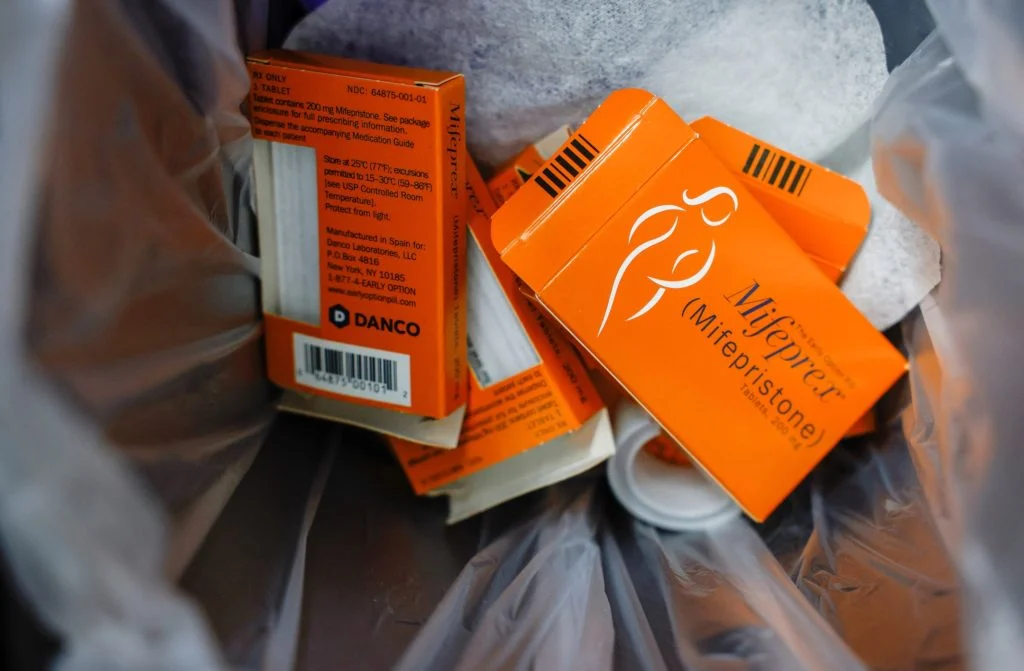
The landscape of reproductive healthcare in the United States remains in a state of fragile equilibrium. In a move that provides temporary relief to patients and providers across the country, the U.S. Supreme Court recently issued a stay, effectively pausing a lower court ruling that threatened to severely restrict the distribution of mifepristone—a primary medication used for medical abortions. While the decision ensures that current access protocols remain in place for the immediate future, legal experts warn that this is merely a brief intermission in a protracted battle that could fundamentally reshape the future of reproductive medicine in America.
The Current State of Play: A Temporary Reprieve
The Supreme Court’s decision to extend its pause on lower court restrictions means that for the time being, the status quo prevails. Patients seeking reproductive care continue to have access to mifepristone through existing channels, including telehealth consultations and mail-order delivery systems. This system, which gained significant prominence during the COVID-19 pandemic, has become a cornerstone of reproductive healthcare access, particularly in states where abortion clinics are sparse or where travel distances for patients are prohibitive.
Mary Ziegler, a professor at the University of California, Davis, School of Law, notes that while the ruling provides clarity for the present, it offers no long-term security. "At the moment, it means that access is unchanged," Ziegler explained in a recent interview. "It’s still available on the same terms that it was before. But there is obviously some future legal uncertainty about whether that continues. For now, we’re in the status quo."
Chronology of the Conflict
The legal challenges surrounding mifepristone did not arise in a vacuum; they are the latest chapter in a multi-year effort by anti-abortion advocates to leverage the federal court system to enact nationwide restrictions.
- The Dobbs Catalyst: The trajectory of this litigation changed dramatically following the Supreme Court’s 2022 decision in Dobbs v. Jackson Women’s Health Organization, which overturned Roe v. Wade and stripped away the federal constitutional right to an abortion, returning the authority to regulate or ban the procedure to individual states.
- The Lower Court Ruling: Following Dobbs, conservative groups initiated lawsuits aimed at the FDA’s long-standing approval of mifepristone. A federal district court judge in Texas issued a ruling that would have effectively blocked the FDA’s ability to allow the drug to be prescribed via telehealth or distributed by mail.
- The Supreme Court Intervention: The case was quickly elevated to the Supreme Court, which issued a stay to prevent the lower court’s order from taking effect while the litigation proceeds through the appellate process.
- Ongoing Legal Maneuvers: The case is now slated for further review in lower courts. Observers expect the matter to return to the Supreme Court’s docket, likely by next year, as the litigation winds through the Fifth Circuit Court of Appeals and potentially heads toward a final determination on the merits.
Supporting Data: The Scope of Mifepristone Usage
To understand the stakes of this legal battle, one must consider the ubiquity of the drug in modern reproductive healthcare. Mifepristone is not merely an alternative to surgical procedures; it is the most common method of abortion in the United States.
- Market Share: According to current data, approximately two-thirds of all abortions performed in the United States now involve the use of mifepristone.
- The Telehealth Impact: Over a quarter of all abortions in the country are currently facilitated through telehealth services. Experts suggest this figure may be an undercount, as it does not fully account for informal networks or patients seeking care in states where restrictive laws have made it difficult to track reproductive health data accurately.
- The Demographic Reach: The availability of the drug via mail has proven vital for individuals in "abortion deserts"—geographies where physical clinics are either non-existent or overwhelmed by patient volume. Any permanent restriction on these distribution channels would effectively force millions of people to seek more invasive, expensive, and logistically difficult alternatives.
Official Responses and Judicial Dissent
The Supreme Court’s decision was not unanimous in sentiment, even if the result was a pause in lower court activity. The divide within the Court underscores the deeply ideological nature of the dispute.
Planned Parenthood, a primary provider of reproductive services, acknowledged the decision as a necessary move to protect patient health, though it characterized the Court’s action as the "bare minimum" required to maintain basic rights.
More significant, perhaps, were the dissents filed by Justices Clarence Thomas and Samuel Alito. Their language suggests a willingness to entertain arguments that could dismantle the current regulatory framework of abortion access entirely. Justice Alito, in particular, framed the ongoing efforts to protect mifepristone access as a "scheme" intended to undermine the Dobbs decision.
Justice Thomas raised eyebrows by labeling pharmaceutical manufacturers who distribute the drug via mail as a "criminal enterprise," citing the Comstock Act—an archaic 19th-century law that prohibits the mailing of "obscene" materials, including those intended for the prevention of conception or the production of abortion. The invocation of the Comstock Act is seen by legal analysts as a "sleeping giant" that, if revived by the Supreme Court, could have sweeping consequences for the distribution of all reproductive medications, regardless of state-level legality.
The Legal Road Ahead: Implications and Risks
The litigation is, as Ziegler describes it, "just the tip of the iceberg." The legal fight is diversifying; multiple challenges are currently working their way through the court system. Some of these cases are not merely asking for a return to in-person requirements, but are actively seeking to have the FDA’s approval of mifepristone rescinded entirely, which would effectively remove the drug from the U.S. market.
The Threat of "Shield Laws"
In response to the shifting federal landscape, several states have enacted "shield laws" to protect providers who prescribe and ship mifepristone to patients in states where abortion is banned. These laws create a direct legal collision between state authority and potential federal mandates. This friction is highly likely to reach the Supreme Court, setting the stage for a landmark ruling on the extent to which states can protect their citizens’ access to healthcare in the face of restrictive federal oversight.
Administrative Uncertainty
The stability of the FDA is also being scrutinized. Changes in personnel and political pressure regarding the agency’s drug approval processes add a layer of volatility to the proceedings. If the courts begin to supersede the FDA’s scientific authority, it could set a dangerous precedent for the approval of other medications, far beyond the scope of reproductive healthcare.
Conclusion: A Long-Term Struggle
The current extension of access to mifepristone is a reprieve, but it is not a resolution. The ideological divide on the Supreme Court, the resurrection of obscure federal statutes like the Comstock Act, and the growing network of state-level legal battles suggest that the battle over reproductive medication will be a defining feature of the American judicial landscape for years to come.
As the litigation moves back into the lower courts, the healthcare sector, patients, and legal advocates are bracing for a protracted conflict. The question is no longer just about the legality of a single pill; it is about the broader question of whether federal agencies or judicial mandates will dictate the future of personal healthcare in the United States. For now, the status quo remains, but the horizon is clouded by the inevitability of further, and perhaps more consequential, legal interventions.