











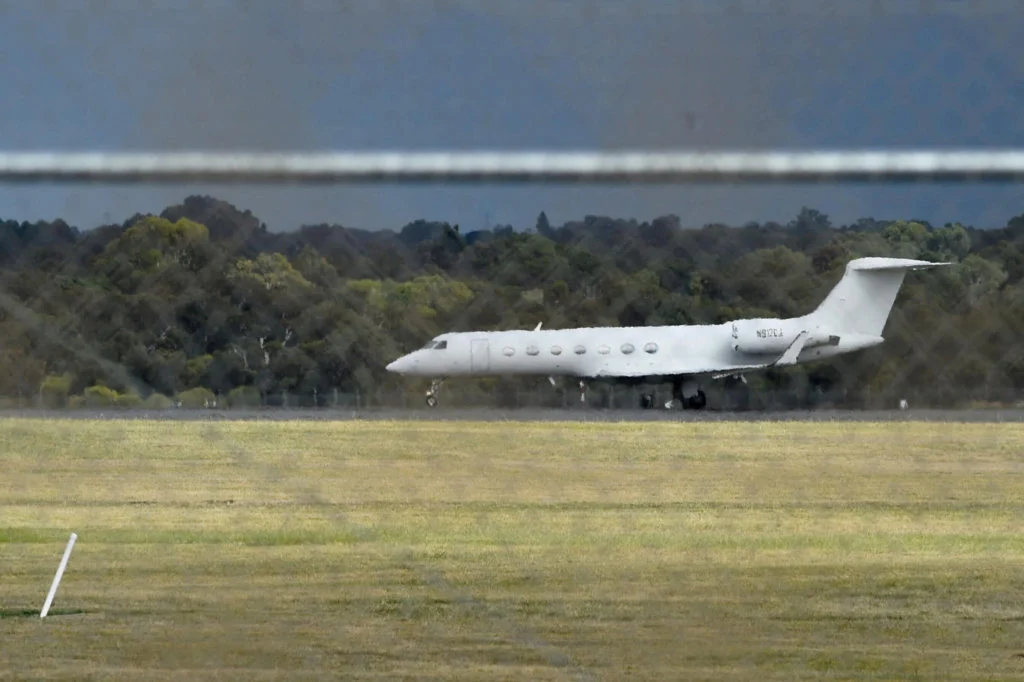
PERTH, Australia — In a move underscoring the enduring global anxiety regarding zoonotic diseases, Australian authorities have launched a high-stakes quarantine operation for six passengers repatriated from a cruise ship recently stricken by a deadly hantavirus outbreak. The mission, which saw the travelers land at RAAF Base Pearce on the outskirts of Perth, marks a significant departure from the more lenient protocols being observed by other nations, signaling a "zero-risk" policy toward the viral threat.
The Arrival and Immediate Response
On Friday morning, a specialized Gulfstream long-range business jet touched down at the Royal Australian Air Force (RAAF) base, carrying five Australian citizens and one New Zealand national. These individuals were among the passengers and crew of the MV Hondius, an expedition vessel that had been navigating the treacherous, remote waters between Argentina and the Antarctic.
The arrivals, accompanied by a medical team, were immediately transferred via bus to the Bullsbrook quarantine facility. This site, constructed in 2022 as a contingency against the COVID-19 pandemic, has remained largely dormant until this week. The individuals are now slated to undergo a mandatory 21-day isolation period, a duration that exceeds the protocols established by most other countries involved in the vessel’s repatriation efforts.
Chronology of a Maritime Crisis
The crisis aboard the MV Hondius unfolded across the isolated stretches of the South Atlantic. The vessel, which specializes in expeditionary cruises to Antarctica and remote sub-Antarctic islands, became a focal point for international health agencies when an unusual cluster of respiratory and systemic illnesses began to emerge among those on board.
- Initial Outbreak: The MV Hondius was conducting a routine expedition from Argentina toward the Antarctic circle when symptoms consistent with hantavirus—a zoonotic disease often transmitted via rodent excreta—were identified.
- Escalation: As the ship continued its route toward isolated islands in the South Atlantic, the situation deteriorated. Of the 11 confirmed cases identified during the voyage, three individuals tragically succumbed to the illness.
- International Coordination: Faced with a worsening health crisis at sea, the ship’s operators coordinated with various governments to evacuate passengers and crew. While the vessel began its long journey back to the Netherlands for comprehensive sanitation, the remaining passengers were dispersed to their respective home countries.
- Repatriation: The Dutch-led logistics operation saw the majority of European and American passengers return to their home countries, where many are undergoing shorter, less stringent quarantine requirements—a contrast that has brought the Australian government’s strategy under intense scrutiny.
The Australian Stance: A Proactive Defense
Australian Health Minister Mark Butler, speaking from his hometown of Adelaide, defended the government’s decision to impose a 21-day quarantine—significantly longer than the few days required by the U.S. and several European nations.
"We have taken the decision to take a stronger approach to quarantine arrangements than that [other nations] because we are determined to ensure there is no risk at all of any transmission of this virus into the Australian community," Butler stated.
The minister acknowledged that while the World Health Organization (WHO) has identified a 42-day potential incubation period for the specific strain of hantavirus identified, a final decision on whether the six passengers will require extended observation beyond the three-week mark remains pending.
The six individuals arrived in Perth having already tested negative for the virus in the Netherlands. Furthermore, they underwent rigorous medical screenings conducted by a specialized physician during the long-haul flight. Despite these negative results, the Australian government is prioritizing an abundance of caution, ensuring that all passengers receive detailed health assessments once they are settled within the Bullsbrook facility.
Understanding Hantavirus: The Silent Threat
Hantaviruses are a group of viruses primarily carried by rodents. Unlike many other viral outbreaks, hantavirus is not typically spread from person to person; rather, humans become infected primarily through contact with the urine, feces, or saliva of infected rodents, or by inhaling dust contaminated with these materials.
However, the nature of the MV Hondius outbreak has raised questions about the potential for environmental exposure in confined, remote maritime settings. Expedition ships, which spend significant time in isolated wilderness areas, can inadvertently harbor rodent populations in supply storage areas or through contact with shore-based environments in remote sub-Antarctic regions.
The severity of the MV Hondius outbreak—with a mortality rate among identified cases exceeding 25%—has alarmed international health authorities. The World Health Organization is currently tracking the situation to determine if this specific strain possesses any unusual characteristics that would warrant heightened global surveillance.
Implications for Global Public Health
The MV Hondius incident serves as a stark reminder of the "post-COVID" landscape in public health management. The global reaction to this outbreak is deeply colored by the collective trauma and logistical lessons learned during the COVID-19 pandemic.
The Legacy of COVID-19
The decision to utilize the Bullsbrook facility, which was built specifically to manage large-scale contagion, highlights how the infrastructure of the last three years has become a permanent feature of national security. Health ministries globally are now more inclined to act swiftly and decisively when faced with unknown or emerging pathogens, even when the risk of community transmission—as is the case with standard hantavirus—is low.
Maritime Safety Standards
The cruise industry, already reeling from the reputational damage suffered during the 2020 lockdowns, is facing renewed pressure to overhaul sanitation and pest-control protocols. The MV Hondius is currently sailing back to the Netherlands, where it will undergo a comprehensive disinfection process. The ship’s return to service will likely be contingent on a clean bill of health from international maritime safety boards, who are expected to issue new guidelines regarding rodent control on expedition-class vessels.
The Future of Quarantine
Critics of the Australian government’s approach argue that a 21-day quarantine for asymptomatic, test-negative individuals is excessive and costly. However, supporters point to the rapid spread of previous global pandemics as justification for such measures. The "Australian model" of quarantine, characterized by the utilization of dedicated, state-run facilities and long observation windows, represents a philosophy that prioritizes total risk elimination over the convenience of international travel.
Looking Ahead
As the six passengers settle into their three-week residency at Bullsbrook, the eyes of the international health community remain fixed on Western Australia. The health of these individuals, and the results of their ongoing testing, will determine the next steps for public health officials.
For now, the MV Hondius remains a symbol of the vulnerability inherent in modern travel. While the ship is being purged of its viral burden, the six passengers remain the primary focus of a government determined to maintain its record of being among the strictest in the world regarding border health security. Whether this incident leads to a permanent shift in how cruise lines manage biological risks in remote regions remains to be seen, but one thing is clear: the era of "business as usual" for expedition travel has ended, replaced by a new, more vigilant standard of global health oversight.