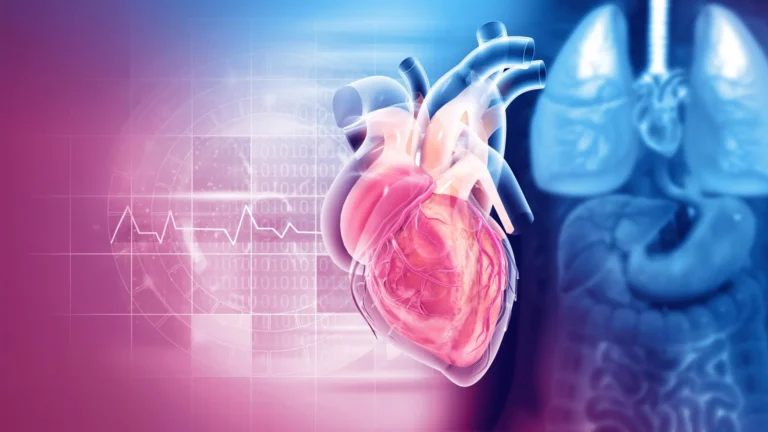





In the high-stakes environment of emergency cardiology, time is the ultimate arbiter of survival. When a heart attack strikes, the immediate priority is to restore blood flow to the oxygen-starved cardiac muscle. However, even when the blockage is cleared and the patient survives the initial event, the body’s repair mechanism is often its own worst enemy. Instead of regenerating healthy, contractile muscle, the heart forms stiff, non-functional scar tissue, setting the stage for a lifetime of congestive heart failure.
For decades, medicine has lacked a viable way to reverse this damage directly. Now, a breakthrough in regenerative engineering from the University of California San Diego (UCSD) is poised to change that narrative. Researchers have developed a revolutionary biomaterial—delivered not through invasive surgery, but through the bloodstream—that acts as a systemic "patch" to calm inflammation and jumpstart tissue repair from the inside out.
The Chronology of an Engineering Breakthrough
The journey toward this intravascular therapy began years ago in the lab of Dr. Karen Christman, a professor of bioengineering at UCSD. Her team first garnered international attention with the development of a hydrogel derived from the extracellular matrix (ECM) of cardiac muscle tissue. This scaffolding material, designed to be injected directly into the heart via a catheter, showed immense promise in preclinical models by providing a structural foundation for cell regrowth.
The Evolution from Injection to Infusion
By 2019, the team had successfully completed a phase 1 clinical trial for their first-generation hydrogel, known as VentriGel. While the trial confirmed that direct injection into the heart muscle was safe and feasible for patients with left ventricular dysfunction, it also highlighted a critical limitation. Direct injection requires precise placement by a specialist, and more importantly, it cannot be performed in the immediate, volatile aftermath of a heart attack without risking further structural injury.
Recognizing the need for a more accessible, timely intervention, Dr. Christman’s team, led by then-doctoral student Martin Spang, pivoted their strategy. Their goal: to create a material that could utilize the body’s existing highway—the circulatory system—to reach injured tissue anywhere in the heart.
The Breakthrough: Nano-Sized Precision
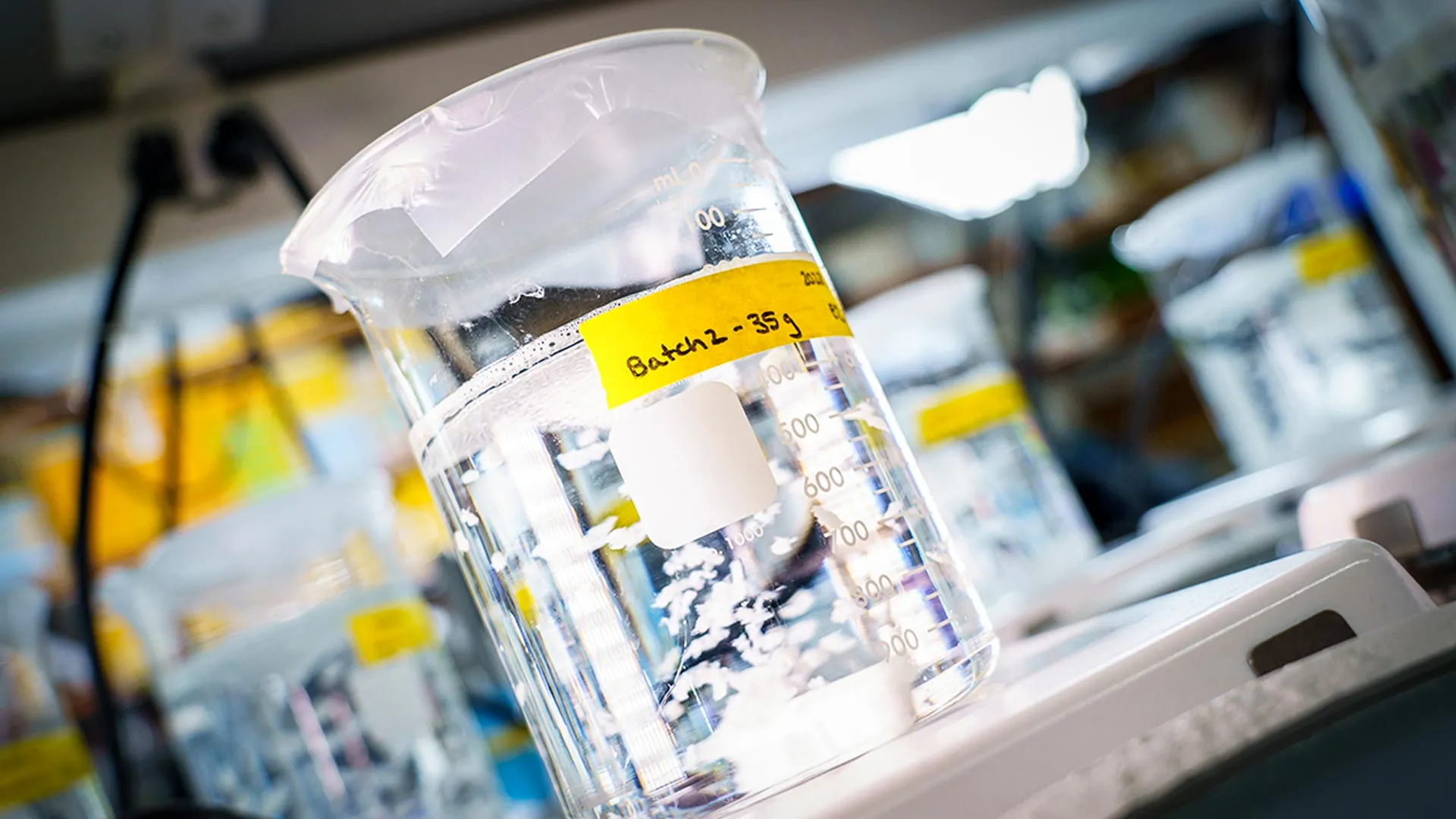
The primary challenge in creating a systemic therapy was physical: the particles in the original hydrogel were far too large to navigate the micro-vasculature of the heart. Using centrifugal processing, the team successfully isolated nano-sized particles from the liquid ECM precursor. The resulting material was then dialyzed, filtered, and freeze-dried into a stable powder. When reconstituted with sterile water, the material can be infused intravenously or delivered directly into a coronary artery during standard procedures like stenting.
Supporting Data: From Rodents to Clinical Promise
The efficacy of this new material was first demonstrated in a 2022 study published in Nature Biomedical Engineering. In both rodent and porcine (pig) models of acute myocardial infarction, the biomaterial showed a remarkable ability to localize to the site of injury.
Mechanisms of Repair
Contrary to initial expectations that the material would simply settle into the damaged tissue gaps, the researchers discovered a more sophisticated mechanism. The nano-particles attached to the endothelial cells lining the blood vessels, effectively "sealing" the leaks that occur during inflammation. By closing these gaps, the biomaterial significantly reduced the inflammatory response—the primary driver of long-term tissue death following a heart attack.
Data from the porcine trials were particularly compelling. Animals treated with the intravascular infusion exhibited:
- Reduced left ventricular volumes: A key indicator of improved heart shape and function.
- Enhanced wall motion: Evidence that the heart was contracting more effectively.
- Favorable gene expression: Molecular markers indicated a shift from scarring-focused pathways to those promoting tissue repair and regeneration.
Recent Advancements
The science has continued to evolve. A 2025 study published in Nature Communications, involving researchers from the Christman lab, utilized cutting-edge spatial transcriptomics and single-nucleus RNA sequencing to map the exact cellular responses to this therapy. The study confirmed that the ECM-based biomaterial triggers a complex cascade of immune modulation, blood vessel development (angiogenesis), and even neurogenesis—the growth of new nerve cells—within the injured heart tissue.
Official Responses and Clinical Perspectives
The medical community has greeted these developments with cautious optimism, acknowledging that while the laboratory results are groundbreaking, the transition to human clinical application is the true test of any therapy.
Dr. Ryan R. Reeves, a physician in the UC San Diego Division of Cardiovascular Medicine, emphasizes the massive public health burden that this technology addresses. "Coronary artery disease, acute myocardial infarction, and congestive heart failure continue to be the most burdensome public health problems affecting our society today," Dr. Reeves notes. "As an interventional cardiologist, I see patients daily who would benefit from a therapy that doesn’t just manage symptoms but actively improves patient outcomes."
Dr. Christman herself views the technology as a paradigm shift. "This biomaterial allows for treating damaged tissue from the inside out," she explains. "It’s a new approach to regenerative engineering that moves us away from localized, high-risk injections and toward systemic, precision medicine."
Implications for Future Medicine
The potential of this technology extends far beyond the heart. The very nature of the delivery method—intravascular infusion—means that if the biomaterial can be tuned to target specific tissues, it could theoretically treat any organ supplied by blood vessels.
Beyond the Heart: Brain and Lungs
In proof-of-concept experiments, the team has already explored the material’s utility for other conditions defined by inflammation and vascular leakage. This includes traumatic brain injury (TBI) and pulmonary arterial hypertension. Because the biomaterial naturally localizes to "leaky" microvasculature, it could serve as a platform for treating systemic inflammatory responses that have historically been difficult to reach without significant surgical intervention.
The Path to Commercialization
The commercialization arm of this research, Ventrix Bio, Inc., is already working to bridge the gap between bench science and bedside care. While their focus remains on advancing cardiac ECM technology—including ongoing interest in pediatric applications for conditions like hypoplastic left heart syndrome—the regulatory path for the new intravascular material is currently being charted.
The next critical phase for the research team involves securing FDA authorization for human clinical trials. These trials will need to establish that the material is not only safe for intravenous use but also robust enough to survive the physiological pressures of the human circulatory system while maintaining its therapeutic potency.
Conclusion
The promise of a "liquid patch" that can be administered via an IV drip after a heart attack represents a bold leap forward for regenerative medicine. By moving from the mechanical, invasive approaches of the past toward a biologically intelligent, systemic delivery system, researchers are rewriting the rules of how we treat cardiac damage.
While the therapy remains experimental and will require years of rigorous human testing, the implications are profound. If successful, this biomaterial could transform the treatment of heart attacks from a process of "damage control" into a true process of tissue repair. In doing so, it would not only reduce the incidence of debilitating heart failure but also provide a new, versatile toolkit for treating the most difficult-to-access injuries in the human body. As we look toward the next decade, the ability to heal the heart from the inside out may well become the new standard of care.