










For centuries, our ancestors navigated the physical world by relying on an internal compass: the wisdom of the body. They assessed their vitality, readiness, and exertion through the direct feedback of their senses—how the breath labored, how the muscles ached, and how the mind felt. Today, that internal dialogue is increasingly mediated by a new silent partner: the wearable gadget.
From the sleek rings on our fingers to the watches tethered to our wrists, we are living in the era of the "quantified self." With a glance at a screen, we can quantify our heart rate, step counts, metabolic intensity, and the architecture of our sleep. While this data revolution provides a bridge between subjective feeling and objective reality, it also forces a difficult question: Have we become so reliant on the numbers that we have forgotten how to listen to our own bodies?
The Data Paradox: Why Precision Isn’t Always the Answer
At its best, technology acts as an objective mirror. Humans are notoriously poor at quantifying their own behaviors with "cold precision." A classic example involves a fitness enthusiast who believed he was strictly adhering to a caloric deficit, only to discover through meticulous logging that he was consuming an additional 500 calories daily—hidden entirely in the barbecue sauce he poured over his meals. In cases like this, data is a corrective lens, sharpening our perception of reality.
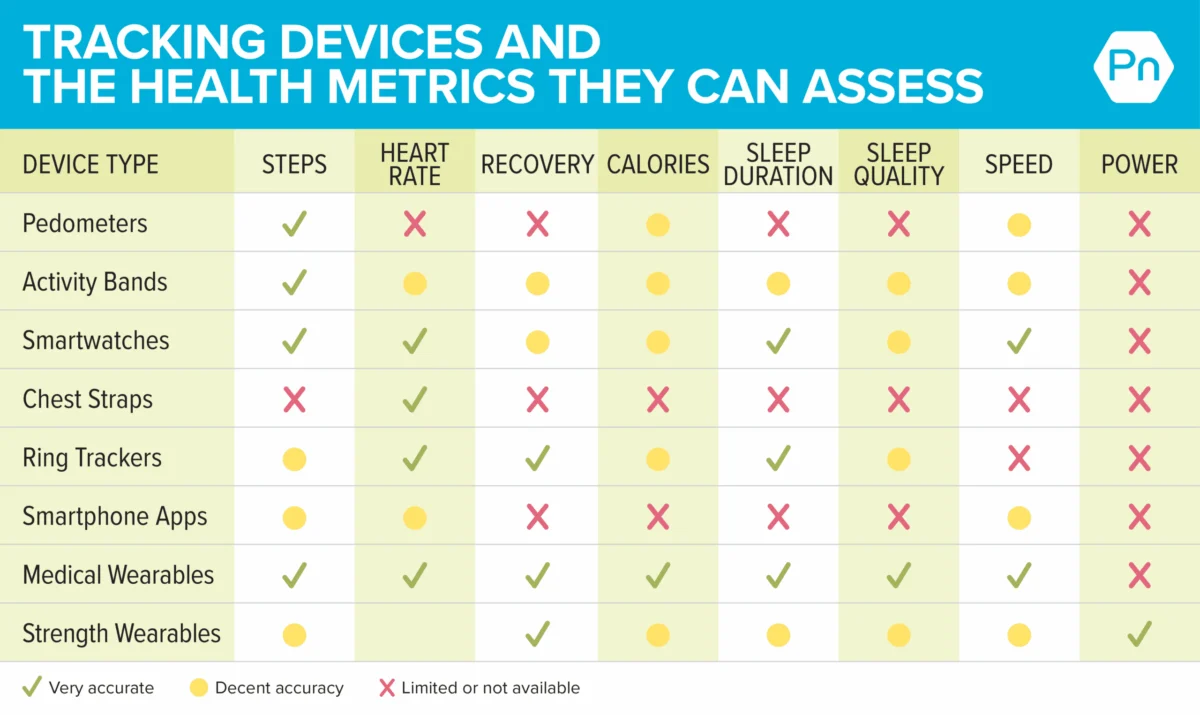
However, the efficacy of this data is not universal. Not all trackers are created equal. While heart rate and step-counting technology have matured into highly reliable tools, other metrics—such as "calories burned" or "recovery scores"—often function as educated guesses rather than absolute truths.
This leads us to the "Data Paradox." As computer scientist Samantha Kleinberg, an expert in decision-making, notes: "Even a tiny amount of surplus information has a big negative effect on our decision-making." We operate on an inverted U-curve. Too little information leaves us flying blind, but too much information induces "analysis paralysis." We see this in the modern consumer who spends an hour reading reviews for a local taco shop, eventually losing the appetite they set out to satisfy. In health, this manifests as an obsession with optimization that can actually impede our ability to act.
Chronology: The Evolution from Intuition to Algorithmic Living
The human relationship with health metrics has undergone a dramatic shift over the last fifty years.

- The Era of Sensation (Pre-1980s): Performance and health were dictated by RPE (Rate of Perceived Exertion). Athletes like Canadian sprinter Ben Johnson were outliers, reportedly able to call out their 100-meter times within a tenth of a second based purely on proprioception.
- The Rise of the Stopwatch (1980s–1990s): The democratization of the digital stopwatch brought the first wave of external validation to the average gym-goer.
- The Wearable Revolution (2010s–Present): The introduction of the FitBit and its successors turned health into a 24/7 data-gathering operation.
- The Optimization Phase (Current): We have moved from simple counting to advanced biological monitoring, including continuous glucose monitors (CGMs) and sleep architecture analysis, leading to a culture of "biohacking."
Supporting Data: The Reliability Gap
When examining the utility of these devices, we must distinguish between "sensor-based" data and "algorithm-based" data.
The Reliability Hierarchy
- High Reliability: Heart rate monitors (specifically chest straps) and step counters (accelerometer-based) remain the gold standard. They measure direct movement or electrical signals.
- Moderate Reliability: GPS tracking for speed and distance and sleep duration tracking. These are accurate enough for general trends but can be thrown off by environmental factors or specific movement patterns.
- Low Reliability: Calorie expenditure estimates and "readiness" scores. These are heavily dependent on proprietary algorithms that often fail to account for individual metabolic variance, stress levels, or hormonal fluctuations.
The implication is clear: Use high-reliability data to build your foundation, but treat low-reliability data as suggestive rather than prescriptive.
The Three Pillars of Helpful Tracking
How can you tell if your device is helping or hindering? To determine if your tracking is constructive, evaluate it against three specific criteria:
1. Validation and Stress Reduction
For some, data is the only way to silence the inner critic. Consider the "grinder" personality type—individuals who feel that if a workout doesn’t leave them destroyed, it wasn’t effective. When such a person tracks their resting heart rate and sees it trending downward, they receive objective proof that their "easier" recovery sessions are actually building their cardiovascular engine. Here, technology doesn’t just inform; it grants permission to recover.
2. The Behavioral Prompt
Behavior change requires three things: motivation, ability, and a prompt. Many people have the motivation and the ability to change, but they lack the specific prompt. A sleep tracker that shows a direct correlation between evening alcohol consumption and poor REM sleep acts as a powerful, undeniable prompt. Once you "see" the data, the behavioral shift becomes logical rather than punitive.
3. Self-Discovery and Calibration
Data allows us to understand our potential. Many athletes habitually underestimate their capacity, while others overestimate it. By mapping felt experience against actual output, individuals learn to calibrate their internal "fuel gauge." When the mind says "I’m exhausted" but the data shows a high-power output, the user learns to distinguish between genuine fatigue and mere psychological resistance.

The Dark Side: When Data Becomes a Crutch
The "bad omen" of modern tracking is the erosion of self-trust. The "Great My Fitness Pal Blackout" of 2019 serves as a perfect case study. When the app went offline, millions of users felt a wave of anxiety—not because they didn’t know what to eat, but because they had outsourced their intuition to an algorithm.
When you become overly reliant on a screen, you risk "numbing" your own internal signals. You may stop eating when you are hungry, waiting instead for a caloric budget to reset. You may stop training when you feel strong, because the watch says your "readiness score" is low. This creates a feedback loop that disconnects you from your nervous system’s innate wisdom.
Implications: Building a Resilient Practice
If we are to move forward, we must stop treating fitness trackers as the "source of truth" and start treating them as a "consultant." A consultant provides advice, but the CEO—you—makes the final decision.
Actionable Strategies for Better Self-Assessment:
- The "Pre-Check" Protocol: Before looking at your watch or app, perform a check-in. Ask yourself: How do I feel? What is my energy level on a scale of 1–10? Then, look at the data. Over time, this practice narrows the gap between your intuition and the reality of your physiology.
- The "Million Dollar Rep" Method: To improve your RPE, ask yourself: "If I were paid a million dollars to do one more perfect rep, could I?" This mental shortcut helps you identify your true limit, a skill far more valuable than a machine-generated fatigue score.
- Prioritize Internal Sensory Networks: Humans possess an incredible array of sensors—proprioception, interoception, and kinesthesia. When you train, focus on the rhythm of your breath and the tension in your muscles. The data is the post-game report, but your body is the field of play.
Conclusion
The goal of health technology should not be to replace our senses, but to refine them. We have access to an unprecedented network of information, but we must remember that the most sophisticated piece of "wearable technology" is the human body itself.
By using trackers to calibrate our intuition rather than replace it, we can achieve a state of informed mastery. When the device is off, the wisdom remains. We learn to listen to the signals our bodies send—hunger, fatigue, strength, and joy—and we trust that, with enough practice, we don’t need a screen to tell us whether we are thriving. The data may offer the map, but you are still the one holding the compass.