










For decades, the bodybuilding lexicon was defined by a singular, all-encompassing philosophy: "Leg Day." Whether you were a recreational gym-goer or a competitive bodybuilder, the lower body was treated as a monolithic entity. You trained quads, hamstrings, glutes, and calves as one cohesive unit, from hip to toe. The delineation was simple—quads one day, hamstrings the next—but the glutes were never treated as a standalone body part. They were merely the connective tissue of a leg workout, secondary to the structural heavy lifting of the squat rack.
That era of training has been thoroughly eclipsed. In the modern fitness landscape, the glutes have been promoted to the status of a primary muscle group, often receiving more weekly volume than the chest or back. This shift has not only changed how we program our workouts but has fundamentally altered the gym floor’s landscape, led largely by the rise of the cable kickback and the aesthetic demands of the Wellness and Bikini divisions.
The Cultural Shift: How the "Glute-Centric" Era Began
The emergence of the "glute-centric" training philosophy is not merely a change in methodology; it is a response to a seismic shift in aesthetic trends. As the "big, round booty" became a central pillar of global fitness aesthetics, the demand for targeted glute hypertrophy skyrocketed.
Suddenly, women were not just training legs; they were training glutes three times a week, sometimes more. In gyms across the globe—from Mexico to Brazil and beyond—the frequency of glute training reached a fever pitch. It was not uncommon to see athletes dedicating six days a week to lower-body development, with Sundays reserved for active recovery like cycling. This transition turned the cable kickback from a niche accessory movement into the most sought-after exercise in the gym.
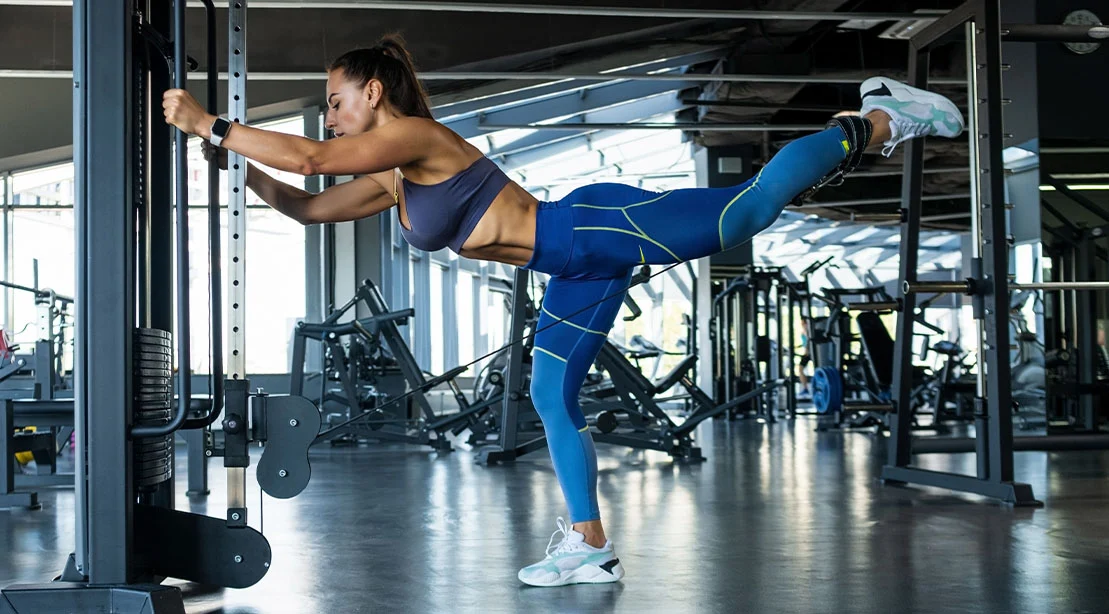
In the early 2000s, the popularity of the cable kickback was so intense that gym owners frequently cited the ankle cuff as the number one most stolen item in their inventory. It became the symbol of the new "glute-first" movement, marking the first time a piece of gym equipment was repurposed almost exclusively for the development of a single muscle group.
The Bodybuilder’s Perspective: Utility vs. Aesthetics
Within the hardcore bodybuilding community, there exists a persistent, albeit narrowing, skepticism regarding the cable kickback. To the traditionalist, the movement is often dismissed as a "girl exercise."
For the serious competitive bodybuilder, glute development has historically been a byproduct of heavy, compound, multi-joint movements. When a male competitor seeks to bring up his glutes for a stage appearance, he is rarely found clipping an ankle cuff to a cable machine. Instead, he turns to high-intensity, metabolic-demanding movements: walking lunges, heavy Smith machine static lunges, and wide-stance Sumo squats. The goal here is "striation"—the fine-tuning of detail through extreme, low-body-fat dieting.
However, this dismissal misses a fundamental truth in exercise science: there is no such thing as a "useless" exercise. There is only the "useless performance" of an exercise. The cable kickback, when executed with clinical precision, is a potent tool for isolation. When performed poorly—using momentum, poor range of motion, or an incorrect hip angle—it becomes an exercise in vanity rather than hypertrophy.
Chronology of the Glute Revolution
- The Era of "Leg Day" (1970s–1990s): Glutes were considered a secondary stabilizer. No athlete trained them in isolation.
- The Emergence of the Aesthetic Focus (Early 2000s): Social media and changing beauty standards drive the demand for specific glute hypertrophy. The cable kickback gains notoriety.
- The Rise of Wellness Divisions (2010s–Present): Competitive divisions like IFBB Wellness demand a specific, muscular silhouette that requires extreme, high-frequency glute training.
- The "Gym-Goer" Integration: Compound movements and isolation movements (like the kickback) are now synthesized into a single, high-volume glute-specific workout structure.
The Mechanics of the "Mind-Muscle Connection"
The primary argument against the cable kickback, particularly for novices, is the high barrier to entry regarding technical proficiency. Unlike a squat, which provides immediate feedback through external load and structural balance, the cable kickback requires a profound "mind-muscle connection."
To perform a cable kickback correctly, one must stand square to the machine, maintain a rigid core, and pivot perfectly at the hip to raise the heel toward the ceiling. The goal is to reach a full, hard contraction at the apex of the movement. Yet, there is no standardized metric for success. Because the glute is a complex, multi-functional muscle, "feeling" the contraction is an art form that takes years to master.
For the average gym member who has only an hour to train, the time required to "dial in" the movement often outweighs the benefits. Beginners are frequently seen oscillating in the cable machine, using their lower back for leverage rather than their glutes. This is where the efficiency of the exercise falls apart.
Supporting Data: Efficiency and Training Economy
For the novice or intermediate athlete, time is the scarcest resource. If you have 60 minutes to transform your physique, the "bang for your buck" should be the primary metric of your programming.
- Compound Movements: Squats, leg presses, and lunges utilize multiple joints and larger muscle groups. They trigger a greater systemic hormonal and metabolic response, which is crucial for building the "big block of marble" (the base) that a physique requires.
- Isolation Movements: Exercises like the cable kickback are essentially "sculpting" tools. They are designed for refinement, not for building the foundational mass of the muscle.
The data suggests that individuals who spend their limited gym time chasing the "perfect" cable kickback often miss out on the mechanical tension required for significant growth. You cannot carve detail into a block of marble that does not yet exist. A trainee should prioritize heavy, compound movements until they have developed a substantial, base-level amount of muscle. Only then should they pivot to the fine-tuning work of the cable machine.
Implications for the Modern Athlete
The current fitness culture has successfully integrated the best of both worlds. Today’s athletes utilize the "old school" bodybuilding movements—Sumo squats, Smith machine lunges, and leg presses—while incorporating the cable kickback to finish off a workout. This hybrid approach is undoubtedly superior to the one-dimensional training of the past.
However, a cautionary note remains for the aspiring fitness enthusiast: do not prioritize the accessory over the foundation. If your goal is a large, round, "bubble" butt, your training program should reflect the laws of progressive overload.
Key Takeaways for Effective Programming:
- Prioritize the Compound: Build your glutes with heavy squats, lunges, and deadlift variations.
- Master the Mechanics: If you choose to perform cable kickbacks, treat them as a technical exercise. Focus on the contraction and the mind-muscle connection rather than the weight on the stack.
- Audit Your Time: If you are a beginner with limited time, ensure you are not spending 20 minutes of your workout on ineffective isolation movements.
- Consistency Over Variety: You do not need to invent new, complex ways to train your glutes. The standard, well-executed movements remain the gold standard for a reason.
In conclusion, the evolution of glute training has been a positive development for the industry. It has expanded the scope of what is possible for physique athletes and provided more tools for those looking to build their dream body. But whether you are a professional competitor or a weekend warrior, remember that the most effective exercise is the one performed with focus, intent, and the correct mechanical application. The "big, round booty" isn’t built in a day, and it certainly isn’t built by stealing an ankle cuff and moving it around without purpose. It is built by earning the right to refine your physique through years of dedicated, intelligent, and heavy training.