







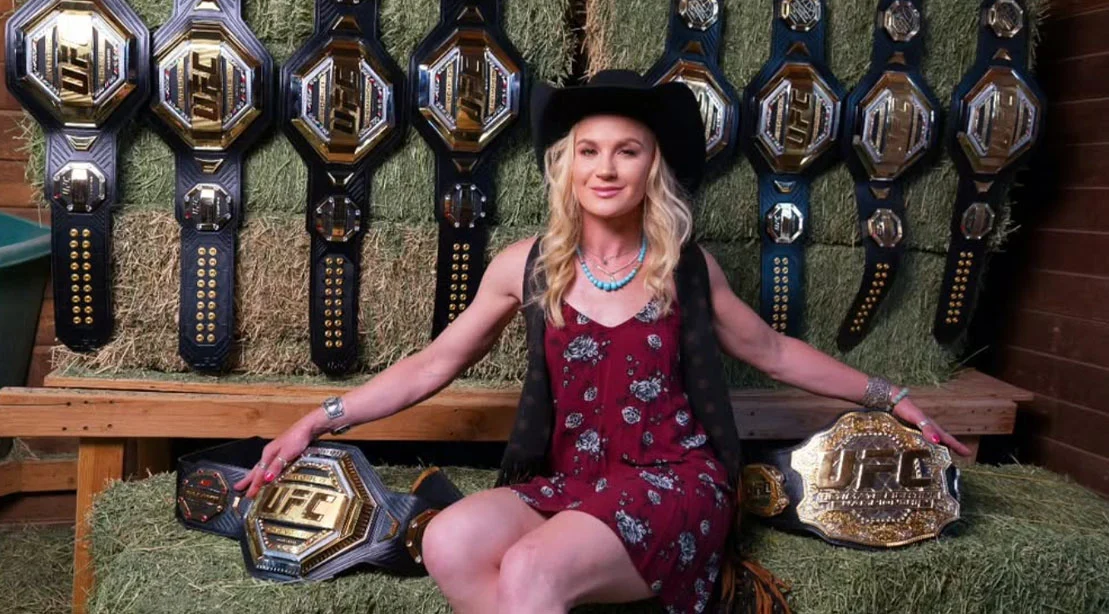
There is a precise, inevitable moment in the arc of every dominant champion when the narrative shifts from "ascent" to "stagnation." The championship belts begin to stack like trophies on a mantle, the win streaks become statistical footnotes, and the fighter’s identity hardens into a static, predictable relic of their former self. It is the twilight phase where the hunger that fueled the climb is slowly replaced by the comfort of the summit.
For Valentina "The Bullet" Shevchenko, that time has yet to arrive.
This is not a result of luck or mere physical preservation. It is a deliberate, calculated refusal to succumb to the inertia of success. With a career spanning back to the early 2000s and a resume that bridges generations of combat sports evolution, the UFC women’s flyweight champion remains an anomaly. Following her clinical November victory over Weili Zhang and with a looming title defense against the surging Natalia Silva, Shevchenko speaks not like a veteran sitting on a throne, but like a hungry contender still chasing a ghost just beyond her reach.
Main Facts: The Anatomy of a Modern Legend
Valentina Shevchenko’s career is defined by an uncompromising philosophy: the belief that a martial artist is never truly finished—only perpetually under construction.
"With every single fight, the performance is better than the last one," Shevchenko asserts. "The understanding that as a martial artist, you are not staying in one place, and that you still have much more to give—that is the fuel. It isn’t about what you have already done; it’s about what you are capable of doing in the next ten minutes inside that Octagon."
This mindset has solidified her status as one of the greatest mixed martial artists in history, regardless of gender or weight class. As the MMA world turns its eyes toward the high-stakes showdown at UFC 328 between middleweight champion Khamzat Chimaev and former kingpin Sean Strickland, Shevchenko’s focus remains singular. She is not observing the landscape to judge her peers; she is observing it to calibrate her own evolution.
A Chronology of Excellence: From Bishkek to the Global Stage
To understand Shevchenko’s longevity, one must look at the timeline of her development. Her journey began at the age of five in her native Kyrgyzstan, a childhood defined by the discipline of Taekwondo and Muay Thai. By 2003, she was already standing on a world championship podium in South Korea.
- 2003–2010: The formative years. Shevchenko dominated the international Muay Thai circuit, securing multiple world titles and refining a striking style that would eventually terrorize the UFC.
- 2015: The UFC debut. Shevchenko entered the promotion as a highly touted striker and quickly proved that her grappling and cage IQ were on par with her elite kickboxing.
- 2018: The crowning achievement. Shevchenko captured the vacant UFC flyweight title, beginning a reign of dominance that would see her clear out the division with clinical precision.
- 2024–2026: The era of adaptation. After a brief period of uncertainty, her victory over Weili Zhang signaled a "Version 2.0" of the champion—a fighter who had successfully integrated newer, more explosive elements into her traditional base.
Shevchenko views these chapters not as separate lives, but as a continuous thread. "I’ve already passed all of these phases," she reflects. "I know how to control the situation. It doesn’t matter what is happening in the world—the media, the pressure, the fame—I still know how to deal with that. I am the architect of my own environment."
Supporting Data: The Science of Sustained Performance
Longevity in the brutal landscape of professional MMA is typically attributed to two factors: genetic luck or an iron-clad discipline. For Shevchenko, the secret is a third, more nuanced variable: Control.
While most champions allow the "hunted" status to change their internal chemistry—leading to bloated egos, eroded work ethics, or the distractions of celebrity—Shevchenko remains stoic. "You are not letting yourself go very far beyond the clouds," she says, referencing the tendency of champions to lose touch with the grind. "With your mind, you can control things. You rule the situation; the situation does not rule you."
The Recovery Paradigm
For years, the "tough guy" mythos dictated that a fighter must train through every ailment, ignoring broken bones and torn ligaments to prove their worth. Shevchenko once adhered to this, admitting that as a younger athlete, she viewed pain as a test to be passed.
"It kind of doesn’t matter if you are injured or not," she says of her early mindset. "You want to show up for training… if I broke my leg, I’d fight with my hand. If I broke my hand, I’d fight with my leg."

However, she realized that this mentality is the primary cause of early retirement. She compares her career to a tree: "When you plant a tree, you have to wait for it to grow. If you just start to pull it, you’re just going to break it. You have to nurture the process." Today, she utilizes a sophisticated recovery protocol. If an injury is minor, she pivots to different training modalities; if it is severe, she allows the body the space to heal. This shift from "pushing through" to "training smart" is the foundational pillar of her current three-year streak of elite-level output.
Unconventional Strength: The Nature-Based Approach
Perhaps the most fascinating aspect of Shevchenko’s training is her rejection of the "modern" fight camp. While her peers utilize state-of-the-art sports science facilities, Shevchenko often retreats to the raw, unrefined environment of nature.
"Even with no fight scheduled, I do training every other day, no matter what," she explains. "If I don’t have a gym, it’s even better for me because I can train in nature. Nature, for me, it’s everything. It gives me so much power and motivation."
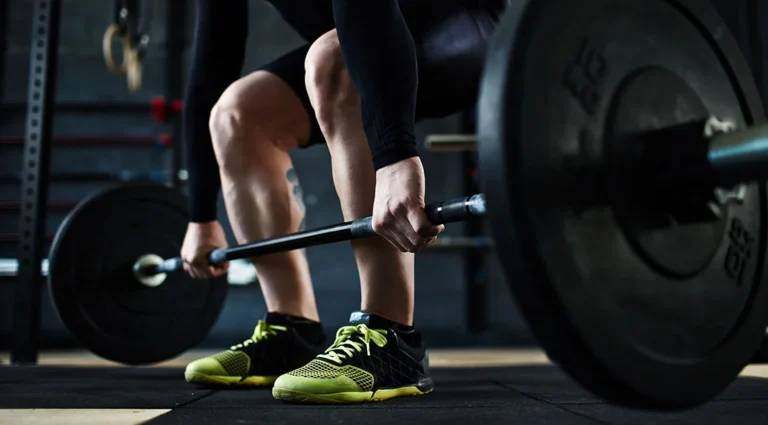
Her strength training lacks the sheen of high-tech cable machines. She prefers irregular, natural resistance—heavy stones, tree trunks, and uneven terrain. "I love to use stones, not just regular beautiful-shaped weights," she says. "With the stones, the shape is uneven. It’s also good strength for your grip, which is essential for the clinch and for chokes."
When asked for a singular piece of advice for aspiring fighters, her answer is deceptively simple: The Pull-Up Bar.
"I recommend pull-up bars to everyone," Shevchenko insists. "This makes your body very strong. It’s good for the quality of your fights. It gives you that specific, functional strength for gripping, pulling, and controlling an opponent’s posture."
Official Responses and Industry Implications
The MMA community, from commentators to her fellow athletes, has struggled to categorize Shevchenko’s longevity. Analysts point to her "Fight IQ"—a term often used loosely but applicable here in its truest sense. Shevchenko doesn’t just win; she solves puzzles.
In the wake of her recent success, the conversation has shifted toward her legacy. Is she the greatest of all time? While the debate continues, the implications of her approach are clear for the next generation of fighters. Shevchenko has effectively proven that the "prime" of a fighter is not a biologically fixed window, but a mental one.
"I’m not happy with just enjoying the process," she clarifies. "I am enjoying the process, yes, but the goal is to be the best and to perform at the highest level. I don’t train for participation. I train to give everything. Greatness isn’t a destination; it’s the standard you wake up and meet every single morning."
Conclusion: The Horizon
As she prepares for the upcoming challenge against Natalia Silva, the question is not whether Shevchenko can win, but whether she can continue to surprise an audience that thinks they have seen everything she has to offer.
With over two decades of professional experience, she remains a student of the game. While the sport of MMA evolves with new techniques and training methodologies, Shevchenko has anchored herself in the timeless principles of discipline, recovery, and psychological fortitude. She remains, in every sense of the word, the standard. For Valentina Shevchenko, the fight is never just against an opponent—it is against the limits of her own potential, a battle she has no intention of losing.