







For millennia, fasting has been practiced across cultures and religions, often shrouded in mystery and anecdotal claims of spiritual clarity or physical rejuvenation. In recent years, modern science has begun to peel back the layers of this ancient practice, focusing on the metabolic and cellular mechanisms that drive its purported health benefits. While intermittent fasting—the practice of cycling between eating and fasting—has gained immense popularity as a weight-loss tool, groundbreaking new research is revealing that the most profound physiological transformations may require a deeper, more sustained departure from caloric intake.
A landmark study published in Nature Metabolism has provided perhaps the most detailed map to date of what happens inside the human body when it is deprived of food for an extended period. The findings suggest that the body’s reaction to fasting is not a linear process, but rather a staged, coordinated overhaul that shifts into high gear only after a critical threshold is crossed: the 72-hour mark.
The Metabolic Shift: From Glucose to Fat
To understand the findings, one must first look at the evolutionary history of the human body. Humans are biologically engineered to survive periods of food scarcity. When the external supply of glucose—the body’s primary fuel source derived from meals—is exhausted, the body undergoes a metabolic switch. It pivots from its reliance on sugar to burning its own internal stores of fat.
This process, known as ketosis, is a well-documented survival mechanism. However, the recent research conducted by scientists at Queen Mary University of London’s Precision Healthcare University Research Institute (PHURI) and the Norwegian School of Sports Sciences suggests that this transition is merely the beginning of a much larger, systemic biological reboot.
The study monitored 12 healthy volunteers during a seven-day water-only fast. By utilizing advanced proteomics technology—a field of study that focuses on the large-scale analysis of proteins—the researchers tracked roughly 3,000 proteins circulating in the bloodstream. These proteins serve as biological messengers, offering a high-resolution view of how different organs and tissues are communicating and adapting to the absence of food.
A Chronology of Biological Transformation
The study’s most striking discovery was not just the changes themselves, but the timing of their onset. While the body begins burning fat within the first 48 to 72 hours, the truly significant molecular shifts—those affecting the immune system, brain function, and cellular structure—do not materialize until after the third day of total caloric restriction.
The First 72 Hours: The Preparation Phase
During the initial three days, the body is primarily concerned with energy management. It aggressively burns through glycogen stores before moving into the utilization of adipose (fat) tissue. Participants in the study experienced an average weight loss of 5.7 kilograms (approximately 12.5 pounds). This reduction included both fat and lean tissue. Interestingly, upon the resumption of a normal diet, much of the lean tissue was regained, while the reduction in fat mass remained, highlighting the efficiency of the body’s fat-burning switch.
The Post-72-Hour Threshold: The Molecular Deep Dive
After the three-day mark, the body enters a distinct biological state. Researchers observed that more than one-third of the 3,000 proteins tracked showed significant changes in activity levels. This was not a chaotic response to starvation, but a highly coordinated, consistent pattern across all volunteers.
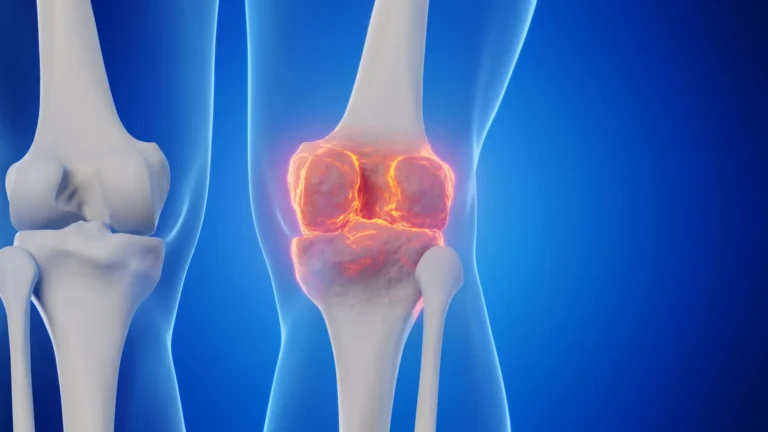
One of the most profound shifts involved the extracellular matrix—the complex network of proteins and other molecules that provide structural support to tissues and organs. Changes in these proteins suggested that the body was beginning to remodel its internal architecture, a process that could have significant implications for how we understand cellular repair and aging.
Supporting Data: Why Timing Matters
The consistency of these protein shifts across the study’s participants is significant. It suggests that the human body possesses a "fasting program" that is activated once the brain determines that food will not be arriving soon.
According to Dr. Claudia Langenberg, Director of PHURI, these findings validate the health claims surrounding fasting but also serve as a caveat to those expecting instant results from shorter windows. "Our results provide evidence for the health benefits of fasting beyond weight loss, but these were only visible after three days of total caloric restriction—later than we previously thought," Langenberg noted.
This realization challenges the current "intermittent fasting" zeitgeist, which often focuses on windows as short as 16 to 24 hours. While shorter fasts may improve insulin sensitivity and lipid levels—as supported by recent reviews—the deep molecular changes associated with structural tissue repair appear to be a feature of prolonged, multi-day fasting.
Official Responses and Scientific Implications
The academic community has reacted to these findings with a mix of excitement and caution. The prospect of identifying the specific proteins that regulate these benefits has opened a new frontier: the development of "fasting mimetics."
The Goal: Mimicking the Benefits
The ultimate ambition of researchers like Maik Pietzner, Health Data Chair of PHURI, is not to force the entire population to stop eating for days at a time, but to translate the molecular language of fasting into clinical therapies.
"While fasting may be beneficial for treating some conditions, often times, fasting won’t be an option to patients suffering from ill health," Pietzner explained. "We hope that these findings can provide information about why fasting is beneficial in certain cases, which can then be used to develop treatments that patients are able to do."
If scientists can identify the precise protein signaling pathways triggered after three days, they may eventually be able to create pharmaceutical or nutritional interventions that "trick" the body into initiating repair processes without the stress of total starvation.
Weighing the Risks: The Dark Side of Fasting
Despite the promising data, it is imperative to address the potential dangers of prolonged caloric restriction. The body’s transition into a "starvation mode" is a high-stakes biological gamble.
A separate, recent proteomics study has raised concerns about the unintended consequences of extended fasts. Researchers identified evidence of increased systemic inflammation, platelet activation, and alterations in blood clotting pathways. While these might be interpreted as temporary stress responses, they underscore the volatility of the body when deprived of external fuel.
Furthermore, medical experts warn that the risks of prolonged fasting are non-trivial. They include:
- Electrolyte Imbalances: A rapid depletion of essential minerals like sodium, potassium, and magnesium, which can lead to cardiac arrhythmias.
- Dehydration: Without the water typically ingested through solid food, participants are at high risk of rapid fluid loss.
- Muscle Wasting: While the body protects its fat stores, it will eventually catabolize muscle tissue to provide essential amino acids if the fast continues too long.
- Chronic Complication Exacerbation: For individuals with diabetes, eating disorders, or cardiovascular disease, extended fasting can be life-threatening.
Medical guidance is, therefore, the only safe path for those considering multi-day fasts. The "fasting for longevity" movement should not be conflated with safe medical practice, and the distinction between a controlled clinical study and a self-guided fast is immense.
Future Directions: A New Era of Metabolic Medicine
The research conducted by the PHURI team marks a significant pivot in metabolic science. By moving beyond the simple observation of weight loss and into the granular, molecular reality of protein expression, we are beginning to understand why ancient traditions prioritized these periods of abstinence.
The convergence of genetic data and proteomics is allowing researchers to map the long-term health trajectories associated with these protein changes. Preliminary evidence suggests links to improved inflammation markers and neurological support—key indicators in the fight against age-related diseases.
As we look to the future, the integration of these findings into clinical practice will be the next major hurdle. We are entering an era where the ancient wisdom of fasting is being translated into the modern language of precision medicine. Whether this leads to a new generation of longevity therapies or a more nuanced understanding of dietary interventions, one thing is clear: the human body is far more resilient, and far more adaptive, than we once dared to believe.
While the data suggests that three days is the "magic number" for deep molecular change, the scientific community remains committed to the principle of primum non nocere—first, do no harm. As research continues to advance, the goal remains clear: to harness the restorative power of fasting while mitigating the inherent risks of hunger, ensuring that the benefits of this evolutionary mechanism can be safely accessed by all.