










The modern biopharmaceutical landscape is defined by a paradox: while biologic drugs represent the cutting edge of medicine, offering targeted treatments for everything from cancer to chronic metabolic disorders, the delivery mechanisms for these therapies remain tethered to archaic, inconvenient, and often painful patient experiences. Today, most biologics are administered via self-injection pens or regular clinical infusions—methods that are not only expensive and burdensome but often result in erratic dosing patterns that can lead to diminished efficacy or toxic side effects.
Enter Duracyte, a Houston-based biotechnology startup emerging from the RBL LLC venture studio at Rice University. The company is pioneering a radical departure from traditional drug delivery: a “living pharmacy” housed within a miniaturized, implantable device. By engineering cells to act as internal drug factories, Duracyte seeks to bypass the complexities of traditional biomanufacturing, supply chain logistics, and patient self-administration, potentially ushering in a new era of precise, automated, and cost-effective medicine.
The Core Problem: The “Peak and Valley” of Biologic Dosing
To understand the necessity of Duracyte’s innovation, one must look at the limitations of current biologic administration. Biologics—complex proteins typically derived from living organisms—are notoriously fragile. Unlike small-molecule pills, they cannot survive the digestive tract, necessitating injection or infusion.
This creates a cycle of inconvenience. Patients are often required to self-administer injections at home, a regimen that leads to high rates of non-compliance. Furthermore, the pharmacokinetics of these drugs are suboptimal. In the case of popular GLP-1 medications, for example, a weekly injection creates a "peak and valley" effect: the patient is overdosed shortly after the shot, appropriately dosed mid-week, and under-dosed by the time the next injection arrives.
Beyond convenience, there is the issue of immunogenicity. The body’s immune system often recognizes the sudden influx of exogenous proteins as a threat, eventually mounting an attack that renders the drug ineffective over time. Duracyte’s solution is to move the production of these proteins from a factory floor to the patient’s own tissue, ensuring a steady, physiological, and controlled release of medicine.
A Decade in the Making: The Chronology of an Innovation
The path to Duracyte’s current prototype is the result of over a decade of rigorous academic and scientific inquiry.
- 2014–2016 (Foundational Research): The concept originated in the labs of MIT luminaries Bob Langer and Dan Anderson, where co-founder Omid Veiseh served as a postdoctoral researcher. Their work focused on creating “cell-in-a-box” systems that could keep therapeutic cells alive within the human body.
- 2016 (The Rice Connection): Upon joining Rice University as a professor of bioengineering, Veiseh accelerated the development of these platforms, focusing on immune-shielding materials that would prevent the body from rejecting the implanted cells.
- 2023 (Federal Validation): The project received a massive vote of confidence when the Advanced Research Projects Agency for Health (ARPA-H) awarded the team up to $45 million in funding for its Targeted Hybrid Oncotherapeutic Regulation (THOR) project, aimed specifically at treating ovarian cancer.
- 2024 (Institutional Birth): Rice University formally launched RBL LLC, a biotech venture creation studio designed to bridge the gap between academic discovery and commercial viability.
- 2025 (Commercial Launch): Duracyte formally spun out of RBL LLC, armed with more than $100 million in total funding, including backing from DARPA, Breakthrough T1D, and the Gates Foundation. Clinical trials are currently slated to commence by early 2026.
The Technology: Submarine Engineering Meets Cell Biology
The technical hurdle for any implantable cell therapy is twofold: keeping the cells alive and keeping them shielded from the immune system.
While existing implants—such as hormone-delivery devices or the recently FDA-approved Neurotech Pharmaceuticals system for eye disease—rely on passive nutrient absorption, Duracyte’s system is more sophisticated. Because its device contains a high density of cells, it requires a higher oxygen supply than simple diffusion can provide.
Duracyte’s engineers turned to maritime technology for a solution. The device incorporates a mechanism based on electrolysis—the same process used on submarines to generate oxygen from seawater. A small, onboard battery powers an electric field that splits water into hydrogen and oxygen, providing the “living factory” with the fuel it needs to thrive.
The device is further enhanced by miniaturized electronics, which were largely unavailable just five years ago. These components monitor the internal environment, track the production of therapeutic proteins, and respond to the patient’s physiological needs. Because the battery is wirelessly rechargeable, the device can theoretically produce medicine indefinitely, with clinicians managing the dosage through a dedicated mobile application.
Official Responses and Strategic Vision
The leadership at Duracyte views their invention not just as a medical device, but as a total shift in the economics of healthcare.
"They get nutrients from the body, and there’s the oxygen source that’s generated within the device," explains co-founder Omid Veiseh. "The body’s not going to run out of water, and the body’s not going to run out of nutrients. So everything that the cells need to survive comes from the body."
Paul Wotton, CEO of RBL and co-founder of Duracyte, emphasizes the unique regulatory classification of the system. The FDA has categorized the device as a “combination product.” In this setup, the engineered human cells act as the “drug substance.”
"They’re actually a cell factory that’s producing these human proteins," Wotton said. "The pharmacy on a cell is the sort of approach that we’re actually working on here."
Implications for Global Health
The potential applications for Duracyte’s platform are vast, stretching across oncology, metabolic disease, and immunology.
Oncology
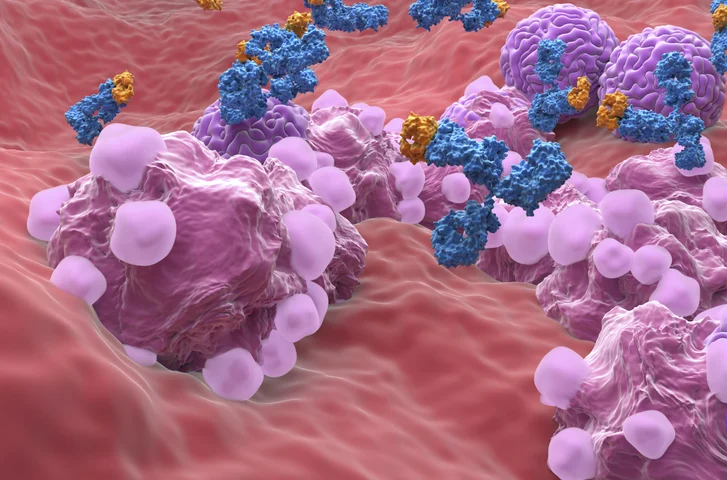
The lead indication is ovarian cancer. By implanting the device directly near the site of a tumor, the system can produce two powerful proteins: IL-12 (a signaling protein) and ipilimumab (a checkpoint inhibitor). Because the drug is produced locally at the tumor site, the systemic toxicity usually associated with checkpoint inhibitors is significantly mitigated.
Metabolic Health
Beyond cancer, the company has successfully demonstrated the production of GLP-1 peptides. By programming the device to release GLP-1 specifically during mealtimes—and idling during sleep—the device could eliminate the metabolic "peaks and valleys" that plague patients on weekly injection cycles, potentially leading to better weight management and glycemic control with lower total doses.
Chronic Immunology
Perhaps the most significant long-term opportunity lies in immunology. Patients suffering from chronic conditions like rheumatoid arthritis or Crohn’s disease often require frequent biologics that lose effectiveness over time due to the immune system’s reaction to the delivery method. A constant, low-level, internal supply of these drugs could fundamentally alter the disease course, preventing the "drug fatigue" that currently plagues the biologic market.
The Future of Biomanufacturing
If Duracyte succeeds in its clinical objectives, it will represent a milestone in the history of medicine. By moving the "factory" inside the patient, the startup eliminates the need for complex cold-chain logistics, massive manufacturing facilities, and the high-margin, high-cost injection hardware that currently dominates the industry.
"If you can solve this problem, biologics become a lot more cost-effective, scalable, and with the dosing on an as-needed basis, they become a lot more effective too," Veiseh stated.
As the medical community looks toward the next decade, the shift toward "combination biologics" and "precise dosing" seems inevitable. With over $100 million in backing and a technological approach that mimics the complexity of a living system, Duracyte is positioning itself at the vanguard of a movement that may eventually render the standard injection pen a relic of the past. As they approach human clinical trials in 2026, the world will be watching to see if this miniature "living pharmacy" can truly deliver on its promise to rewrite the rules of modern medicine.