








As we cross the threshold into our sixties, the body’s relationship with fitness undergoes a significant transformation. For many, the most visible and frustrating indicator of this shift is the accumulation of stubborn stomach fat. For nearly 40 years, I have worked as a personal trainer, and for the last two decades, I have dedicated my time to mentoring the next generation of fitness professionals at TRAINFITNESS. During this time, I have found that the greatest barrier to success isn’t a lack of effort—it’s the persistence of outdated, high-impact fitness myths that simply do not serve the aging body.
The reality is that you do not need to subject your joints to punishing crunches or high-impact burpees to reclaim your waistline. By utilizing low-impact, standing core exercises, we can effectively target visceral fat, improve functional mobility, and preserve muscle mass without the risk of injury.
The Physiology of Aging: Why Traditional Approaches Fail
To understand why traditional "ab workouts" often fail those over 60, we must first look at the biological changes occurring beneath the surface.
The Muscle Mass Decline
Beginning around the age of 50, adults experience a natural decline in muscle mass, often referred to as sarcopenia, at a rate of approximately 1% per year if left unaddressed. Muscle is metabolically active tissue; when it withers, our resting metabolic rate drops. Consequently, the nutritional habits that kept us lean in our forties can lead to subtle but consistent fat gain in our sixties. Many individuals do not notice this shift until they find their waistbands tightening.
The Hormonal Factor
Hormonal shifts—menopause in women and declining testosterone levels in men—change how our bodies distribute energy. The body becomes more efficient at storing adipose tissue, particularly visceral fat. Unlike subcutaneous fat, which sits just under the skin, visceral fat wraps around the internal organs. This is the "stubborn" fat that presents the greatest concern for long-term metabolic health.
The Dangers of High-Impact Training
Many fitness enthusiasts over 60 attempt to combat this fat with high-impact movements like jumping jacks, mountain climbers, or intense floor-based crunches. This is often a recipe for disaster. These movements place excessive shear force on joints already susceptible to arthritis or wear and tear. A single flare-up of back or knee pain can force weeks of sedentary recovery, effectively halting any progress made in the gym.
Why Standing Beats Floor-Based Crunches
For decades, the crunch was the gold standard of core training. However, from a biomechanical perspective, it is arguably one of the least effective and potentially harmful exercises for the over-60 demographic.
Spinal Integrity and Flexion
Crunches require repeated spinal flexion—bending forward at the waist. For individuals with disc thinning, mild osteoporosis, or previous back injuries, this motion is counterproductive. Research consistently suggests that repetitive spinal flexion under load can exacerbate disc issues. Furthermore, with a significant percentage of women over 50 at risk for osteoporotic fractures, loading a flexed spine is a risk that simply isn’t worth taking.

Functional Core Engagement
Crunches isolate the rectus abdominis—the "six-pack" muscle—while largely ignoring the transverse abdominis and the obliques. These deeper muscles are the body’s natural corset; they are responsible for stabilizing the spine and flattening the midsection.
Standing exercises, by contrast, force the entire trunk to work as a cohesive unit. When you perform a movement while standing, your core must engage continuously to maintain balance and posture. This mirrors the demands of daily life—reaching for a high shelf, carrying groceries, or twisting to look behind you. By training in a standing position, you build functional strength while simultaneously increasing your calorie burn, as your body must recruit more muscle groups just to stay upright.
The Four Essential Standing Moves
These exercises are designed to be performed as a circuit, focusing on control, stability, and steady breathing.
1. Standing March with Core Engagement
This move is a powerhouse for balance and hip health. As you lift each knee, your standing leg must stabilize, activating the glutes, while the deep core muscles fire to keep your torso upright.

- Muscles Targeted: Glutes, hip flexors, transverse abdominis.
- Execution: Stand tall, lift one knee to hip height, and lower it with control. Keep your chest up and your core braced.
- Pro Tip: Hold onto a chair if you are concerned about balance; it is a safety tool, not a sign of weakness.
2. Standing Wood Chop
Rotation is a movement pattern we use daily but rarely exercise. The wood chop targets the obliques, the muscles essential for a sculpted, tight waistline.
- Muscles Targeted: Obliques, hips, shoulders, and the entire trunk.
- Execution: With feet shoulder-width apart, rotate your torso and reach your hands diagonally across your body from high to low. Use your hips and core to drive the motion, not just your arms.
- Pro Tip: Imagine your arms are merely "straps" attached to your core; let the trunk do the heavy lifting.
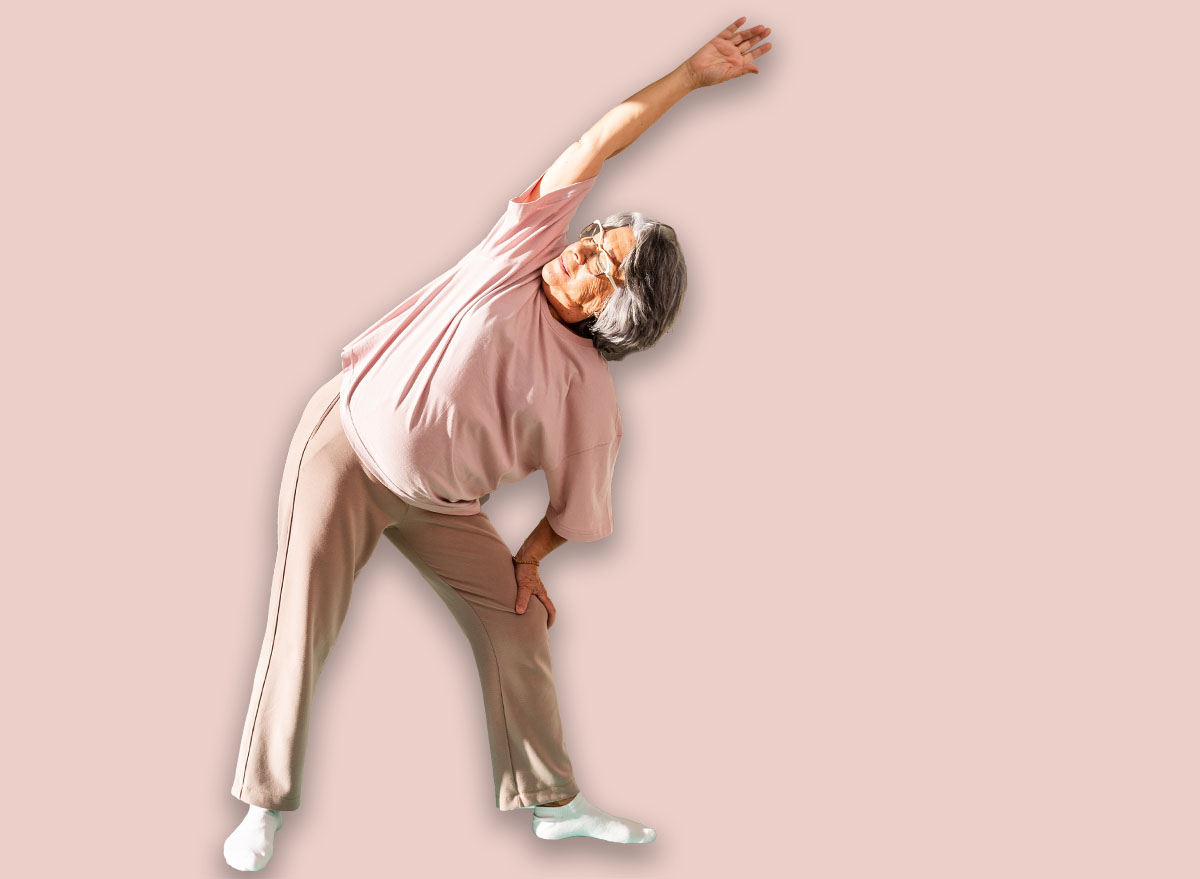
3. Standing Side Bend with Reach
This exercise improves spinal mobility while directly targeting the side of the torso.
- Muscles Targeted: Obliques, lats, and spinal stabilizers.
- Execution: Reach one arm overhead and gently bend to the opposite side. Feel the stretch along your ribcage, then use your oblique muscles to return to center.
- Pro Tip: If you have shoulder discomfort, keep the overhead arm bent rather than fully extended.
4. Standing Knee-to-Elbow
This is a full-body movement that combines rotation with stability.
- Muscles Targeted: Obliques, rectus abdominis, hip flexors.
- Execution: Place your hands lightly behind your head. Lift one knee while rotating your torso to meet it with the opposite elbow.
- Pro Tip: Focus on the "squeeze" at the top of the movement rather than speed.
Structuring Your Weekly Routine
Consistency is the ultimate driver of results. I recommend a structured approach that emphasizes recovery as much as exertion.
The Weekly Schedule
- Frequency: Aim for three sessions per week. This allows the body to adapt to the stimulus while providing 48 hours of recovery between workouts.
- Circuit Format: Perform each of the four exercises for 45 seconds. Rest for 90 seconds after completing the full circuit.
- Progression: Beginners should start with two rounds, eventually building to four rounds over the course of six weeks.
- Supplementary Activity: On "off" days, prioritize 20 to 30 minutes of brisk walking. Walking is the most underrated tool for long-term fat management; it is low-impact, sustainable, and highly effective for metabolic health.
Safety and Modifications
It is vital to distinguish between productive muscle fatigue—the feeling of the muscles working hard—and joint pain. If you feel sharp, localized pain in a joint, stop immediately.
- Balance: Always perform these near a wall or a sturdy chair.
- Back Pain: If you feel strain in your lower back, your core may be disengaging. Stop, reset your posture, and focus on bracing your stomach muscles before restarting.
- Hydration: As we age, our thirst mechanism becomes less sensitive. Ensure you are drinking water consistently throughout the day to support recovery and energy.
Setting Realistic Expectations
The digital world is rife with "quick fix" promises that simply do not hold up to scientific scrutiny. Real change is a marathon, not a sprint.
- Weeks 1-2: You will likely notice improvements in sleep quality and daily energy levels before you see physical changes.
- Weeks 3-4: You will feel a newfound strength in your midsection. Your posture will naturally improve as your core muscles become more efficient.
- Weeks 5-6: You will find that daily tasks—like tying your shoes or climbing stairs—become noticeably easier. Your balance will have improved significantly.
It is important to remember that these exercises build the muscle that shapes your midsection, but nutrition reveals it. To see significant reduction in stomach fat, you must pair these workouts with a diet that prioritizes protein (roughly 1.2 to 1.6 grams per kilogram of body weight) and minimizes ultra-processed foods.
Visible, lasting changes usually appear between the 8 and 12-week mark. Treat this as a long-term investment in your physical autonomy. Your body did not reach its current state overnight, and it will not transform overnight. However, by showing up consistently, moving with intention, and honoring your body’s need for recovery, you can build a stronger, more functional, and more confident version of yourself in your sixties and beyond.