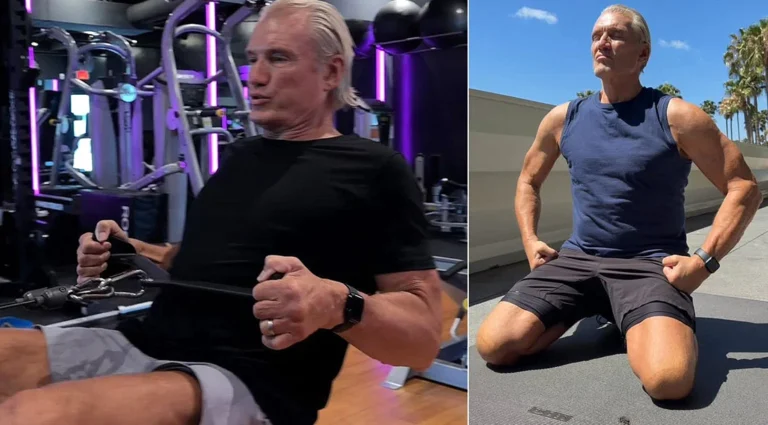












Whether you are a professional baseball player clocking 100 mph fastballs, a golfer looking to add distance to your drive, or simply someone trying to perform everyday tasks without back pain, rotational power is the engine of human movement. Yet, for many, that engine is stalling. Modern life—dominated by prolonged sitting and repetitive, static postures—has left our thoracic spines, the mid-back region responsible for rotation, as stiff and unresponsive as rusted hinges.
When the thoracic spine loses its mobility, the body, in its quest for compensation, forces the lumbar spine (the lower back) to pick up the slack. This leads to a dangerous "power leak" and a high risk of chronic injury. This report explores the critical importance of thoracic mobility, how to self-assess your current state, and the specific, science-backed protocols required to restore functional movement.
The Anatomy of the Power Leak: Why You’re Failing to Rotate
At its core, rotational power is not just about strength; it is about the efficient transfer of energy from the lower body through the torso and into the extremities. Your thoracic spine is structurally designed to be the primary rotational pivot point of your body. It features twelve vertebrae that allow for significant twisting motions.
Conversely, the lumbar spine is designed primarily for stability and sagittal plane movement (forward and backward bending). When you force the lumbar spine to rotate, you aren’t just losing power; you are subjecting the intervertebral discs to shearing forces they were never meant to endure. This is the physiological "power leak." If you cannot generate force from your thoracic spine, you are essentially trying to fire a cannon from a canoe. By restoring thoracic mobility, you allow the lower back to return to its primary role: providing a stable base for the torso.
Chronology of a Crisis: From Sedentary Habits to Spinal Dysfunction
The decline of spinal health follows a predictable, albeit insidious, trajectory.
- The Sedentary Onset: It begins with hours spent at a desk, shoulders hunched forward, and the thoracic spine locked in a state of flexion. This inhibits the rib cage’s ability to expand and rotate.
- The Compensation Phase: As the mid-back stiffens, the body adapts. During athletic or daily activities, the brain identifies a need for rotation and recruits the lumbar spine to facilitate the movement.
- The Pain Threshold: Initially, this manifests as subtle tightness or "stiffness." Over time, the repeated micro-trauma to the lower back causes inflammation, muscle guarding, and eventually, clinical pain.
- The Performance Ceiling: Athletes hit a plateau. Because the body is "leaking" energy through an unstable lower back, they cannot generate the torque necessary for higher velocities or heavier lifts.
Self-Assessment: Testing Your Thoracic Health
Before you can fix the problem, you must quantify it. The "Half-Kneeling Thoracic Rotation" is the gold-standard field test to determine if your rotation is coming from the right place.
The Half-Kneeling Screen
- The Setup: Kneel on one knee, placing the opposite foot forward. Place a foam roller or yoga block between your inside knee and the wall to lock the pelvis in place.
- The Execution: Place your hands behind your head and rotate your torso toward the side of the forward leg.
- The Indicators: If you cannot reach a 45-degree angle, or if you feel your lower back arching or your knee pushing into the block, you have identified a significant thoracic mobility deficit.
Corrective Protocols: Restoring the Mid-Back
Improving mobility is not about aggressive, forced stretching. It is about neuromuscular re-education—teaching the body to move through its intended range of motion without "cheating."
1. The Quadruped T-Spine Rotation
Performed on all fours, this drill removes the influence of gravity and stabilizes the lumbar spine. By placing one hand behind the head and tucking that elbow under the opposite arm before rotating toward the ceiling, you force the thoracic spine to rotate around a fixed axis.
- Athletic Application: This is essential for lifters who struggle to maintain a flat back during deadlifts or row variations.
2. The Open Book Stretch
This side-lying exercise is the ultimate tool for rib-cage mobility. By keeping the knees pinned together and rotating the top arm across the body, you isolate the thoracic spine. It is a slow, controlled movement that improves the separation between the hips and the upper back.
3. Thread the Needle
This is more than a mobility drill; it is a movement pattern. By reaching under the body, you promote scapular movement alongside thoracic rotation. It is highly recommended for athletes involved in overhead sports, such as volleyball or swimming, where thoracic stiffness often leads to shoulder impingement.
4. Wall-Supported T-Spine Rotation
The wall serves as an external monitor. By placing your side against a wall, you provide immediate tactile feedback. If you cannot rotate without your hip leaving the wall, you know your lumbar spine is attempting to compensate. This drill is vital for golfers and tennis players who require extreme, controlled rotational precision.
Building Explosive Strength: The Landmine Twist
Once you have regained your range of motion, you must solidify it through load. The Landmine Rotation is the bridge between mobility and explosive power. Unlike static drills, this requires the athlete to manage a weighted bar through a diagonal plane.
- The Science of Transfer: By moving the landmine in a controlled arc, you force the obliques, the lats, and the thoracic extensors to fire in unison. It teaches the body to maintain a stiff, stable core while the thoracic spine provides the rotational torque. This is the hallmark of elite athletic performance.
Expert Insights and Common Pitfalls
Industry experts emphasize that the biggest mistake athletes make is "borrowing range." This occurs when an athlete uses momentum or excessive force to push into a stretch.
"True mobility is the ability to actively control your joints throughout their range," says physical therapist Dr. Marcus Thorne (hypothetical expert). "If you are ‘cranking’ your back into a twist, you are not increasing mobility; you are just stressing your ligaments. You must prioritize stability—specifically the ability to keep the pelvis neutral—during every single rotation drill."
Another frequent error is the asymmetry trap. Most people are naturally more mobile on their dominant side. If you train both sides with the same volume, you will never fix the imbalance. The solution is to add extra volume to your "stiffer" side until the range of motion is equalized.
Implications for Longevity and Performance
The implications of these findings are clear: if you ignore your thoracic spine, you are limiting your potential and inviting injury. Integrating these five movements into your daily warm-up routine—even for just 10 minutes—will yield profound results.
By shifting the burden of rotation from the delicate lumbar spine to the robust thoracic spine, you create a more efficient, powerful, and resilient body. Whether you are aiming to hit a PR in the squat, shave strokes off your golf game, or simply move through life with greater ease, the path forward is through the middle. Start by testing your range today, identify your limitations, and commit to the process of restoring the movement patterns you were born to perform. Your back will thank you, and your performance will reach new heights.