




Originally published in Yoga Journal, May-June 1994; updated and expanded for the modern practitioner.
When yoga first surged into the American cultural consciousness during the 1960s, the image of a practitioner balanced precariously on their head became the unofficial icon of the discipline. Often viewed by the uninitiated as an eccentric, if not downright bizarre, display of physical theater, Sirsasana (Headstand) was frequently relegated to the private corners of the home. Yet, beneath the veneer of its gravity-defying aesthetics lies a sophisticated, ancient technology designed for the systematic recalibration of the human nervous and endocrine systems.
The Chronology of an Ancient Practice
The origins of inversion are as mysterious as they are profound. Scholars often joke that the discovery of such complex postures was the byproduct of two conditions familiar to the ancient forest-dwelling yogis: too little food and an abundance of time for self-reflection. However, the intent behind these postures was never merely gymnastic.
By 1975, when Yoga Journal began archiving the core tenets of the practice, Sirsasana was already established as the "King of Asanas." Its development was not aimed at athletic prowess but at the preservation of amrita—a legendary "fluid of immortality" believed to be secreted by the pineal gland. According to ancient lore, this cooling, lunar-like essence would normally drip downward to be incinerated by the solar plexus. By inverting the body, the yogi sought to catch this elixir, fostering a state of regenerative, vibrant health.
Physiological Implications and the Endocrine Connection
While modern Western science may struggle to quantify the "elixir of immortality," it acknowledges the profound systemic influence of inversions. The practice of Headstand, and its cooling counterpart Sarvangasana (Shoulderstand), creates a unique physiological environment that touches the core of our hormonal regulation.
The Anatomy of the Subtle Channel
Contemporary research into the endocrine system provides a fascinating bridge between ancient philosophy and modern anatomy. The seven major endocrine glands—sex glands, adrenals, pancreas, thymus, thyroid, pituitary, and pineal—regulate our vitality. As Margo Anand noted in The Art of Sexual Ecstasy, these glands are connected by specific neurological and physical pathways.
Yogis identified this pathway as the "inner flute" or "hollow bamboo," a central channel running from the perineum to the crown of the head. Inversion acts as a form of "irrigation" for this channel, vitalizing these glands and allowing for a refinement of consciousness. By stimulating the central nervous system through the pressure of the cranium against the earth, the practitioner creates a closed energy loop that fosters mental clarity and internal stability.
Why "Cheating" With Inversion Swings Fails
In recent years, the market has been flooded with "inversion tables" and swings designed to offer the benefits of being upside down without the physical demand of balancing. However, experienced practitioners argue that these devices miss the point.
Hanging from a swing creates a passive, often unpleasant rush of blood to the head. It lacks the "earth-sky" polarity essential to the practice. In true Sirsasana, the pressure of the head against the floor stimulates a proprioceptive feedback loop. The human frame acts as a conduit, integrating the material world (the floor) with the spiritual aspiration (the vertical alignment of the spine). Passive hanging does not require the engagement of the deep core stabilizers necessary to cultivate the "inner flute" energy flow, rendering the practice more of a circulatory gimmick than a transformative tool.
The Precision of Tripod Headstand (Sirsasana II)
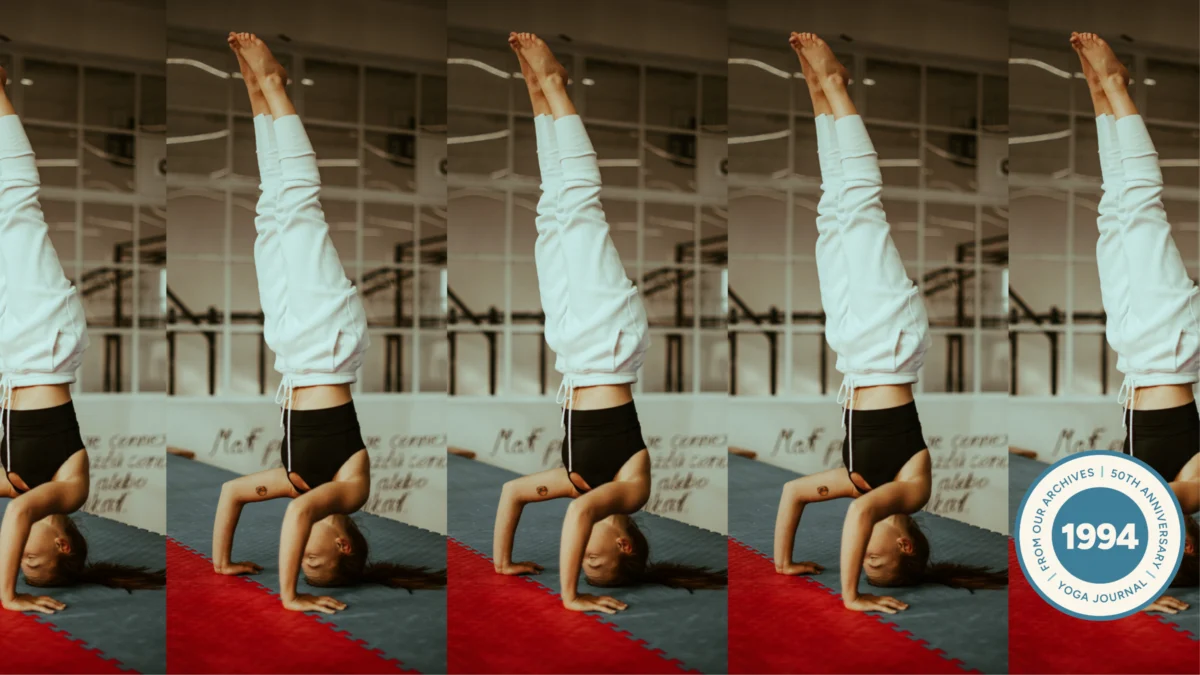
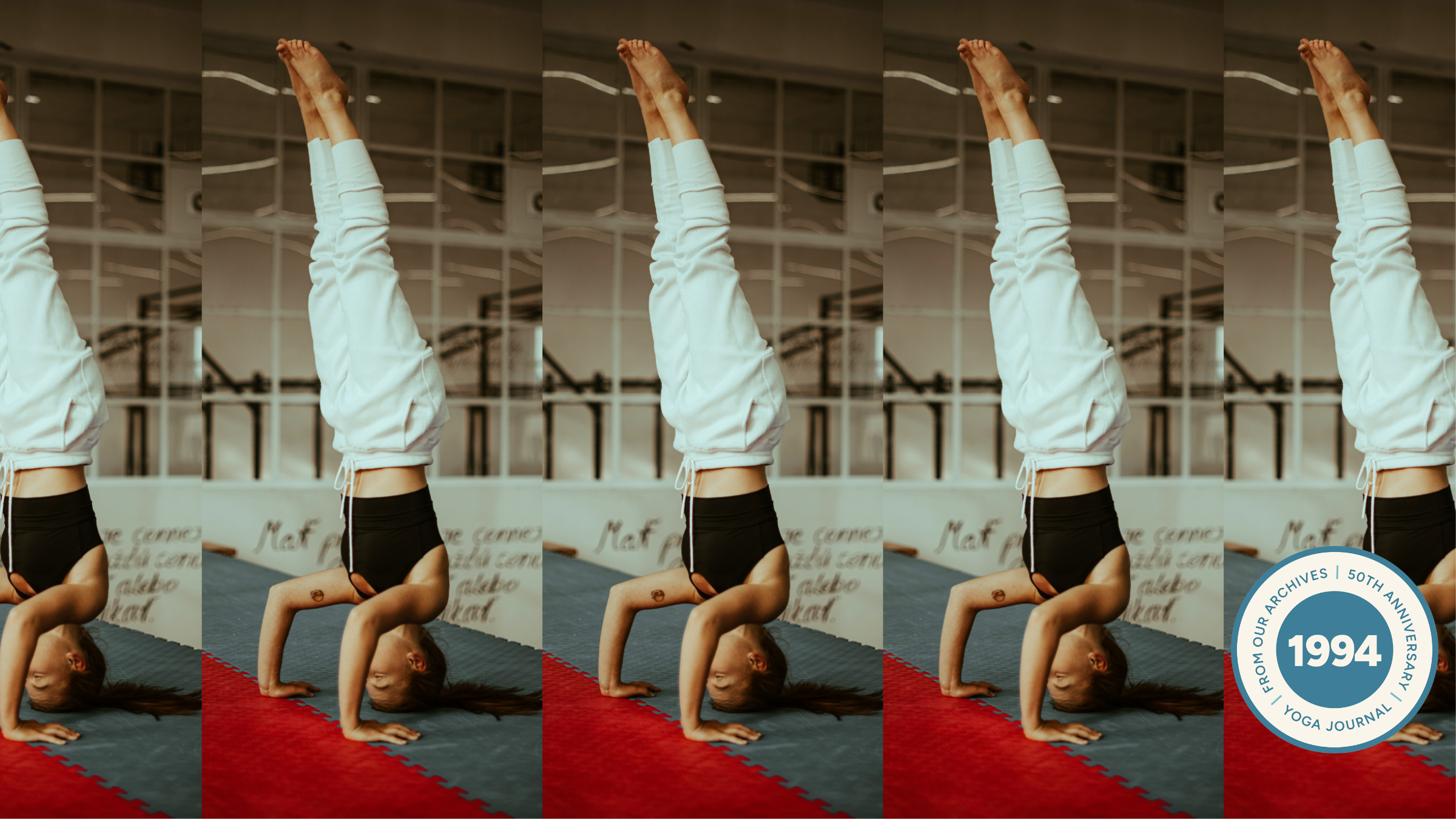
For the advanced practitioner, the Tripod Headstand—or Sirsasana II—represents the pinnacle of structural integrity. Unlike the standard headstand where the hands are clasped behind the head to provide a base, the tripod variation requires the hands to be placed flat on the floor in front of the head. This demands impeccable alignment.
The Mechanics of the Frame
The most common mistake in Tripod Headstand is the collapse of the "frame." The shoulder girdle must support the weight of the torso, protecting the cervical spine.
Steps for Structural Integrity:
- The Principle of the Crown: Much like indigenous peoples who balance heavy loads on their heads, the weight must pass through the central axis of the spine. If the chin lifts or the head tilts, the structure fails.
- Shoulder Girdle Activation: The shoulders must be broadened away from the spine and rolled back, away from the ears. If the muscles collapse, the cervical vertebrae undergo unnecessary compression.
- The Prasarita Padottanasana Prep: Before attempting the tripod, use the Expanded Foot Pose to train your shoulders. By placing hands shoulder-width apart and bending elbows to a 90-degree angle, you learn to keep the shoulder joints aligned with the ears.
Technical Execution: A Guide for the Qualified
Note: These instructions are intended for those who have already mastered the basic Headstand (Sirsasana I) and can balance unassisted in the center of the room. Do not attempt this pose if you are a beginner or have neck/back vulnerabilities.
1. Estimating Distance
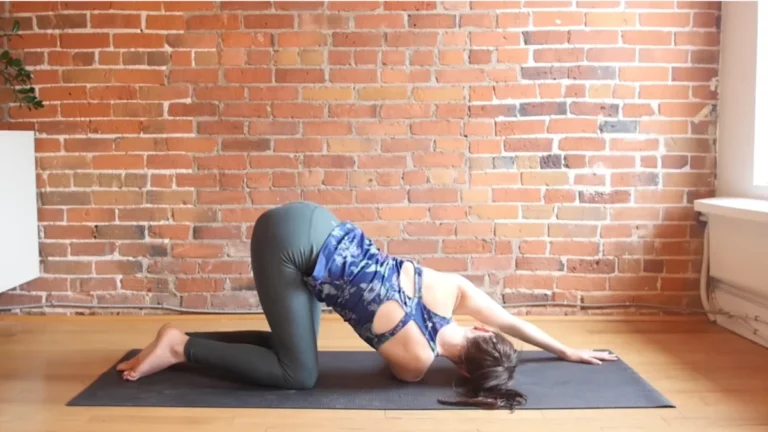
Kneel on the floor. Place your hands shoulder-width apart. Move your knees forward so the kneecaps align with the tips of your fingers. Place the crown of your head on the floor directly in front of your knees. This initial placement is vital; if the hands are too close or too far, the forearms will not be perpendicular to the floor, leading to a catastrophic collapse of the neck curve.
2. The Ascent
Walk your feet toward your head, maintaining the perpendicularity of the forearms. Keep your elbows pulling inward—do not allow them to splay outward, as this causes the shoulder blades to collapse into the neck. If your hamstrings are flexible, lift into the pose with straight legs. If not, bend your knees and gently hop upward.
3. The Vertical Axis
Once inverted, feel the connection between the perineum and the crown of the head. Extend through the heels. A common error is keeping the legs slightly forward out of a fear of falling backward. By drawing the coccyx toward the pubic bone, you engage the pelvic floor, creating a neutral pelvis that allows the spine to feel weightless.
Implications: The Centripetal Turn
The ultimate goal of Sirsasana II is not to master a difficult physical feat, but to shift one’s orientation toward the world. As scholar Georg Feuerstein noted, human behavior is generally centrifugal—always looking outward, always distracted.
The Tripod Headstand is a, quite literal, reversal of this orientation. By focusing the senses inward toward the central channel, the practitioner engages in a centripetal movement, pulling the awareness back to the "Self."
A Note on Safety and Sequencing
- Duration: Start with one-minute intervals. Gradually increase to three to five minutes as comfort allows.
- Cooling Down: Because Headstand is a heating, stimulating practice, it must be balanced. Always conclude your session with Sarvangasana (Shoulderstand), which acts as a sedative for the nervous system, or follow the inversion with restorative poses that ground the body.
- Professional Guidance: Given the high risk of cervical injury, the tripod variation should be approached with extreme caution, preferably under the direct supervision of a certified instructor who can visually correct your shoulder alignment.
The beauty of the Tripod Headstand lies in its honesty. It does not allow for "cheating." If the alignment is flawed, the weight of the body makes the posture impossible to maintain. When practiced with respect for the anatomy and the ancient intent of the central channel, it remains one of the most effective tools for achieving both physiological longevity and the profound, quiet realization of one’s original nature.