









BUNIA, Democratic Republic of Congo — An atmosphere of profound anxiety has descended upon the verdant but volatile provinces of Ituri and North Kivu in eastern Democratic Republic of Congo (DRC). As health workers scramble to contain a burgeoning outbreak of the Bundibugyo strain of the Ebola virus, they find themselves fighting a war on two fronts: one against a highly contagious, deadly pathogen, and another against the logistical, security, and systemic failures that have allowed it to flourish undetected for months.
For the people of Bunia and the surrounding regions, the emergence of this rare strain represents a cruel new chapter in a history already marred by armed conflict, displacement, and crumbling infrastructure. As the international community watches with growing alarm, the reality on the ground is far grimmer than initial reports suggested.
The Anatomy of the Outbreak: A Hidden Killer
The Bundibugyo strain, while less frequently documented than the Zaire strain often associated with major outbreaks, is no less devastating. It is a zoonotic, highly contagious virus that spreads through contact with the bodily fluids of the infected—vomit, blood, or semen. Symptoms typically manifest as sudden-onset fever, debilitating muscle pain, vomiting, diarrhea, and, in advanced stages, both internal and external hemorrhaging.
For weeks, the virus moved through the population like a ghost. Authorities, initially searching for the more common Zaire strain, saw their tests return negative, leading to a fatal delay in diagnosis. This gap allowed the virus to circulate unchecked, claiming lives while families mistook the symptoms for malaria or other common regional illnesses.
"It’s truly sad and painful because we’ve already been through a security crisis, and now Ebola is here too," said Justin Ndasi, a local resident. For many, the arrival of the virus is not merely a health crisis; it is an existential threat to communities already pushed to their breaking point.
Chronology: From Silent Spread to Global Concern
The timeline of this outbreak serves as a sobering lesson in the dangers of diagnostic delays and the fragility of regional surveillance.
- Pre-Detection Phase: Epidemiologists, including Anaïs Legand of the WHO’s emergencies program, believe the outbreak likely began at least two months ago. During this period, the virus spread quietly as health officials tested for the wrong strains, providing a false sense of security.
- The First Confirmed Death: The first known death was officially announced last week, triggering a belated, frantic response.
- Expansion: By mid-week, the World Health Organization (WHO) confirmed 51 cases across the northern provinces of Ituri and North Kivu, with two additional cases detected in neighboring Uganda.
- The Escalation: While official records cite 139 suspected deaths and nearly 600 suspected cases, independent analysts—including those at the London-based MRC Centre for Global Infectious Disease Analysis—warn that these figures are significant undercounts. Experts estimate that the actual number of cases may already exceed 1,000, suggesting that the "true magnitude" remains shrouded in uncertainty.
Supporting Data: An Overwhelmed System
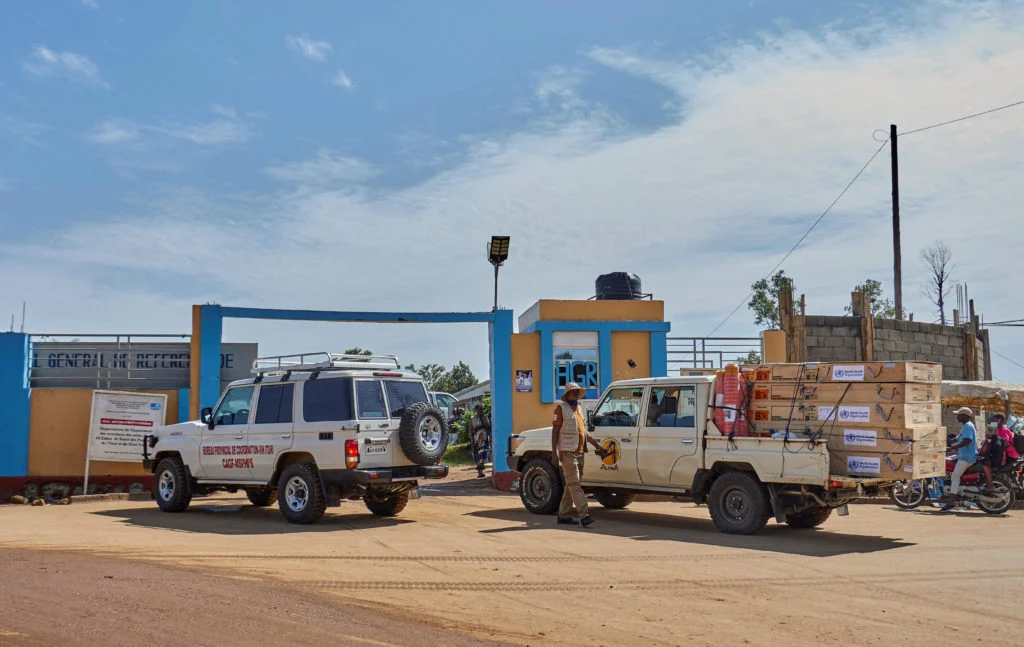
The logistical challenges facing the response effort are monumental. Despite tons of medical supplies being airlifted into Bunia, the "last mile" of distribution is failing. Residents report that essential personal protective equipment (PPE), such as masks, are becoming increasingly scarce. Worse, the predatory economics of a crisis have taken hold; disinfectants that once sold for 2,500 Congolese francs (approximately $1) have seen their prices quadruple in local markets, placing them out of reach for the average family.
At the hospital level, the situation is even more dire. Trish Newport, an emergency program manager with Doctors Without Borders, described a chaotic scene at Salama hospital, where teams identified suspected cases but found no available isolation space. "Every health facility they called said, ‘We’re full of suspect cases. We don’t have any space.’ This gives you a vision of how crazy it is right now," she noted.
In Mongbwalu, medical professionals are working in near-total isolation. Dr. Richard Lokudu, the hospital’s medical director, noted that patients are currently scattered throughout the facility, risking cross-contamination. "We hope for proper triage and isolation facilities to be installed today, and if that doesn’t happen, we will be completely overwhelmed," he warned.
Official Responses and International Intervention
The WHO has officially declared the situation a "Public Health Emergency of International Concern," citing the "scale and speed" of the spread. WHO Director-General Tedros Adhanom Ghebreyesus has been blunt, stating that the "scale of the epidemic is much larger" than the current tally suggests.
The international response, however, is being hamstrung by complex geopolitical factors. The presence of M23 rebels in the city of Goma has further complicated efforts to reach affected populations. Dr. Anne Ancia, the WHO’s representative in the DRC, described the environment as "complicated" and perilous.
Meanwhile, the United States has pledged $23 million toward the effort, with Secretary of State Marco Rubio emphasizing the importance of funding 50 emergency clinics. However, critics point to the impact of broader foreign aid cuts, which have left the local health system underfunded and ill-equipped to handle an epidemic of this magnitude.
On the clinical front, the prospects for a medical breakthrough are distant. Dr. Vasee Moorthy, a special adviser at the WHO, confirmed that a vaccine specifically tailored for the Bundibugyo strain is at least six to nine months away from being viable, leaving health workers to rely entirely on infection prevention and control (IPC) measures.
Implications: A Global Health Vulnerability
The outbreak has reached beyond the borders of the DRC, highlighting the precarious nature of international medical transit. A U.S. national who tested positive in the region was recently evacuated to a specialized isolation ward in Berlin, Germany. The German Health Ministry has confirmed that they are providing care for the patient and, at the request of U.S. authorities, have admitted the patient’s family for observation.
Additionally, an American doctor who had been treating patients in Uganda was moved to the Czech Republic for monitoring. These evacuations underscore the high-stakes coordination between the U.S. State Department, the CDC, and European health authorities.
The broader implications are clear: the world remains vulnerable to "forgotten" regions where health systems have collapsed under the weight of chronic underfunding and active conflict. In places like Mongbwalu, where gold mining continues and the border with Uganda remains porous, the lack of basic infrastructure—such as handwashing stations—creates a fertile breeding ground for the virus to cross international borders once again.
The Human Cost: A Mother’s Grief
Behind the clinical terminology of "outbreak," "strains," and "triage" lies the devastating human experience. Botwine Swanze, who recently lost her son to the virus, recounts a harrowing descent into illness.
"He told me his heart was hurting," Swanze recalled, describing the moment the virus took hold of her son. "Then he started crying because of the pain. … Then he started bleeding and vomiting a lot."
For families like hers, the loss is compounded by the inability to perform traditional burial rites. In the treatment center at Rwampara, health workers in heavy protective gear must sanitize the bodies of the deceased and place them directly into coffins for secure, anonymous burials. For grieving families, this denial of cultural closure adds a layer of psychological trauma to the physical loss of their loved ones.
As the epidemic continues to evolve, the primary fear remains that the window for containment is closing. Without a massive influx of specialized training for local staff, reliable supplies of protective gear, and a secure environment for medical teams to operate, the virus will continue its march through the remote villages and crowded hospitals of eastern Congo. The world is waiting, but for those on the ground, the clock is ticking toward a catastrophe that could have been avoided with earlier intervention and sustained global support.