





By Investigative Staff
The lingering shadows of the COVID-19 pandemic stretch far beyond the physical markers still present in our daily lives—the plexiglass barriers, the ubiquitous hand sanitizer stations, and the sporadic sight of face masks in crowded transit hubs. Years after the formal end of the global health emergency, the true legacy of the pandemic is not found in the material world, but in the psychological architecture of society.
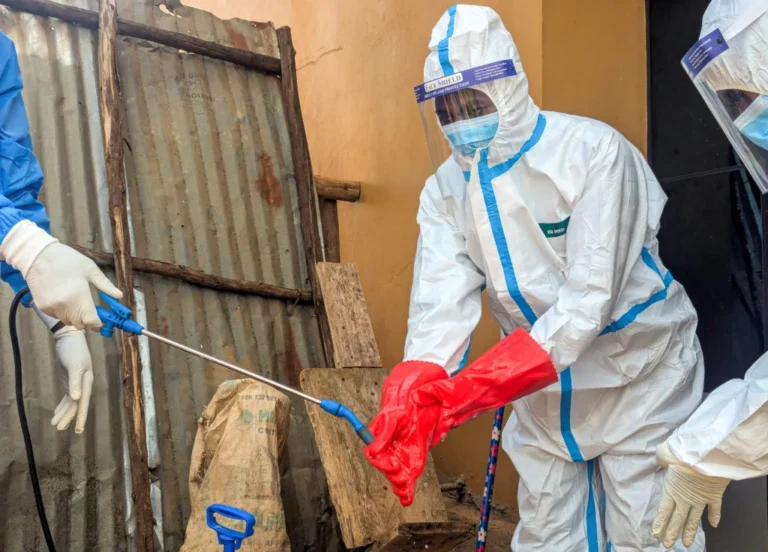
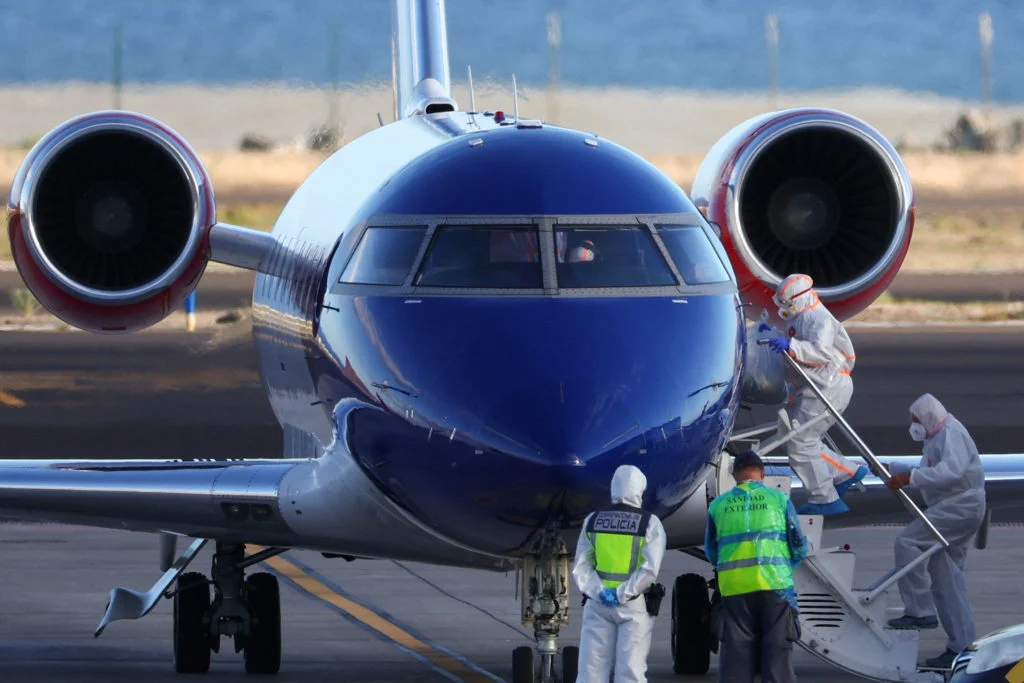
We are living in an era of profound institutional disillusionment. When a rare hantavirus outbreak recently occurred aboard a luxury cruise ship, the immediate global reaction was not one of calm observation, but of reflexive, widespread anxiety. Despite health officials providing clear, data-driven reassurances that the risk to the general public was negligible, the visceral memory of 2020 triggered a collective alarm. This incident highlights a sobering reality: in the post-pandemic era, the bonds of trust that once linked citizens to science, government, and the media have been fundamentally frayed.
The Anatomy of a Crisis: The Cruise Ship Incident
The recent hantavirus outbreak, while contained, serves as a litmus test for modern public perception. The World Health Organization (WHO) has confirmed 11 cases linked to the vessel, with eight verified through rigorous laboratory testing. For a generation accustomed to the localized nature of past outbreaks—such as the 1997 hantavirus epidemic in Chile or various regional bouts of cholera and SARS—the current climate of hyper-vigilance is unprecedented.
When the ship docked at the Spanish island of Tenerife to allow for the disembarkation of passengers, the local response was telling. Residents, scarred by the trauma of lockdowns and health mandates, expressed profound skepticism toward official containment protocols. "We don’t feel as though there are 100% security measures in place to welcome them," noted local resident Samantha Aguero. "This is a virus, after all, and we have lived this during the pandemic."
This sentiment reflects a wider trend: the inability of expert reassurance to penetrate the shield of fear. The public is no longer satisfied with "low risk" assessments; they are searching for absolute, zero-risk guarantees—a standard that neither biology nor public health can ever provide.
Chronology: From Pandemic to Perpetual Anxiety
To understand our current state of fragility, one must look at the timeline of the breakdown of trust:
- Pre-2020: The "Before Times," characterized by a general (if sometimes complacent) reliance on institutional experts to manage health crises. Outbreaks were viewed as distant events or manageable regional issues.
- 2020–2021: The "Process Reveal." As COVID-19 evolved, the public was forced to watch science in real-time. The changing recommendations regarding masks, ventilation, and transmission—necessary shifts based on evolving data—were perceived by many not as the scientific method at work, but as inconsistency and deception.
- 2022–2023: The erosion of the "Information Commons." As misinformation proliferated online, institutional trust reached a nadir. The politicization of basic health measures, such as vaccines, fundamentally altered the social contract.
- 2024–Present: The "Post-Pandemic Reflex." We have entered an era where every medical anomaly, from rare viruses to localized clusters, is viewed through the lens of a looming existential threat.
Science Under the Microscope: The Misunderstanding of Process
The crisis of trust is not merely a political phenomenon; it is an epistemological one. According to Elisa Jayne Bienenstock, a research professor and sociologist at Arizona State University, the core issue lies in a fundamental misunderstanding of what science is.
"Most people don’t think of science as a process. In their mind, science is an answer; it’s a fact," Bienenstock explains. When the scientific community adjusted its guidance as new data emerged during the pandemic, it was not an admission of failure to the initiated, but to the public, it was interpreted as a lack of credibility.
"One of the problems with COVID is that it undermined confidence in science for those who don’t understand how it works," she continues. "It showed the process. And it showed that scientists don’t always have the answer. A lot of people in crisis, when they fear things, don’t care what the answer is, as long as there’s a definitive one. Science doesn’t provide that when it doesn’t know."
This disconnect has left a vacuum. In the absence of a trusted, nuanced voice, the public is increasingly turning to rumor, anecdote, and ideologically driven media to fill the void, creating a feedback loop of fear.
Institutional Decay: The Data on Disconnection
The decline in trust is not limited to health institutions. It encompasses the media, government, and scientific bodies—the "three pillars" that previously provided a stabilizing framework for societal uncertainty.
Michele Gelfand, a professor of organizational behavior at the Stanford Graduate School of Business, argues that this disconnect has created a "risk-perception imbalance." COVID-19 did not just make us more sensitive to health threats; it made us sensitive in ways often disconnected from actual risk.
"Without trust, people rely more on rumor, fear, and emotion," Gelfand states. "This leads them to overreact to small, manageable risks—like a contained hantavirus outbreak—while potentially underreacting to more serious, systemic issues."
The evidence is visible in the public health sector. Karlynn Morgan, a retired nurse-anesthetist with decades of experience, has observed a marked shift in public attitudes toward medical care. She points to the decline in childhood vaccination rates as a primary indicator of this new, deep-seated skepticism. "People are far less trusting. When I was a kid, there was no question you were going to get your shot. Now, there is a constant, exhausting interrogation of basic medical practices."
Official Responses and the Path to Rebuilding
Health organizations, including the WHO and the CDC, have struggled to adapt to this new environment. Their traditional communication strategies—relying on top-down, expert-led declarations—are increasingly failing to resonate with a public that is already primed to be skeptical.
The path forward, according to experts like Gelfand, requires a fundamental shift in leadership. "Strong, reliable institutions have historically been our superpower," Gelfand says. "They are what allow millions of people to coordinate under uncertainty without knowing each other personally. Without that institutional backbone, we lose the very capacity for collective action."
Rebuilding this backbone requires:
- Transparency of Process: Institutions must move away from "The Answer" and toward "The Evidence." Explaining why a decision was made, and acknowledging the limitations of current data, is more likely to build long-term trust than offering overly confident, singular solutions.
- Leadership Accountability: Leaders must stop weaponizing threat levels for political gain. When threat is manipulated for an agenda, the resulting cynicism erodes the norms of shared reality.
- Community Engagement: Bridging the gap between the lab and the living room requires localized, trusted voices—community leaders, local doctors, and educators—to act as translators for complex scientific information.
The Implications: A Society Unmoored
The long-term danger of our current trajectory is not a specific virus or a single outbreak, but the loss of our ability to function as a unified group. When society loses its "institutional backbone," it loses its capacity to respond effectively to the next inevitable global crisis.
We are currently in a period of transition. We are moving from a society that assumed institutional competence to one that reflexively doubts it. If we are to survive the next century of global challenges—be they health-related, climatic, or geopolitical—we must find a way to navigate uncertainty together.
The hantavirus incident serves as a warning: fear is a poor architect for a society. To move forward, we must rebuild the foundation of trust, not by demanding absolute certainty, but by reclaiming the process of collective understanding. Until then, we remain vulnerable—not just to the viruses that travel on cruise ships, but to the fractures in our own social fabric.