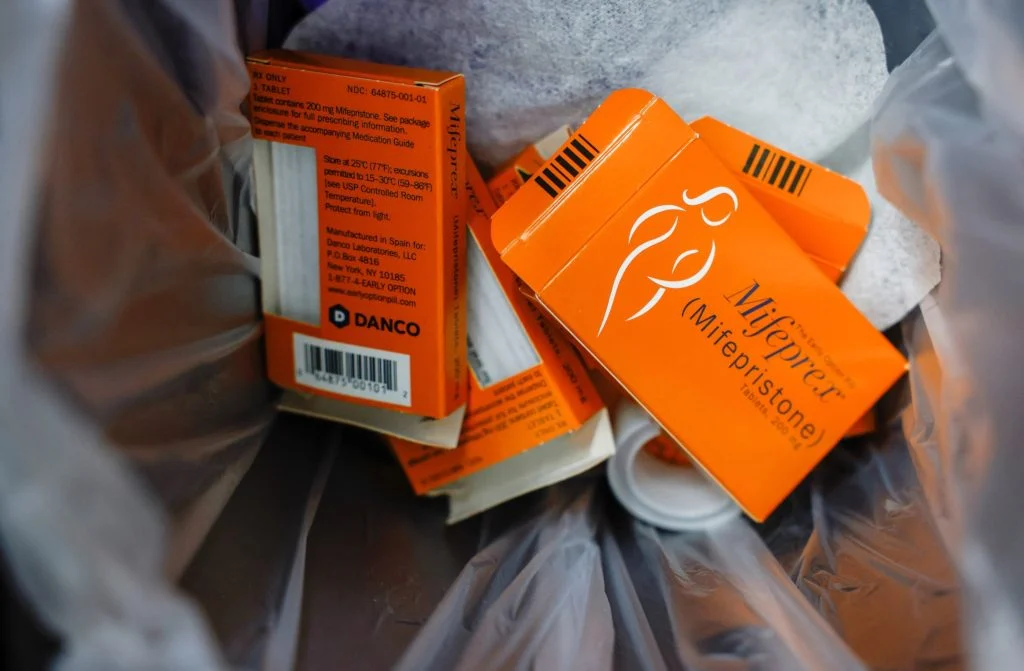
The legal landscape surrounding reproductive healthcare in the United States remains in a state of suspended animation. In a recent development, the U.S. Supreme Court issued an order extending a stay on a lower court ruling that threatened to severely restrict the availability of mifepristone—a medication used in more than two-thirds of all abortions performed in the country.
While the ruling provides immediate relief for patients and providers by maintaining the status quo, it serves as a temporary reprieve rather than a definitive resolution. The decision underscores the deepening ideological divide within the high court and sets the stage for a protracted legal battle that will likely define the boundaries of federal regulatory authority and state-level abortion restrictions for years to come.
The Current Legal Status: A Status Quo Maintained
The Supreme Court’s decision to continue the pause on a lower court’s ruling effectively preserves access to mifepristone via telehealth consultations and mail-order delivery. For the present moment, the regulatory environment governed by the Food and Drug Administration (FDA) remains unchanged. Patients may continue to access the medication through existing channels, a development that advocates have described as a necessary, if minimal, step toward protecting patient health.
Mary Ziegler, a professor at the University of California, Davis, School of Law and a leading expert on reproductive law, emphasizes that while the immediate "crisis" of potential total market removal has been averted, the legal foundation remains fragile. "At the moment, it means that access is unchanged," Ziegler noted. "But there is obviously some future legal uncertainty. For now, we are in the status quo."
Chronology of a Mounting Conflict
To understand the gravity of the current situation, one must examine the rapid escalation of litigation that led to this point:
- The Post-Dobbs Landscape: Following the Supreme Court’s 2022 decision in Dobbs v. Jackson Women’s Health Organization, which overturned the constitutional right to an abortion, the focus of the anti-abortion movement shifted toward the regulatory and administrative mechanisms of the FDA.
- The Texas District Court Challenge: The current controversy originated in a Texas federal district court, where plaintiffs sought to revoke the FDA’s long-standing approval of mifepristone. The initial ruling in that case would have effectively pulled the drug from the national market, regardless of the laws in individual states.
- The Fifth Circuit Intervention: The case proceeded to the U.S. Court of Appeals for the Fifth Circuit, which partially granted the administration’s request to preserve access but sought to roll back FDA policies that expanded access to the drug during the COVID-19 pandemic—specifically, the authorization of telehealth prescriptions and mail delivery.
- Supreme Court Stays: The Supreme Court’s most recent action ensures that the Fifth Circuit’s restrictions cannot be enforced while the case works its way through the appellate process. This "back-and-forth" suggests a court that is carefully managing its docket but remains deeply conflicted on the underlying merits of the challenge.
Supporting Data: The Scope of Mifepristone Usage
The significance of this legal battle cannot be overstated when viewing the data on reproductive healthcare. According to public health statistics:
- Market Prevalence: Mifepristone is involved in approximately 66%—or two-thirds—of all abortions in the United States. It is the gold standard for medical abortion, favored for its efficacy and the privacy it affords patients.
- The Rise of Telehealth: Roughly one-quarter of all abortions now utilize telehealth services. Experts like Professor Ziegler suggest that this figure is likely an undercount, as it does not fully account for the "gray market" or the usage of cross-border shield laws that protect providers mailing pills into states with strict bans.
- Regulatory Impact: Any court-ordered restriction on mail distribution would disproportionately affect marginalized communities, rural populations, and individuals living in "abortion deserts" where in-person clinic visits are logistically or financially impossible.
Official Responses and Judicial Dissents
The Supreme Court’s order was not unanimous, and the dissents filed by Justices Clarence Thomas and Samuel Alito provide a window into the intense ideological pressure surrounding this case.
Justice Alito, in his dissent, characterized the administration’s efforts to maintain access as a "scheme" to undermine the Dobbs decision. He argued that the current legal strategy is an attempt to circumvent state-level bans by utilizing federal regulatory power. This language signals that the conservative wing of the Court is increasingly viewing federal FDA preemption as a battleground for state sovereignty.
Perhaps more startling was Justice Thomas’s reference to pharmaceutical manufacturers as a "criminal enterprise." This rhetoric hinges on a controversial interpretation of the Comstock Act—a 19th-century law that historically prohibited the mailing of "obscene" materials, which included information and devices related to abortion. If the Supreme Court were to adopt this interpretation in future rulings, it could have catastrophic implications for all abortion access, far exceeding the current dispute over mifepristone.
Planned Parenthood and other reproductive rights organizations have characterized the Court’s stay as the "bare minimum." While they view the ruling as a victory for patients, they warn that the legal "Sword of Damocles" remains hanging over the heads of clinicians and patients alike.
Future Implications: What Lies Ahead?
Legal scholars agree that the current order is merely a prelude to a much larger confrontation. Several factors suggest that the Supreme Court will be forced to issue a definitive ruling within the next year:
1. The Proliferation of Lower Court Challenges
This case is not an isolated incident. There are multiple lawsuits winding through various circuits, some of which are more radical in their demands. Some plaintiffs are seeking to bypass the issue of telehealth entirely and are instead advocating for the total withdrawal of FDA approval for the medication, citing the drug’s safety record in ways that contradict established medical consensus.
2. The Comstock Act Revival
The mention of the Comstock Act in the recent dissents is a harbinger of a looming constitutional crisis. Should the Court decide to hear a case centered on this archaic law, it could potentially revive a nationwide ban on mailing abortion-related materials, effectively creating a federal ban without the need for new legislation from Congress.
3. The "Shield Law" Conflict
States that have legalized abortion have begun passing "shield laws" to protect providers who mail mifepristone to patients in states where abortion is banned. The inevitable clash between these states and those enforcing strict bans will likely trigger a massive federalist dispute, pitting state rights against federal authority.
4. Administrative Instability
The regulatory environment is further complicated by leadership changes at the FDA and the politicization of what was previously considered a technical, scientific process. The resignation of key officials and the constant threat of litigation have created an atmosphere of uncertainty that impacts the pharmaceutical supply chain and clinical practice.
Conclusion
The Supreme Court’s recent extension of access to mifepristone is a temporary stabilizing force in a chaotic environment. However, as Professor Mary Ziegler aptly put it, this is "the tip of the iceberg."
The legal battle over mifepristone is not just about a single drug; it is a fundamental clash over the future of reproductive autonomy, the scope of federal regulatory power, and the historical interpretation of long-dormant statutes. As the litigation moves forward, the American public remains in a state of high-stakes uncertainty, waiting to see if the highest court in the land will prioritize administrative precedent or bow to a growing legal movement seeking to fundamentally redefine the availability of healthcare across the nation. For patients, providers, and legal observers, the coming year promises to be a pivotal chapter in the post-Dobbs era.