











For most of us, the alphabet is the foundational tool of our intellectual lives—the building blocks of communication, education, and social connection. We learn our A-B-Cs in infancy to navigate the world of language. Yet, as mental health professionals and psychologists are increasingly noting, we are rarely taught the equivalent literacy required to navigate the internal world of our own emotions.
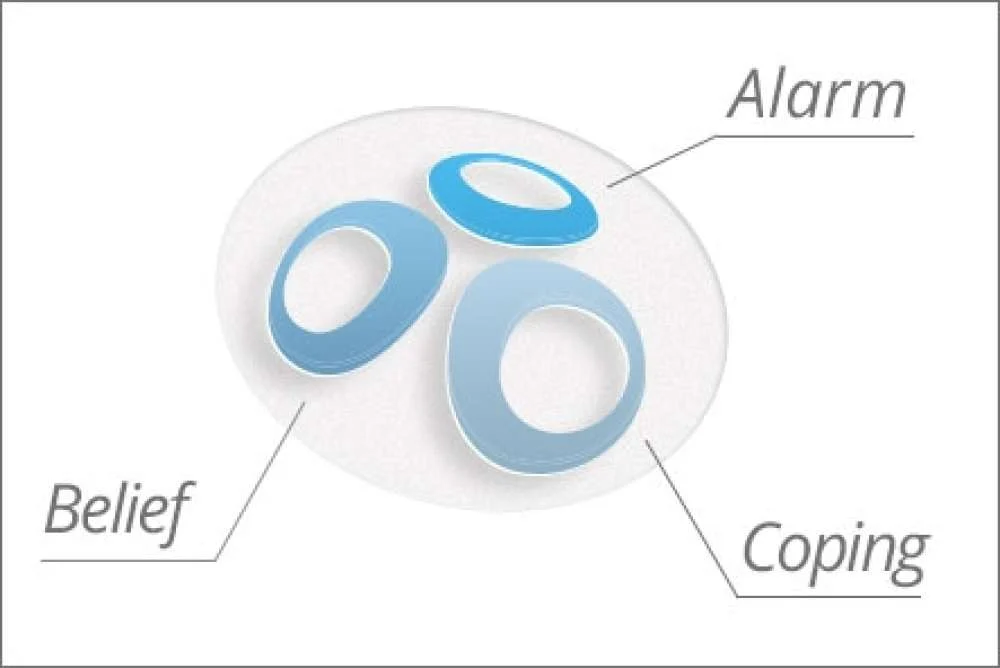
Anxiety, a fundamental human experience designed to protect us from genuine threats, often becomes a source of profound confusion and distress in the modern age. When the internal alarm system misfires, the result is often a cycle of avoidance and overwhelming fear. However, a new clinical framework—the ABCtracker™—is gaining traction, offering a structured, accessible approach to decoding anxiety by categorizing the experience into three distinct stages: Alarm, Belief, and Coping.
The Main Facts: Defining the ABC Framework
The premise of the ABCtracker™ is rooted in cognitive-behavioral principles. It posits that anxiety is not a monolithic, uncontrollable force, but rather a sequence of physiological and psychological events that can be dissected and managed.
- A – Alarm: The physiological activation of the nervous system.
- B – Belief: The cognitive appraisal or internal narrative that interprets the alarm.
- C – Coping: The behavioral response enacted to manage the resulting discomfort.
By formalizing these steps, patients are encouraged to transition from a passive victim of their anxiety to an active observer. Rather than being swept away by the tide of a panic attack or chronic worry, individuals are taught to pause and identify which "letter" they are currently experiencing. This framework is not intended to replace professional therapy; rather, it is designed to be used in tandem with the guidance of physicians, psychologists, and licensed mental health practitioners.
Chronology: The Evolution of Emotional Literacy
The journey toward understanding anxiety has shifted dramatically over the last century.
The Early Era: The "Fight or Flight" Foundation
In the early 20th century, physiologist Walter Cannon first described the "fight or flight" response. This established the scientific baseline for what we now call the "Alarm" phase. For decades, the medical community focused primarily on the physiological output of this alarm—the racing heart, the sweaty palms, and the surge of adrenaline.
The Cognitive Revolution: The "Belief" Breakthrough
By the 1960s and 70s, researchers like Aaron Beck began to identify that it wasn’t just the physical sensation that caused suffering, but the meaning we attached to it. This marked the birth of Cognitive Behavioral Therapy (CBT). It became clear that if an individual interprets a racing heart as "I am having a heart attack" (a catastrophic belief) rather than "I am feeling nervous about this meeting" (a manageable belief), the anxiety trajectory changes entirely.
The Modern Era: Systematic Tracking
In the current decade, the focus has shifted toward accessibility. With the rise of digital mental health tools and self-monitoring, frameworks like the ABCtracker™ were developed to bridge the gap between clinical theory and daily application. By turning complex psychological processes into a simple, three-letter acronym, the framework makes the science of emotional regulation portable and understandable for the layperson.
Supporting Data: Why We Need a New Language for Anxiety
According to the Anxiety and Depression Association of America (ADAA), anxiety disorders are the most common mental illness in the U.S., affecting 40 million adults. Despite this, there remains a "literacy gap." Many individuals seek treatment only after their "maladaptive coping strategies"—such as substance use, social withdrawal, or compulsive checking—have already caused significant disruption to their lives.
Clinical observations suggest that the "B" (Belief) is often the most overlooked component. Research indicates that individuals with Generalized Anxiety Disorder (GAD) often have a "cognitive bias toward threat." This means their brains are essentially hardwired to interpret neutral or ambiguous stimuli as dangerous. When a person tracks their beliefs over a period of weeks, data shows a significant decrease in the intensity of "false alarms," as the brain learns to recalibrate its threat-detection system through conscious cognitive appraisal.
Official Perspectives: What the Experts Say
Dr. Elena Vance, a clinical psychologist specializing in anxiety disorders, emphasizes that the power of the ABC framework lies in its ability to create distance between the individual and their symptoms.
"When a patient walks into my office, they often describe anxiety as a singular, crushing weight," Dr. Vance notes. "When I introduce the ABCs, I’m giving them a scalpel. We can dissect the experience. We can say, ‘Okay, that physical sensation in your chest was the Alarm. The thought that you were going to faint was the Belief. And hiding in the bathroom was the Coping mechanism.’ Once you isolate those pieces, they become much easier to disassemble."
The American Psychological Association (APA) has long supported the use of self-monitoring logs in treatment. The consensus among mental health professionals is that by externalizing anxiety through tracking, patients reduce the "fear of the fear"—a phenomenon where the anxiety about feeling anxious creates a secondary, more intense loop of panic.
The Three Pillars: A Deeper Dive
A: Understanding the Alarm
The "Alarm" is not an enemy. It is a biological survival mechanism inherited from ancestors who needed to react instantly to predators. The problem in the 21st century is that our internal smoke detectors are often set to "high sensitivity." They trigger for emails, traffic, and social interactions as if they were life-threatening dangers. The first step in the ABCtracker™ is simple recognition: identifying the physical sensation before it snowballs into a full-blown panic response.
B: Challenging the Belief
Beliefs are the stories we tell ourselves about the alarm. If the alarm sounds, the brain immediately searches for a cause. Often, for those prone to anxiety, the brain creates a narrative that validates the danger: "I am trapped," "Everyone is watching me," or "I am losing control." The goal of the ABC tracker is to force a "reality check." By writing down the belief, the user can subject it to scrutiny. Is the threat real, or is it a projection? This cognitive restructuring is the heart of effective anxiety management.
C: Refining the Coping Strategy
Coping strategies are behaviors enacted to restore a sense of safety. These fall into two categories:
- Adaptive: Deep breathing, mindfulness, exercise, or seeking professional support. These reduce the anxiety long-term.
- Maladaptive: Avoidance, alcohol consumption, procrastination, or excessive reassurance-seeking. While these provide temporary relief, they ultimately reinforce the idea that the world is a dangerous place, keeping the cycle of anxiety alive.
Implications: The Future of Mental Health Literacy
The implications of implementing such frameworks on a wide scale are profound. If we teach children and adults how to identify their "ABCs" in the same way we teach them to identify letters or numbers, we fundamentally change the trajectory of mental health care.
Destigmatization
By categorizing anxiety as a series of manageable mechanical parts, we remove the "shame" associated with the disorder. It is no longer a character flaw; it is an issue of system management.
Early Intervention
If an individual can identify that they are relying on a maladaptive coping strategy early in the cycle, they can pivot before the anxiety becomes debilitating. This proactive approach could reduce the burden on healthcare systems and prevent the escalation of minor anxieties into severe, chronic disorders.
Empowerment
Ultimately, the goal is to shift the locus of control. By using tools like the ABCtracker™, individuals gain the agency to manage their physiological responses. It is the transition from being a subject to a master of one’s own internal landscape.
Conclusion: A New Alphabet for Wellness
We are currently living in an era where mental health awareness is at an all-time high, yet functional tools for the average person remain scarce. The ABCs of anxiety offer a bridge between clinical insight and daily living. By learning to label the Alarm, evaluate the Belief, and choose a healthy Coping strategy, we reclaim the ability to navigate our lives with clarity.
As we continue to build our knowledge of the mind, it is time we embrace these "new ABCs"—not as a replacement for professional care, but as the fundamental literacy required to live a balanced, resilient, and healthy life. Whether you are dealing with occasional stress or chronic anxiety, the process begins with three simple letters, a pen, and the courage to look inward.