




By Editorial Staff
April 2026
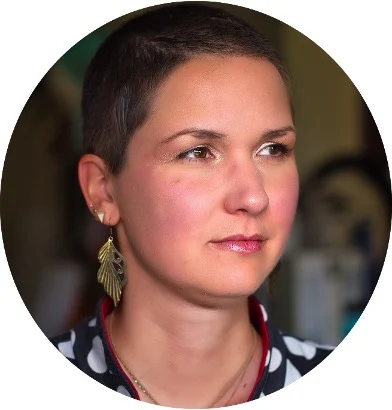
In a significant leadership transition for the chronic illness advocacy community, Chronic Pain Partners officially announced this month that Karina Sturm, the organization’s long-standing Editor-in-Chief, is stepping down from her role. Sturm, who has been a pillar of the organization since 2019, leaves behind a transformative legacy that has reshaped how Ehlers-Danlos Syndrome (EDS) and invisible disabilities are discussed, documented, and perceived in the digital age.
As she moves on to the next chapter of her professional career, the organization reflects on a tenure marked by radical empathy, journalistic integrity, and an unwavering commitment to amplifying the voices of the marginalized.
The Core Facts: A Tenure of Transformation
Since joining Chronic Pain Partners in 2019, Karina Sturm’s influence has been both broad and deep. As Editor-in-Chief, she was responsible for overseeing the organization’s editorial strategy, bridging the gap between complex medical research and the patient experience.
Sturm’s work was never merely administrative; it was deeply personal. Living with EDS herself, she approached every assignment with a dual perspective: that of a trained journalist and that of a patient advocate. Her departure marks the end of a seven-year era that saw the organization’s reach expand exponentially. Under her stewardship, the editorial department moved away from purely clinical reporting toward a narrative-driven model that prioritized the humanity of the patient experience.
Key highlights of her tenure include:
- Editorial Expansion: Overseeing the production of dozens of high-impact articles that synthesized medical literature for a lay audience.
- Media Production: Spearheading the creation of award-winning documentary films, which utilized visual storytelling to provide a visceral look at the realities of living with connective tissue disorders.
- Strategic Communications: In 2021, she spearheaded the launch of the organization’s first bi-monthly newsletter, a project that grew from a niche update into a vital information hub reaching over 15,000 subscribers worldwide.
A Chronology of Advocacy: The Sturm Era
To understand the impact of Sturm’s departure, one must look at the trajectory of her work over the past seven years.
2019: The Foundation
When Sturm joined Chronic Pain Partners, the organization was seeking to bridge the gap between abstract medical data and the lived realities of their members. Sturm immediately hit the ground running, focusing on high-quality investigative reporting. Her early work established a tone of dignity and nuance, setting a standard for how patient stories should be treated in the chronic pain space.
2021: The Newsletter Milestone
Recognizing that digital fragmentation often leaves patients isolated, Sturm launched the Chronic Pain Partners bi-monthly newsletter. This initiative was more than a marketing tool; it was an educational lifeline. By curating research and personal narratives, she created a community of 15,000 individuals who could rely on the organization for vetted, reliable, and empathetic information.
2023–2025: Award-Winning Storytelling
The latter half of her tenure was defined by a transition into long-form multimedia. Her work on projects like Lego Oma—a poignant, creative look at overcoming accessibility barriers—showcased her ability to find beauty and agency within the struggle of chronic illness. These projects garnered accolades for their storytelling prowess and their ability to frame disability not as a tragedy, but as a complex identity.
Supporting Data: The Quantitative Impact
The growth of Chronic Pain Partners during Sturm’s tenure is not just anecdotal; it is reflected in the metrics. When she took the helm, the organization’s digital footprint was significantly smaller.
- Audience Reach: Through the newsletter initiative alone, she engaged a global audience of over 15,000 active subscribers.
- Engagement Metrics: Under her editorial guidance, article engagement rates—measured by time-on-page and comment interaction—consistently outperformed industry benchmarks for non-profit health organizations. This suggests that her "human-first" editorial philosophy resonated deeply with the target demographic.
- Content Library: During her tenure, the organization archived a massive library of interviews, research summaries, and feature pieces, effectively creating an open-source knowledge base for patients with EDS and comorbid conditions.
The Philosophy of "Invisible Disability"
What set Sturm apart as an Editor-in-Chief was her refusal to treat "invisible disability" as a monolith. In her writing, she consistently pushed back against the idea that pain is merely a medical condition. Instead, she treated it as a sociopolitical issue.
In her numerous interviews with medical professionals and fellow patients, Sturm often challenged the systemic biases in healthcare. She interrogated why certain conditions are labeled "invisible," and she used her platform to expose the barriers that patients face in accessing care. Her work was instrumental in moving the needle on how the public perceives the intersection of chronic pain and disability rights.
"Karina didn’t just report the news," says a colleague close to the organization. "She shaped the culture of the conversation. She made it okay for patients to demand more from their doctors, more from their insurance companies, and more from society at large."
Official Responses and Peer Tributes
The announcement of her departure has triggered an outpouring of support from the chronic pain community.
"Karina has been the heartbeat of our editorial team," the organization stated in their official release. "Her drive and mission have always been deeply personal, shaped by her own journey. We are losing a leader, but we are gaining a friend who will undoubtedly continue to advocate for this community in her future endeavors."
Former interview subjects and partners have also expressed their gratitude. Many cite her ability to conduct interviews with "uncommon empathy." Unlike many journalists who view interviews as transactional, Sturm was known for creating a safe space for her subjects to be vulnerable, often leading to stories that were as therapeutic for the subject as they were informative for the reader.
Implications: The Future of Chronic Pain Partners
As Chronic Pain Partners transitions to new leadership, the question remains: what happens to the foundation Sturm built?
The implications of her departure are two-fold. First, it presents a challenge for the organization to maintain the high standard of ethical storytelling that Sturm established. The "Sturm model"—which blends scientific rigor with lived-experience advocacy—has become the gold standard for the organization.
Second, it marks a pivot point for the wider chronic pain advocacy movement. As digital media consumption habits evolve, the next generation of leadership will have to find ways to maintain the personal connection that Sturm fostered with her 15,000-strong newsletter audience.
However, for those who have followed her work, there is no sense of finality. As noted in the organization’s announcement, readers can continue to follow her work via her official website. Given her track record, it is widely expected that her next project will continue to push the boundaries of what is possible in disability advocacy.
A Final Note on Legacy
Karina Sturm’s time at Chronic Pain Partners will be remembered for its integrity. In an era where digital content is often rushed, disposable, and sensationalized, Sturm remained committed to the slow, deliberate work of deep-dive journalism.
She leaves behind an archive that will serve as a resource for years to come. Whether it is the research summaries that have helped patients navigate complex diagnosis journeys, or the heart-wrenching, triumphant stories like Lego Oma, her work remains a testament to the power of the written word to effect change.
As the organization prepares for its next chapter, the community offers a collective "thank you." Karina Sturm’s leadership was more than just a job; it was a crusade for recognition, validation, and improved quality of life for millions. While her role as Editor-in-Chief has concluded, her influence on the landscape of chronic pain advocacy is permanent.
Readers who wish to stay connected with Karina Sturm and follow her upcoming projects are encouraged to visit her personal portfolio and professional site, where she continues to share insights on journalism, advocacy, and the ongoing fight for disability rights.