










For millennia, our ancestors navigated the complexities of physical existence by relying on the most sophisticated diagnostic tool ever engineered: the human body. They gauged their exertion by the depth of their breath, assessed their nutrition by the persistence of their hunger, and determined their recovery by the heaviness of their limbs. Today, however, that internal dialogue is increasingly mediated by a new intermediary: the wearable device.
From heart rate variability (HRV) and VO2 max to sleep architecture and daily caloric expenditure, we are currently living in the age of the quantified self. While these sleek wrist-bound sensors offer a bridge between subjective experience and objective reality, they also introduce a modern paradox. As we outsource our self-assessment to algorithms, we must ask: Are we becoming more in tune with our biology, or are we simply becoming more dependent on the data points that represent it?
The Evolution of Self-Assessment: From Intuition to Algorithm
Historically, human beings have been notoriously poor at quantifying their own biological metrics with precision. We are prone to cognitive biases, such as the "recall bias," where we remember our efforts as more heroic than they were or our dietary lapses as less significant than they truly were. A classic example involves the "hidden" calorie phenomenon. Many individuals believe they are adhering to a strict caloric deficit, only to discover—through rigorous tracking—that they are consuming an extra 500 calories daily in unnoticed variables like cooking oils, dressings, or sauces.
Conversely, there exist outliers who possess a preternatural ability to self-calibrate. Legendary Canadian sprinter Ben Johnson was famously reported to be able to call out his 100-meter dash time within a tenth of a second of the official stopwatch. While this level of sensory acuity is rare, it highlights the potential for humans to develop a refined "internal clock." The question for the modern athlete or health-seeker is whether technology serves to cultivate that internal awareness or replace it entirely.
Understanding Data Reliability: Not All Metrics Are Equal
To navigate the landscape of wearables effectively, one must first recognize that not all data is created equal. The hardware—the sensors, accelerometers, and optical heart-rate monitors—varies significantly in quality, as does the proprietary software that interprets raw data into actionable insights.
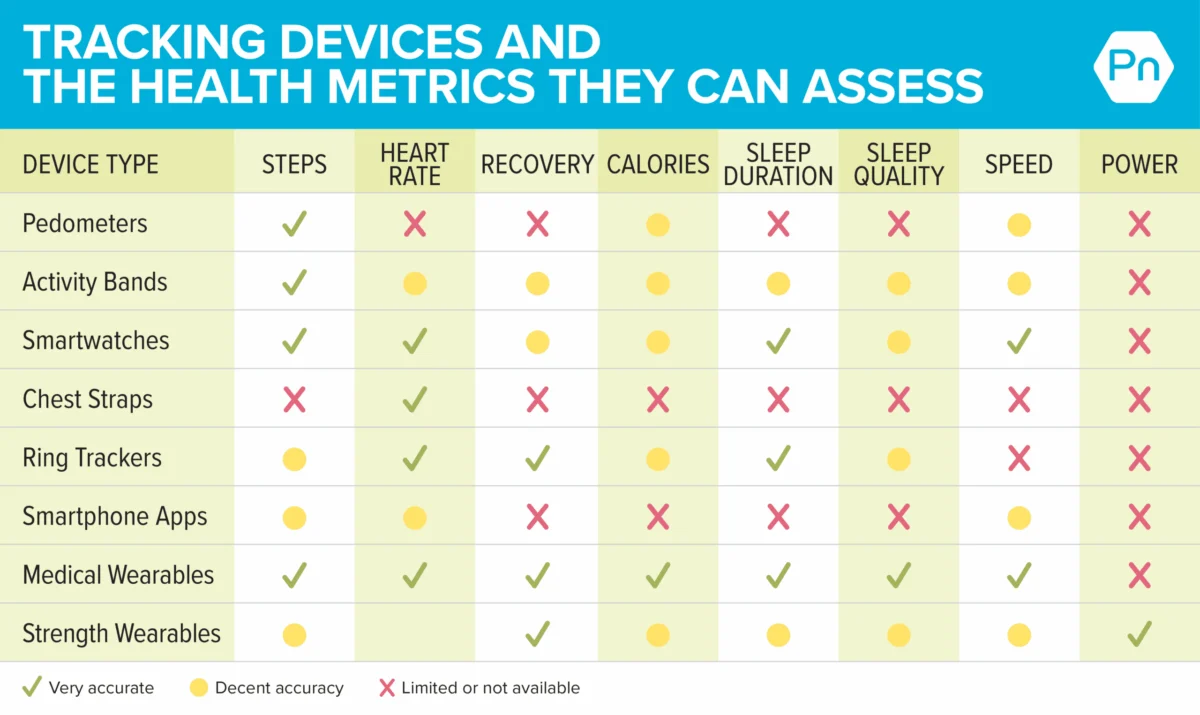
Research indicates that heart rate and step-count data have reached a high level of reliability across most major brands. However, other metrics, such as "calories burned" or "movement velocity," remain estimations based on population-level averages rather than individual physiological reality. When a device claims to measure your recovery or sleep quality, it is performing a complex calculation based on specific variables that may not account for your unique biology. Users should view these figures as "directional data"—useful for identifying trends over weeks and months—rather than absolute truths for any single day.
The Paradox of Information: Finding the Sweet Spot
In the realm of behavioral science, there is a concept known as the "information-decision paradox." While we assume that more data leads to better decision-making, the reality follows an inverted-U curve. When you have too little information, you lack the context to make an informed choice. However, when you are bombarded with too much information, you suffer from "analysis paralysis."

Consider the common experience of navigating a high-end smartwatch app after a workout. You are presented with dozens of metrics: Training Effect, Aerobic/Anaerobic split, recovery time, ground contact time, and power zones. For the average user, this deluge of data can be paralyzing. If the watch says you are "recovered" but your muscles ache, or if it says you are "overtrained" but you feel energized, the conflict creates a new layer of psychological stress. The goal is to reach the "sweet spot" at the top of the curve, where the data provides enough insight to guide behavior without overwhelming the user’s ability to trust their own senses.
Signs Your Tracker is Helping (and When It’s Hurting)
How do you know if your relationship with your device is healthy? There are three primary markers to consider.
1. Validation and Stress Reduction
For many, the primary benefit of tracking is validation. Consider an athlete who is advised to perform "Zone 2" cardio—low-intensity, steady-state training that feels "too easy." Many high-performers struggle to trust this method because it lacks the "burn" they associate with progress. When they wear a heart rate monitor and see their resting heart rate decline and their recovery speed increase over weeks, the data validates the process. The tracker becomes a tool that builds confidence and reduces the anxiety of feeling like one is "not doing enough."
Conversely, the device becomes a "bad omen" when it increases stress regarding factors beyond the user’s control. A new parent, for instance, who receives a "low sleep quality" score every morning is being fed data that serves only to heighten their anxiety without offering a viable solution to the underlying problem—a crying infant. In such cases, the tracking is counterproductive.
2. Enhancing Motivation and Ability
Behavioral psychology posits that for a behavior to occur, one needs motivation, ability, and a prompt. Trackers are excellent at providing the prompt. For a client who previously drank wine before bed, a sleep tracker that clearly visualizes the negative impact of alcohol on their REM cycles provides a powerful, objective "Why." Once the correlation is visualized, the behavioral change becomes significantly easier to maintain.
However, the "bad omen" appears when the data begins to dictate the enjoyment of the activity. If a cyclist stops riding for the joy of the movement and begins riding solely to "demolish" segments on a leaderboard, they risk burnout. When the metrics become the end rather than the means, the activity loses its intrinsic value.
3. Deepening Self-Knowledge
The third indicator is the extent to which the device helps you understand your body’s unique rhythms. Training intensity is not a static concept; it fluctuates based on life stress, nutrition, and hormonal cycles. By using data to observe how your body reacts to high-intensity interval training (HIIT), you can move away from the "no pain, no gain" mentality and toward a model of "intelligent training." A good coach uses this data to keep clients out of "junk volume"—the unproductive, high-fatigue training that hinders rather than helps performance.

The risk here is an over-reliance that leads to "sensory atrophy." If you feel lost, anxious, or unable to decide what to eat or how hard to train without checking an app, you have crossed the line into dependency. This was best exemplified during the 2019 MyFitnessPal outage, where thousands of users reported feeling "adrift" without their caloric data. The solution is to maintain a "manual override"—using the mirror, your energy levels, and your hunger signals as the primary inputs, with the device serving as a secondary check.
Practical Strategies for Integrated Tracking
To harness the power of technology while preserving your human intuition, consider these three protocols:
1. The Pre-Check Protocol: Before you look at your watch or app to see how your workout went, pause for ten seconds. Ask yourself: "How hard was that? How do I feel right now?" By estimating your own effort, you are training your brain to recognize internal signals. Then, check the data. Over time, you will find your estimates becoming increasingly accurate, narrowing the gap between your intuition and the algorithm.
2. Develop Mental Shortcuts: Use subjective scales like the Rate of Perceived Exertion (RPE). Instead of asking "What is my heart rate?", ask "On a scale of 1 to 10, how much more work could I do right now?" This question forces a connection to your internal capacity. Use trackers only as an occasional "calibration tool" to check if your RPE assessment aligns with your physical output.
3. Honor Your Sensory Network: Remember that your nervous system is a pattern-recognition machine of unparalleled complexity. You have proprioception, kinesthesia, hunger/fullness signals, and mood fluctuations that no accelerometer can measure. Your goal is not to outsource your consciousness to a device, but to use the device as a diagnostic lens to help you understand the nuances of the body you inhabit.
Implications for the Future of Health
As we look toward the future, the integration of wearable technology into our daily lives is inevitable. The "digital mirror" will only become more detailed, tracking everything from hydration levels via sweat sensors to real-time blood glucose. The challenge for the next generation of health-conscious individuals will be to maintain a sense of agency.
We must move away from the idea that the tracker is the "expert" and we are the "subjects." Instead, we should view ourselves as the primary authority, using technology as a consultant. When we use trackers to support our intuition rather than replace it, we don’t just achieve better health metrics; we cultivate a deeper, more profound relationship with our own physical and mental selves. In the end, the most important "data" is not what your watch tells you, but how you feel when you wake up, how you move through the world, and how you sustain the energy to pursue what matters most.