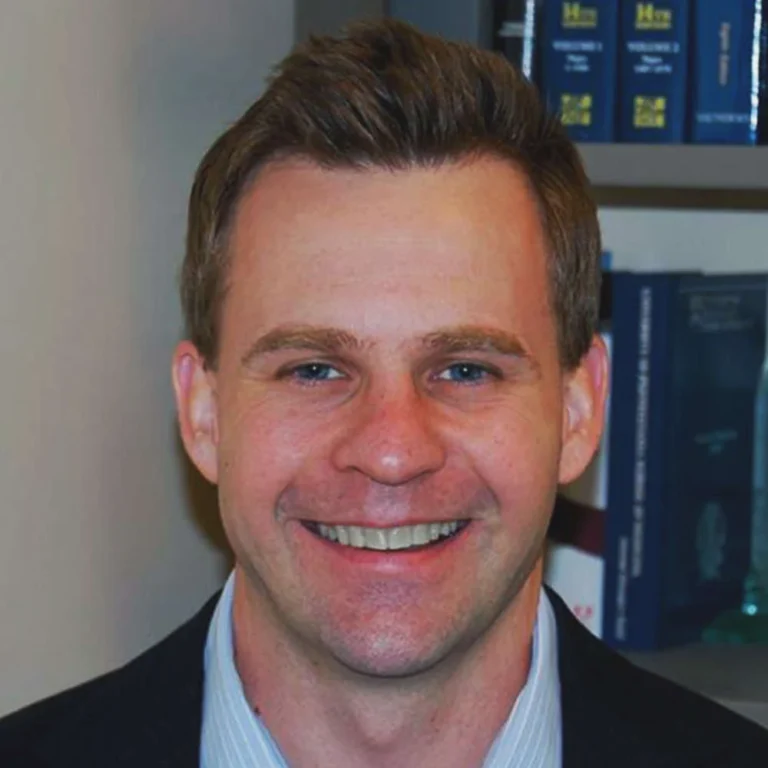










The field of humanistic psychology and the movement for psychiatric reform lost one of its most profound thinkers and compassionate advocates on April 28, 2026. Dr. Brent Dean Robbins, a scholar, author, and educator whose work redefined the boundaries of psychological practice, passed away following a courageous battle with cancer. He was 54 years old.
Dr. Robbins was more than an academic; he was a vocal critic of the "medicalization of distress" and a tireless proponent of the dignity of the human person. As the co-founder of the PsyD program at Point Park University and a frequent contributor to the Mad in America community, his influence stretched from the lecture halls of Pittsburgh to the global stage of psychiatric ethics. His passing marks the end of a chapter for a generation of psychologists who sought to return the "soul" to the study of the mind.
Chronology of a Visionary Career
Brent Dean Robbins’ journey was marked by a persistent desire to bridge the gap between abstract philosophy and practical clinical care. He rose to prominence in the early 21st century, a time when the field of psychology was increasingly dominated by biological reductionism and the pharmaceutical industry’s influence on diagnostic standards.
In the mid-2000s, Robbins began establishing himself as a leading voice in the Society for Humanistic Psychology (Division 32 of the American Psychological Association). His work was characterized by a deep engagement with existential-phenomenological thought, drawing on thinkers like Martin Heidegger and Maurice Merleau-Ponty to argue that psychology must account for the "lived experience" of the individual rather than merely treating symptoms.
The pinnacle of his institutional legacy came with the establishment of the APA-accredited PsyD program in clinical psychology at Point Park University. Unlike traditional programs that often prioritize the Diagnostic and Statistical Manual of Mental Disorders (DSM) as the ultimate authority, Robbins designed the Point Park curriculum to be rooted in humanistic and community psychology. He envisioned a program that trained "scholar-practitioners" who were as comfortable discussing philosophy and social justice as they were conducting clinical assessments.

Throughout the 2010s and 2020s, Robbins became an essential bridge between academia and the "survivor" movement in mental health. His collaboration with Robert Whitaker and the Mad in America organization provided a scholarly foundation for those questioning the long-term efficacy of psychotropic medications and the ethics of involuntary treatment.
Supporting Data: A Literary and Philosophical Legacy
Robbins’ intellectual contributions were codified in several seminal works that challenged the status quo of modern medicine. To understand his impact, one must look at the data and arguments presented in his major publications.
The Medicalized Body and Anesthetic Culture
In his 2018 book, The Medicalized Body and Anesthetic Culture: The Cadaver, The Memorial Body, and The Recovery of Lived Experience, Robbins offered a scathing but deeply researched critique of how modern society views the human body. He argued that the "medical gaze" often treats the living patient as a "living cadaver"—a collection of parts and chemical imbalances rather than a sentient being with a history and a future.
He introduced the concept of "anesthetic culture," a societal trend where the primary goal of treatment is the suppression of pain and discomfort at any cost. Robbins argued that by numbing human suffering through over-medication, society was losing its ability to find meaning in distress, ultimately leading to an existential crisis of the "memorial body."
The Critique of Pediatric Psychopharmacology
Perhaps his most provocative work was the co-edited volume, Drugging Our Children: How Profiteers Are Pushing Antipsychotics on Our Youngest, and What We Can Do to Stop It. In this volume, Robbins and his colleagues compiled data illustrating the alarming rise in the prescription of powerful antipsychotic medications to toddlers and adolescents.

The book highlighted several critical data points:
- The disproportionate use of "off-label" prescriptions in foster care populations.
- The role of pharmaceutical marketing in expanding diagnostic categories like Pediatric Bipolar Disorder.
- The long-term metabolic and neurological risks associated with early-life exposure to neuroleptics.
Robbins’ work in this area was not merely an academic exercise; it was a moral outcry against the commodification of childhood behavior.
Official Responses and Tributes from the Field
The news of Dr. Robbins’ passing triggered a wave of tributes from across the psychological and psychiatric landscape. His colleagues remember him not only for his intellect but for his profound capacity for mentorship.
Robert Whitaker, founder of Mad in America, noted that Robbins was instrumental in bringing academic rigor to the platform’s mission. "Brent was a bridge-builder," Whitaker remarked. "He had the rare ability to speak the language of the academy while remaining fiercely loyal to the truth of the patient’s experience. He didn’t just critique the system; he built a new one at Point Park."
Justin Karter, a longtime colleague and former student, reflected on Robbins’ role as a mentor. "Brent didn’t just teach psychology; he lived it. He opened doors for many of us, introducing us to a world where psychology was a tool for liberation rather than social control. He taught us that ‘all real living is meeting’—a quote from Martin Buber that Brent lived by until his final breath."

The Society for Humanistic Psychology issued a statement honoring Robbins’ service as a former president and a recipient of numerous awards for his contributions to the field. They highlighted his role in the "Open Letter to the DSM-5," a movement that gathered thousands of signatures from mental health professionals worldwide to protest the expansion of diagnostic categories in the 2013 manual.
The Human Element: Love, Loss, and the Final Interview
In the final year of his life, following his cancer diagnosis, Dr. Robbins turned his phenomenological lens inward. He became a student of his own mortality, engaging in deep public dialogues about the nature of love, the inevitability of loss, and the future of a psychology that must eventually face the reality of death.
In a poignant interview with Mad in America titled "All Real Living Is Meeting," Robbins discussed how his illness had deepened his understanding of "the gift of the present." He spoke about the importance of "relationality"—the idea that we do not exist as isolated units but as beings-in-relation-to-others.
Even in his final months, Robbins remained dedicated to his students and his community. His obituary specifically requested that, in lieu of flowers, donations be made to organizations that advocate for human rights in mental health, including Mad in America. This final gesture underscored his lifelong commitment to the cause of psychiatric reform.
Implications: The Future of Humanistic Psychology
The loss of Brent Dean Robbins leaves a significant void in the leadership of the humanistic movement. However, his work has set a trajectory that will likely influence the field for decades to come.

1. The Survival of the Humanistic Paradigm
Robbins’ creation of the PsyD program at Point Park University ensures that his pedagogical approach will continue. By training a new generation of psychologists who are skeptical of the "biochemical-only" model, Robbins has planted seeds of reform within the very institutions that often resist change.
2. The Continued Critique of the DSM
As the world moves toward a potential DSM-6 or alternative diagnostic frameworks like the Power Threat Meaning Framework (PTMF), Robbins’ writings remain a primary source for those arguing against the "narrowing of human suffering." His work provides a philosophical "north star" for the movement to de-medicalize psychological distress.
3. A Model for Ethical Scholarship
Robbins demonstrated that a career in psychology can be both academically prestigious and ethically subversive. He showed that one can work within the APA framework while remaining a staunch advocate for radical change. This "insider-outsider" strategy remains a vital model for young activists in the mental health field.
Conclusion
Dr. Brent Dean Robbins was a man who saw the "dignity of persons" where others saw only pathology. He challenged a multi-billion dollar industry not with anger, but with a profound, grounded alternative: a psychology of the heart, the community, and the lived experience.
He is survived by a loving family and a global network of students and colleagues who carry his mission forward. While his voice has been silenced, the "path he opened" remains wide, inviting others to walk toward a more human, more compassionate understanding of what it means to suffer, to heal, and to be alive.

As Robbins often reminded his students, the goal of psychology is not to "fix" the human machine, but to witness the human journey. In his life and in his passing, Brent Dean Robbins was a witness of the highest order.