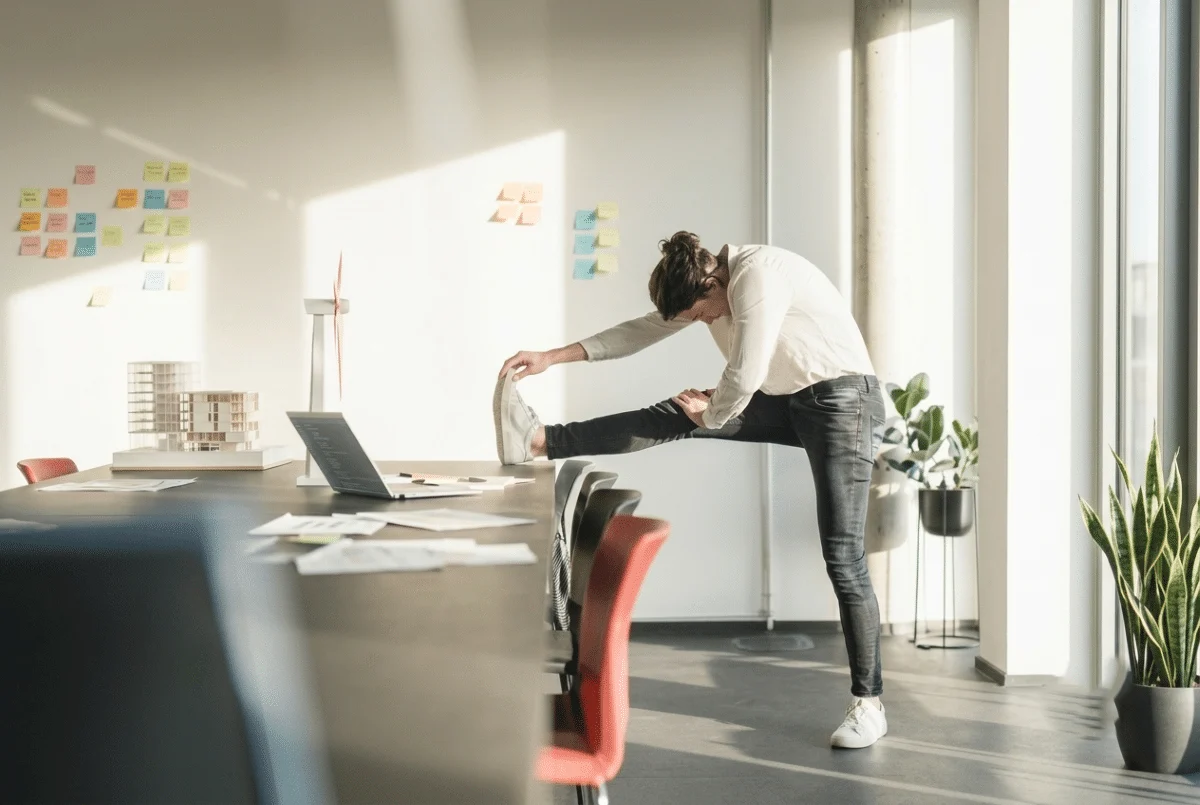
For decades, the gold standard of corporate wellness was the subsidized gym membership. Companies invested millions in fitness centers, group classes, and incentive programs designed to encourage employees to hit the treadmill before or after their shifts. However, a seismic shift in occupational health research has revealed a startling truth: the “weekend warrior” approach is no longer enough.
Emerging evidence suggests that even those who hit the gym for an hour daily are not immune to the metabolic risks of sitting for the remaining eight or nine hours. As a result, the modern workplace is undergoing a radical transformation. The focus is shifting from "structured exercise" to "incidental movement," with employers and health experts alike advocating for a culture of perpetual, low-intensity motion.
Main Facts: The End of the Sedentary Workday
The fundamental issue facing the modern workforce is "prolonged sedentary behavior." According to the latest findings in Medicine & Science in Sports & Exercise (Katzmarzyk et al., 2025), the physiological consequences of sitting for extended periods—such as reduced insulin sensitivity, slower metabolism, and decreased vascular function—cannot be entirely mitigated by a single bout of evening exercise.
This realization has forced a pivot in workplace wellness strategies. Organizations are moving away from the "all-or-nothing" mentality and toward "movement integration." This involves redesigning the physical workspace and the workday structure to prioritize frequent postural changes. Whether it is through the implementation of standing desks, the normalization of walking meetings, or mandatory movement breaks, the goal is to break up the cycle of inactivity that has become the hallmark of the digital age.
Chronology: A Decade of Changing Perspectives
The evolution of workplace health has not happened overnight. To understand why businesses are prioritizing movement today, one must look at the progression of health science over the last ten years:
- 2016–2018: The Rise of the Standing Desk. The initial wave of workplace innovation focused on hardware. Standing desks became a status symbol in tech hubs, though early adoption was often sporadic and lacked a holistic approach.
- 2019–2021: The Pandemic Paradigm Shift. The mass transition to remote work accelerated the sedentary crisis. Without the commute or the natural movement of walking between meeting rooms, inactivity hit record levels, leading to a surge in musculoskeletal complaints.
- 2022–2024: The Evidence-Based Transition. Peer-reviewed studies began to solidify the link between "total daily activity" and cardiovascular health. Employers began to realize that wellness was not an "add-on" benefit, but a fundamental aspect of operational design.
- 2025–Present: The Movement-First Era. Wellness is now integrated into the architectural and cultural fabric of organizations. The emphasis is on "movement equity," ensuring that all staff members, regardless of their role, have the opportunity to incorporate motion into their daily tasks.
Supporting Data: The Case for Movement
The data supporting this transition is robust. According to the 2025 World Health Organization (WHO) report, Promoting movement in the workplace: Evidence-based strategies for reducing sedentary behavior, sedentary behavior is now classified as an independent risk factor for chronic disease, distinct from a lack of physical activity.
Key Metrics from the 2025 Research
- Metabolic Restoration: Studies show that interrupting sitting every 30 minutes with just two minutes of light movement can significantly improve blood glucose regulation compared to sedentary blocks of three hours or more.
- Cognitive Performance: Research published in Medicine & Science in Sports & Exercise highlights that "movement-integrated work" (such as walking meetings) correlates with a 15% increase in creative problem-solving and sustained focus.
- Absenteeism Reduction: Companies that implemented "active environment" policies reported a 12% reduction in musculoskeletal-related sick leave over a 24-month period.
These figures illustrate that the transition is not merely a philanthropic health initiative; it is a strategic business decision aimed at reducing healthcare costs and improving long-term productivity.
Official Responses and Expert Consensus
The consensus among occupational health experts is nearly unanimous: the "static" office is obsolete. Dr. P.T. Katzmarzyk, a lead researcher in the 2025 study on workplace health outcomes, notes that "the objective is not to discourage structured exercise, but to bridge the gap between our active and inactive states. We are essentially trying to make the workday less ‘lethal’ to the human metabolism."
The World Health Organization has echoed these sentiments, urging policymakers to integrate "active design" into building codes and corporate wellness standards. Corporate leaders are responding by re-evaluating office floor plans. Instead of maximizing the number of desks in a square footage, firms are prioritizing "active corridors," lounge areas that encourage standing discussions, and staircases that are designed to be accessible and inviting rather than hidden behind fire doors.
However, some challenges remain. "The culture of the desk is deeply ingrained," says one HR director at a Fortune 500 firm. "Employees often feel that if they aren’t physically in their seat, they aren’t working. Changing that mindset is the biggest hurdle."
Implications: The Future of the Workplace
As we look toward the latter half of the 2020s, the implications of this shift are profound, impacting everything from architectural design to employee retention.
1. Architectural Reimagining
The office of the future will look less like a library and more like a laboratory for movement. Expect to see "treadmill desks" in common areas, high-top workstations for quick check-ins, and flexible furniture that encourages shifting between sitting, standing, and perching.
2. The Cultural Shift
Perhaps the most significant implication is the destigmatization of movement during the workday. In the past, leaving one’s desk to stretch or walk was often viewed as "slacking off." Today, progressive organizations are framing this as a professional necessity. Managers are being trained to lead by example, conducting walking meetings and scheduling "stretch intervals" during long virtual conferences.
3. Health Equity
The integration of movement is also a matter of inclusivity. By designing environments that encourage movement for all, companies are better supporting employees with different physical needs. Movement-friendly design is not about high-intensity exercise, but about functional, accessible motion that accommodates a diverse workforce.
4. Economic Impact
For the employer, the bottom line is clear: a sedentary workforce is a high-cost workforce. By reducing the incidence of chronic conditions such as Type 2 diabetes, hypertension, and chronic back pain, organizations can anticipate lower insurance premiums and higher long-term employee engagement.
Conclusion: A Holistic Approach to Longevity
The transition toward movement-centered wellness marks a maturity in our understanding of human physiology. We have learned that we are not built for stasis. By integrating movement into the very structure of the workday, we are not just attempting to improve our health; we are aligning our professional lives with our biological imperatives.
The challenge ahead lies in execution. It is easy to buy a standing desk; it is much harder to foster a culture that values the movement it facilitates. As the data from 2025 and beyond continues to solidify, it is clear that the organizations that thrive in the coming decades will be those that recognize that a body in motion—even at work—is a body that sustains the enterprise.
The message is clear: the desk is no longer the destination. It is merely a starting point. As we continue to refine these practices, the workplace will become a environment that sustains not just our output, but our longevity.
References
- Katzmarzyk, P. T., Powell, K. E., Jakicic, J. M., Troiano, R. P., Piercy, K., & Tennant, B. (2025). Sedentary behavior, movement throughout the day and workplace health outcomes. Medicine & Science in Sports & Exercise, 57(2), 345–353.
- World Health Organization. (2025). Promoting movement in the workplace: Evidence-based strategies for reducing sedentary behavior. Geneva, Switzerland: World Health Organization.
- Fitness Journal – 2026, Issue 7. (2026). IDEA Health & Fitness Association.