










In a breakthrough study that redefines the relationship between our environment and our internal biology, researchers at the University of Bern and Inselspital, Bern University Hospital, have uncovered a vital mechanism through which the brain processes skin temperature. The research, published in Science Translational Medicine, reveals that neuronal systems in the brain act as a biological "switch," capable of determining whether the brain transitions into REM sleep or triggers the sudden muscle paralysis—known as cataplexy—characteristic of narcolepsy.
This discovery not only sheds light on the physiological architecture of sleep disorders but also suggests that non-medicinal, temperature-based interventions could offer a new frontier in managing the debilitating symptoms of narcolepsy.
Main Facts: The Brain-Skin Connection
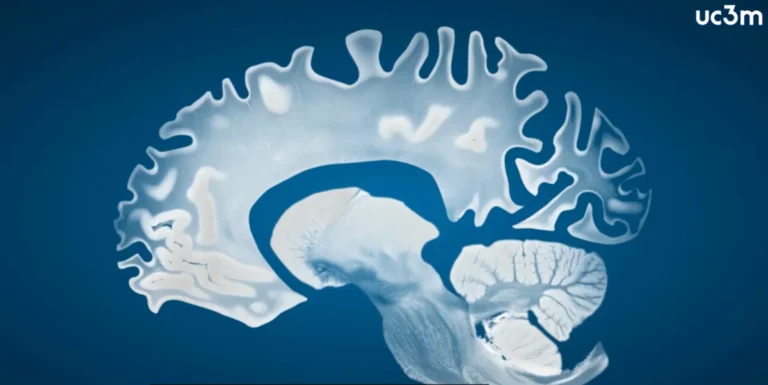
At the heart of the discovery lies the role of the hypothalamus, the region of the brain responsible for maintaining homeostasis. The study identified specific neurons—melanin-concentrating hormone (MCH) neurons—that serve as the primary processors for thermal signals originating from the skin.
In individuals living with narcolepsy, the brain struggles to properly regulate the boundaries between wakefulness and sleep. Cataplexy, a sudden and transient loss of muscle tone often triggered by strong emotions, is a hallmark of the condition. While researchers have long understood that REM sleep and cataplexy share similar physiological markers—namely, muscle paralysis—they have historically been treated as distinct events.
The new findings demonstrate that skin temperature acts as a regulatory lever. When skin temperature drops, the brain is more likely to trigger cataplexy in both human patients and animal models. Conversely, warming the skin produces a bifurcation in brain activity: it actively enhances the onset of REM sleep while simultaneously suppressing the occurrence of cataplexy. This surprising inverse relationship challenges existing models of sleep neurology.
Chronology of the Research
The investigation into the thermal sensitivity of the brain was a multi-year, collaborative effort involving experts from the University of Bern, Inselspital, and the University of Lyon.
The Initial Hypothesis
The research team began with the assumption that because REM sleep and cataplexy both involve muscle atonia (paralysis), they would react similarly to environmental stimuli. The hypothesis was that warming the skin would increase the likelihood of both states.
Experimental Phases
- Animal Modeling: The team first utilized narcoleptic mouse models to map the neural pathways involved in thermal sensation. By manipulating skin temperature, researchers observed real-time changes in the expression of cataplexy and REM sleep.
- Human Translation: Following the success in animal models, the team moved to human clinical observations. By tracking patients with narcolepsy, they confirmed that the correlation between ambient skin temperature and the frequency of cataplectic attacks was consistent with their lab findings.
- Neural Mapping: Using advanced neuroimaging and optogenetic techniques, the team pinpointed the MCH neurons as the specific "switches" in the hypothalamus that interpret skin temperature and signal the rest of the brain to shift states.
Publication and Peer Review
After rigorous validation, the results were submitted to Science Translational Medicine. The study underwent extensive peer review, where the discovery of the "opposite effect" of temperature on REM sleep versus cataplexy was highlighted as a significant departure from previous neurobiological understanding.
Supporting Data and Technical Insights
The research provides a robust data set that quantifies the impact of thermal shifts on neurological output.
The MCH Neuron Mechanism
The MCH neurons are generally associated with the regulation of appetite and energy expenditure, but this study elevates their status to primary "thermal gatekeepers." The data shows that these neurons receive input from peripheral thermoreceptors in the skin. When the skin cools, the MCH neurons decrease their activity in a way that lowers the threshold for cataplexy. When the skin is warmed, these neurons are modulated to favor the onset of natural REM sleep cycles, effectively "locking out" the possibility of a cataplectic event.
Quantitative Observations
- Cataplexy Frequency: In mice, a drop in ambient temperature correlated with a statistically significant increase in cataplectic episodes.
- REM Induction: Increasing skin temperature during the onset of the sleep cycle resulted in a faster and more stable entry into REM sleep, suggesting that thermal regulation could be used to treat patients suffering from fragmented sleep patterns.
- The "Switch" Efficiency: The study observed that the brain’s response to temperature is not merely peripheral; it is a central processing event. The rapidity with which the brain shifts from a wake-state to a cataplectic-state upon cooling suggests a highly sensitive, evolutionary survival mechanism that has gone awry in patients with narcolepsy.
Official Responses from the Research Team
The researchers involved have expressed optimism regarding the potential for clinical translation. Their statements highlight the shift from viewing narcolepsy as a purely chemical imbalance to viewing it as a system that can be modulated through environmental interaction.
Antoine Adamantidis, PhD, co-author and professor of neurophysiology at the University of Bern, noted the surprise of the findings: "We assumed that warming the skin would increase both REM sleep and cataplexy, given that muscle paralysis occurs in both cases. However, the study showed that increasing skin temperature enhances REM sleep while it suppresses cataplexy. The fact that skin temperature controls these two similar muscle states in opposite ways came as a surprise."
Markus Schmidt, MD, PhD, the study’s last author and head of sleep medicine at the Sleep-Wake-Epilepsy Center, emphasized the clinical implications: "It is well known that the body influences the brain. But it is astonishing that even slight changes in skin temperature can trigger either REM sleep or cataplexy."
Claudio Bassetti, MD, co-author and dean of the Faculty of Medicine at the University of Bern, added: "Our findings demonstrate the close communication between the brain and body and open up new possibilities for reducing symptoms such as cataplexy using non-medicinal, everyday approaches."
Clinical Implications: The Future of Narcolepsy Treatment
The most significant takeaway from this research is the potential for non-pharmacological management of narcolepsy. For decades, the standard of care for narcolepsy has been heavy reliance on stimulants and antidepressants to manage wakefulness and suppress cataplexy. While effective for many, these medications often carry significant side effects and do not address the underlying neurological trigger.
Towards "Thermal Therapy"
If skin temperature can be used as a "switch" to prevent cataplexy, the researchers believe it could lead to the development of:
- Smart Clothing: Wearable devices that monitor skin temperature and provide localized, gentle warming when a decrease in temperature is detected, effectively preempting a cataplectic attack.
- Environmental Regulation: Adjusting the temperature of sleeping environments to optimize the transition into REM sleep, helping patients achieve more restorative rest.
- Biofeedback Protocols: Training patients to recognize the physiological sensations of temperature shifts as a warning sign for potential cataplexy, allowing them to utilize simple warming techniques to mitigate the episode.
Limitations and Future Research
While the study is groundbreaking, the researchers acknowledge that it is only the first step. Further studies are required to determine the optimal temperature ranges for different individuals and to ensure that such interventions are safe and sustainable for long-term use. The team intends to transition into clinical trials, where they will test whether targeted thermal interventions can lead to a quantifiable reduction in the frequency and severity of cataplexy in a broader patient population.
A Paradigm Shift in Neurology
This study reinforces the concept of "embodied cognition"—the idea that the brain is not an isolated processor, but a system deeply integrated with the body’s physical state. By uncovering the role of skin temperature, the University of Bern team has provided a new map for navigating the complex terrain of sleep disorders.
As we look toward the future, the integration of physical, environmental, and neurological data promises to provide a more holistic approach to treating narcolepsy. By understanding the "switch" that controls the transition between states, medical science is moving closer to a world where patients can manage their condition through the simple, intuitive act of controlling their thermal environment.