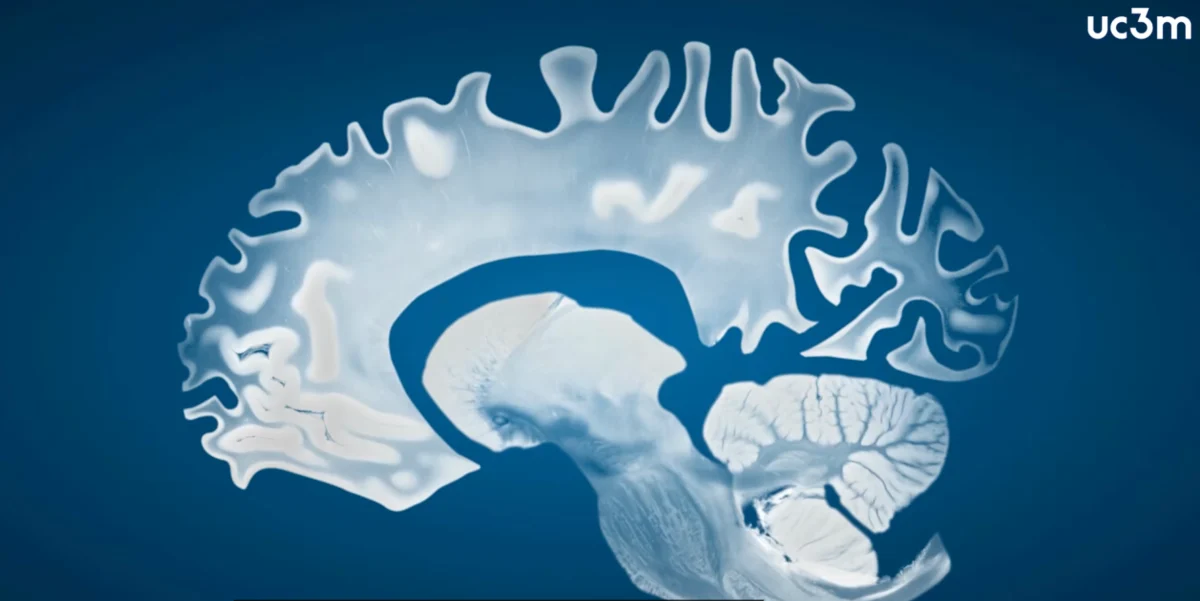
In the quiet hours of the night, when the body rests, the brain remains remarkably busy. It is during this period of sleep that the brain engages in a critical "housekeeping" function: the clearance of metabolic waste, including the toxic buildup of beta-amyloid proteins. For millions, however, this restorative cycle is disrupted by the silent onset of neurodegenerative disease.
Researchers from the Universidad Carlos III de Madrid (UC3M) and the Hospital Universitario Severo Ochoa have unveiled a groundbreaking methodology that turns these nocturnal brain waves into a diagnostic window. By leveraging machine learning to analyze the electrical architecture of sleep, this interdisciplinary team has developed a noninvasive, scalable approach that could fundamentally alter the landscape of Alzheimer’s disease (AD) diagnosis.
Main Facts: The Intersection of Sleep and Neurodegeneration
The study, recently published in the scientific journal GeroScience, centers on a sophisticated AI model trained to interpret nocturnal electrical activity. The researchers identified a bidirectional, pathological relationship between sleep and Alzheimer’s: the presence of AD alters the brain’s sleep architecture, while chronic sleep disturbances accelerate the accumulation of proteins that drive cognitive decline.
Current diagnostic standards for Alzheimer’s—such as positron emission tomography (PET) scans or lumbar punctures—are often prohibitively expensive, invasive, and typically reserved for patients already exhibiting clinical symptoms. By the time these symptoms appear, irreversible neural damage has often already occurred. The UC3M/Severo Ochoa team’s methodology aims to bypass these barriers by utilizing standard, noninvasive electroencephalography (EEG) data recorded during sleep. The AI does not merely detect the presence of the disease; it categorizes patients into distinct biological subgroups based on their unique neural signatures, offering a glimpse into the molecular progression of the condition before memory loss takes hold.
Chronology: A Multi-Year Collaborative Effort
The road to this discovery was paved by a rigorous, multi-disciplinary approach spanning neurology, pulmonology, and biomedical engineering.
- Initial Hypothesis: The research team hypothesized that if sleep is the brain’s "waste management" period, then subtle electrical shifts in brain waves could serve as proxies for the accumulation of beta-amyloid and tau proteins—the two hallmark biomarkers of Alzheimer’s.
- Data Collection: The team compiled a robust database involving 100 participants: 42 individuals already diagnosed with mild to moderate Alzheimer’s and 58 cognitively healthy controls.
- Algorithmic Training: Researchers employed machine learning algorithms to process the electrical signals captured by scalp electrodes. By cross-referencing these signals with established cerebrospinal fluid (CSF) biomarkers—including phosphorylated tau, total tau, and neurofilament light chain—the AI was trained to recognize patterns that distinguish the diseased brain from the healthy one.
- Validation and Subgrouping: Following successful discrimination between the two groups, the algorithm was tasked with identifying finer nuances. It successfully identified three distinct biological subgroups within the Alzheimer’s patient cohort, proving that the disease is not a monolithic condition but one that presents in varied, early-stage biological "profiles."
Supporting Data: Unlocking the Biological Signature
The efficacy of this methodology lies in the precision of the data integration. By correlating nocturnal EEG data with CSF biomarkers, the researchers provided a "ground truth" for the AI to learn from.
The study revealed that the electrical activity of the brain—specifically in the frequency bands associated with deep sleep—shows measurable alterations in patients with higher loads of beta-amyloid. The AI model acted as a high-fidelity filter, isolating these subtle variations from the "noise" of typical sleep cycles.
Perhaps most significantly, the identification of three distinct patient subgroups suggests that Alzheimer’s may follow different "biological trajectories." This level of stratification is vital for the future of precision medicine. If clinicians can determine exactly which "type" of Alzheimer’s a patient is developing, they can move away from a "one-size-fits-all" approach to treatment and instead match patients with therapies tailored to their specific molecular profile.
Official Responses: Insights from the Research Team
The research team emphasizes that this tool is designed to augment, not replace, clinical expertise.
"Recording electrical activity during sleep provides us with a window into the biological processes taking place, which, over the years, can lead to forgetfulness and the characteristic symptoms of Alzheimer’s," explains Arrate Muñoz-Barrutia, PhD, a professor in the department of neuroscience and biomedical sciences at UC3M.
The vision for the future is one of accessibility and prevention. Anna Michela Gaeta, a specialist in pulmonology at the Hospital Universitario Severo Ochoa, highlights the humanitarian impact of the research: "With our research, we seek a tool that enables early diagnosis of Alzheimer’s, one that is noninvasive, affordable, and capable of being extended to the majority of the population."
Lorena Gallego Viñarás, PhD, also of UC3M, clarifies the role of the technology within the clinical workflow: "The AI is not intended to replace medical tests, but rather to support early diagnosis by analyzing information in greater detail so treatments can be initiated sooner."
Implications: A Paradigm Shift in Healthcare
The implications of this research are vast, touching upon clinical, social, and economic spheres.
The Shift to Preclinical Diagnosis
The current generation of anti-amyloid drugs and immunotherapy treatments show the most promise when administered in the preclinical stages of the disease. By detecting subtle neural shifts years before cognitive impairment begins, this AI-driven methodology could provide the necessary lead time to intervene, potentially slowing the progression of neurodegeneration and preserving quality of life.
The Home-Based Future
The potential for this technology to move from the clinic to the home is perhaps its most disruptive aspect. If sleep electrical activity can be recorded via wearable devices or simplified home-monitoring setups, it could evolve into a cost-effective screening tool. This would alleviate the burden on hospital resources and allow for continuous monitoring, rather than the "snapshot" approach currently provided by clinical assessments.
Interdisciplinary Synergy
The success of this study serves as a manifesto for the future of biomedical research. As Gaeta noted, the future of this field relies on the integration of neurology, pulmonology, and engineering. Alzheimer’s is a systemic disease, and treating it requires a systemic view. By combining the expertise of engineers who can build complex diagnostic algorithms with the clinical insights of doctors who understand the pathology of sleep disorders, the scientific community is building a more holistic defense against dementia.
Economic and Public Health Impact
Alzheimer’s disease imposes a crushing economic burden on global healthcare systems. A diagnostic tool that is affordable and noninvasive could significantly reduce the cost associated with expensive PET imaging and invasive procedures. Furthermore, by identifying those at risk early, healthcare systems can shift their focus from late-stage palliative care to proactive management, potentially reducing the long-term cost of care for aging populations.
Conclusion: Lighting the Way Forward
The research conducted by UC3M and Hospital Universitario Severo Ochoa represents a significant leap forward in our quest to decode the mysteries of Alzheimer’s disease. While the path to clinical implementation will require further validation, longitudinal studies, and regulatory approval, the results are undeniably promising.
By transforming the nocturnal brain into a diagnostic data source, we are gaining a new vantage point on the earliest whispers of neurodegeneration. In this new era of AI-driven medicine, the silence of the night may soon provide the answers we have been searching for—offering hope for a future where Alzheimer’s is caught before it can steal the memories that define us.