





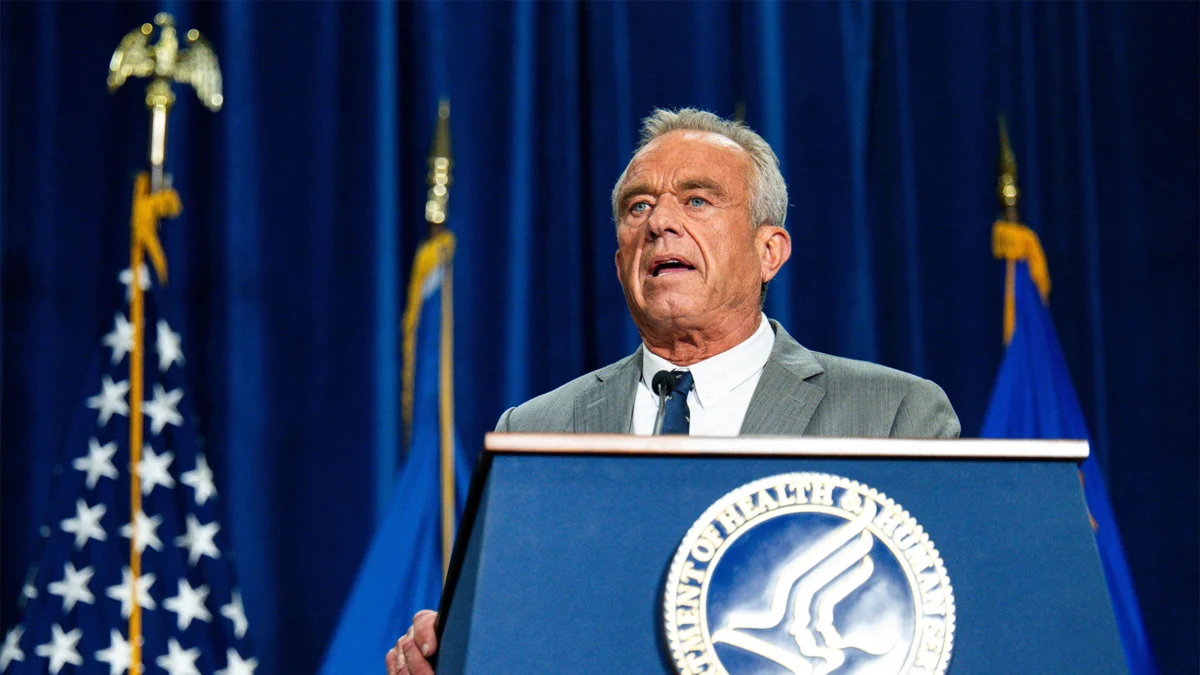
The integrity of American public health is currently at a critical crossroads. In a move that has sent shockwaves through the medical community, the U.S. Department of Health and Human Services (HHS) recently terminated the two remaining chairs of the U.S. Preventive Services Task Force (USPSTF). This action marks the latest in a series of administrative maneuvers by HHS Secretary Robert F. Kennedy that critics argue threaten to dismantle decades of evidence-based clinical guidance.
For 40 years, the USPSTF has served as the gold standard for preventive medicine, providing clinicians with rigorous, non-partisan, and scientifically sound recommendations. By replacing seasoned primary care experts with a broad, potentially conflicted slate of specialists, the current administration risks turning a beacon of objective science into a tool of political and professional bias.
The Chronology of Institutional Decay
To understand the severity of the current situation, one must look at the systematic dismantling of the task force’s operations over the past several months.
1. The Administrative Standoff
Since assuming leadership at HHS, Secretary Kennedy has overseen a significant disruption of the USPSTF’s operational cycle. Most notably, the department postponed a full year’s worth of in-person meetings. These gatherings are not merely bureaucratic formalities; they are the crucible in which recommendations are debated, refined, and voted upon. Without them, the pipeline of clinical guidance has effectively stalled.
2. Vacancy and Neglect
Beyond the postponement of meetings, the administration failed to appoint and orient new members as others finished their terms. This intentional neglect left half of the task force’s seats vacant, severely limiting the body’s ability to achieve a quorum or maintain the intellectual diversity required for complex medical decision-making.
3. The Stalling of Life-Saving Policy
The impact of these delays is already being felt in clinical settings. Specifically, the administration has refused to approve updated cervical cancer screening recommendations. This update would have empowered women by allowing for self-testing options—a major leap forward in accessibility for a potentially lethal disease. By withholding this approval, the administration has directly impeded patient access to life-saving technology.
4. The Final Blow
The climax of this administrative friction occurred last week, when the two remaining chairs of the USPSTF—Dr. John Wong and Dr. Esa Davis—were abruptly dismissed. Despite their exemplary service records, the dismissal letters cited "administrative" reasons, claiming the move was intended to "help protect the task force and preserve confidence in the continuity and durability of its work." The medical community, however, views these justifications as a thin veil for ideological interference.
The USPSTF Model: Why Expertise Matters
The USPSTF is not a collection of political appointees; it is a body of volunteer, independent experts. Historically, the task force has been composed primarily of practicing primary care clinicians—those on the front lines who understand the practical application of preventive medicine.
The Rigor of Evidence Synthesis
The work of the task force is highly specialized. It requires the ability to evaluate and synthesize massive volumes of scientific evidence across more than 90 distinct clinical topics. This is not a task for generalists or lobbyists; it requires a deep, institutional understanding of medical evidence synthesis—the process of determining which interventions actually work, which are neutral, and which might cause more harm than good.
The Conflict of Interest Filter
A cornerstone of the task force’s credibility has been its stringent vetting process. Members are screened for financial conflicts of interest to ensure that recommendations are based solely on patient health outcomes, not on the profit margins of specific medical specialties or pharmaceutical interests. By calling for an influx of specialists—such as radiologists, cardiologists, and gastroenterologists—the administration is opening the door to institutional bias. Unlike primary care physicians, these specialists often have direct financial incentives related to the diagnostic tests they perform.
Implications for Public Health and Clinical Trust
The potential fallout from these changes extends far beyond Washington, D.C. The primary care physician, who manages the vast majority of preventive health, relies on the USPSTF for their daily practice.
Erosion of Physician Trust
If the USPSTF loses its reputation for neutrality, the clinical guidance it issues will be viewed with skepticism. If physicians stop trusting the recommendations, they will be forced to rely on "clinical intuition" or, worse, the marketing materials of medical device companies. This uncertainty would lead to a fragmented healthcare landscape where patients receive inconsistent care depending on their doctor’s personal bias rather than the best available evidence.
The Cost of Inaction
The most concerning implication is the impact on morbidity and mortality. When the task force fails to update its guidelines, or when it issues guidance influenced by specialty bias rather than rigorous science, the result is predictable:
- Preventable Conditions: Failure to provide evidence-based screening for cardiovascular disease, diabetes, and mental health will lead to higher rates of undiagnosed, late-stage illness.
- Increased Mortality: As seen with the stalled cervical cancer screening update, delaying or distorting guidance leads to missed opportunities for early intervention, directly resulting in unnecessary deaths.
The "Specialist Bias" Problem
The new call for nominations from the Federal Register specifically targets anesthesiologists, radiologists, and various surgical sub-specialists. While these professions are vital, they lack the broad, holistic perspective of primary care. For instance, expecting a radiologist or an anesthesiologist to lead a discussion on the complexities of lipid screening in children or fall-prevention strategies for the elderly is a fundamental misunderstanding of the task force’s core mission. This shift suggests a move away from public health outcomes and toward a model that prioritizes procedure-heavy interventions.
A Call for Restraint and Return to Evidence
The authors of this perspective, Dr. Carol M. Mangione and Dr. Michael Barry, represent the collective expertise of those who have actually served on the task force. Their plea is clear: The current administration is making a historic error.
The Request for Reconsideration
The administration has the legal right to appoint new members, but they do not have the right to sacrifice public health at the altar of political expediency. The dismantling of the established selection and onboarding processes, which have functioned with integrity for over four decades, is a dereliction of duty.
The Way Forward
For the USPSTF to regain its standing, several steps are necessary:
- Reinstatement of Rigor: The nomination process must once again prioritize experts in evidence synthesis and primary care over representatives of sub-specialties.
- Transparency: The administration must justify its recent dismissals with more than vague "administrative" rhetoric and provide a clear timeline for the resumption of in-person, evidence-based deliberations.
- Depoliticization: The task force must be insulated from the political volatility of the HHS Secretary’s office. Its findings should be independent, regardless of which political party holds power.
The USPSTF is a crown jewel of American medicine. It provides the "what" and the "why" of modern preventive health. If it is transformed into an instrument of professional lobbying or political ideology, the damage to the American healthcare system may take generations to repair. Secretary Kennedy must recognize that by attempting to "protect" the task force through these maneuvers, he is actually dismantling the very structure that keeps the American public healthy. The stakes are, quite literally, a matter of life and death.