









At the 2026 American Association for Cancer Research (AACR) Annual Meeting, the scientific community paused to recognize a career defined by profound intellectual persistence. The Cancer Research Institute (CRI) and the AACR jointly bestowed the prestigious AACR-CRI Lloyd J. Old Award in Cancer Immunology upon Kenneth M. Murphy, MD, PhD.
This accolade serves as a capstone to decades of pioneering research that has fundamentally altered our understanding of how the immune system identifies and destroys malignant cells. By uncovering the intricate mechanics of dendritic cells (DCs), Dr. Murphy has provided the foundational "blueprints" that underpin many of the most successful cancer immunotherapies currently in clinical use.
The Evolution of an Immunological Pioneer
Dr. Murphy’s journey—and his influence on the field—is a study in the power of basic biological research. Unlike clinical researchers who might focus solely on therapeutic outcomes, Murphy has dedicated his career to the "how" and "why" of immune orchestration.
His research has been instrumental in characterizing the diverse subsets of dendritic cells. Specifically, his identification and functional analysis of the cDC1 subset revealed that these cells are the primary architects of the anti-tumor response. They possess the unique, specialized ability to cross-present antigens to CD8+ T cells, effectively "priming" the immune system to recognize and attack tumors. This discovery transformed the field, shifting the focus from general immune activation to the precise, targeted recruitment of the body’s most lethal anti-cancer soldiers.
A New Format for Scientific Discourse
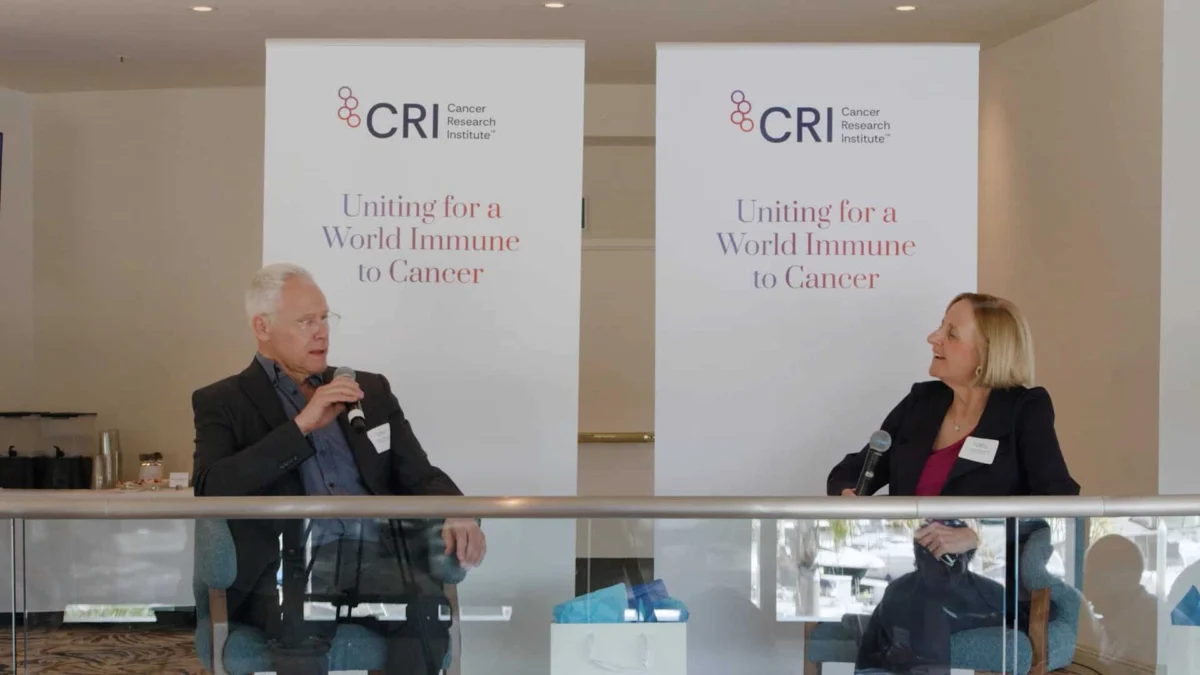
To celebrate this year’s award, the CRI deviated from the traditional lecture format. Instead, they hosted a "fireside conversation" between Dr. Murphy and the 2025 recipient, Dr. Crystal Mackall. The resulting dialogue provided an unvarnished look at the realities of modern scientific discovery.
Rather than a polished recounting of successful experiments, the conversation revealed the messy, nonlinear, and often frustrating nature of the research process. For an audience of seasoned researchers and aspiring scientists alike, the discussion demystified the path to "breakthroughs," portraying them not as "eureka" moments, but as the cumulative result of decades of incremental inquiry.
The Nonlinear Path: Following Biology, Not Hypotheses
A central theme of Dr. Murphy’s reflection was his insistence on "following the biology." In an era where grant funding often demands a clear, linear path toward a specific application, Murphy advocates for the virtue of curiosity-driven research.
"We’re still asking the same question that we started off with," Murphy noted during the session, reflecting on his long-standing fascination with the regulation of immune responses. His career stands as evidence that when scientists remain open to the unexpected signals provided by cellular biology, they often arrive at answers to questions they didn’t even know they were asking.
This philosophy was critical to his work on immune checkpoint inhibitors. While many researchers were focused on the inhibitors themselves, Murphy’s work revealed that these drugs only function effectively when the underlying dendritic cell machinery is operational. This realization was a turning point, explaining why certain patients responded to treatment while others remained refractory.
Addressing the Complexity of Immune Dynamics
The conversation between Dr. Murphy and Dr. Mackall touched on the unresolved frontiers of immunology. Despite the commercial and clinical success of immunotherapy, the field faces significant hurdles in durability and efficacy.
The Stem-like T Cell Conundrum
One of the most compelling areas identified by Dr. Murphy is the transition between "stem-like" T cells and short-lived effector cells. Understanding how to maintain a pool of self-renewing, stem-like T cells within the tumor microenvironment is widely viewed as the "holy grail" of durable cancer immunity. If we can manipulate this transition, we might be able to prevent the exhaustion that often plagues T cells after prolonged interaction with a tumor.
Reimagining Cancer Vaccines
Vaccine technology has seen a renaissance, yet the results remain inconsistent. Dr. Murphy provided a sobering, evidence-based critique: the success of a vaccine depends less on the "payload" (the antigen) and more on the "delivery agent" (the DC subset). His lab’s recent findings suggest that for mRNA and cDNA platforms to achieve their potential, they must be optimized to specifically engage cDC1s. Without this, the immune response may be too weak or too short-lived to induce meaningful clinical regression.
The Changing Landscape of Research
The discussion also addressed the macro-environment of science. With the rapid integration of Artificial Intelligence (AI) and the shifting tides of institutional funding, the next generation of researchers faces an environment vastly different from the one Dr. Murphy entered.
The Role of AI in Discovery
Both speakers acknowledged AI as a powerful tool for big data analytics—a necessity in an age of single-cell sequencing and high-dimensional omics. However, they shared a cautionary note: AI is not a substitute for the scientist. "AI can process the data," Dr. Murphy noted, "but it cannot provide the context or the insight required to ask the right question."
The Burden of Information
Dr. Mackall emphasized a modern paradox: the abundance of information is making it increasingly difficult for early-career scientists to focus. When every piece of data is available, finding the "signal in the noise" becomes a primary challenge. Both laureates agreed that in such a climate, the role of mentorship is more vital than ever—not just in teaching technical skills, but in training young scientists to synthesize, interpret, and prioritize information.
Implications for Clinical Practice
The implications of Dr. Murphy’s work for the future of patient care are profound. By moving toward a more nuanced understanding of how DCs prime T cells, the field is moving away from a "one-size-fits-all" approach to immunotherapy.
Future clinical trials are likely to prioritize combination therapies that explicitly target the DC-T cell axis. This includes:
- DC-targeted adjuvants: Engineering vaccines to specifically engage the cDC1 subset.
- Metabolic reprogramming: Understanding how tumor-derived metabolites suppress DC function and finding ways to circumvent this inhibition.
- Enhanced Priming: Using engineered T cell therapies that are "pre-primed" to interact with the tumor environment in a way that avoids the traditional exhaustion pathways.
Conclusion: A Foundation for the Future
The 2026 AACR-CRI Lloyd J. Old Award ceremony was more than a celebration of past achievements; it was a call to action for the future. As the field stands on the precipice of next-generation immunotherapies, the message from Dr. Murphy is clear: the most sophisticated technologies are useless without a foundational understanding of the immune system’s core logic.
History has shown that the most transformative advances in cancer treatment were not the result of rigid, top-down engineering, but the result of deep, relentless curiosity. As we look toward the next decade of discovery, the research community is reminded that the path forward is found by staying close to the biology—one question, one cell, and one discovery at a time.
For those interested in exploring these topics further, the full transcript and video of the conversation between Dr. Kenneth M. Murphy and Dr. Crystal Mackall can be accessed via the Cancer Research Institute’s official media portal.